Sorry, I’m not an ajumma

#1

In several years ago, I worked as a casual lecturer at university in Seoul. At that time, I was preparing for applying PhD and some required documents for the applications (i.e. research proposal) were stored in my laptop. The document folder for research proposal was named ‘ajumma’ and it was on my laptop. One day, after the class two students came to me and hesitated for a moment. Few seconds later, they finally asked, “Are you an ajumma?”

I said “No, why?”

“Then why you have so many ajumma folders on your laptop?”

I replied “No, I’m not, I’m not an ajumma (laugh)”


They thought I was an ajumma for sure because there are so many folders named as ‘ajumma’.
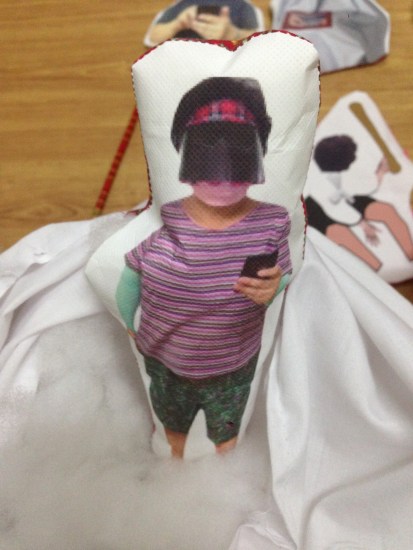
image

#2

During my field research in Seoul, South Korea, I participated in the ‘ajumma day'(http://www.azoomma.com) on 31st May. I suffered from chronic back pain so I walked very slowly at that time so I almost missed the elevator. (I planned to catch the next elevator because I didn’t want to run or walk faster)

Suddenly, a caretaker for that building saw me and he tried to hold an elevator for me. The elevator was jam packed with ajummas and all of them includes a kind caretaker were waiting for me. (Oh no)

And he yelled at me, “Ajumma!! I hold an elevator for you so walk slowly!!”

I looked around and I realised that ‘ajumma’ was me. Yes, that ajumma was me…I was an ajumma…he reckon…

Thanks for his kindness, I could catch that elevator but I felt awkward. I know I research about ajummas and I really admire them in many ways but when I was called as an ajumma by someone, I felt strange. I reckon maybe I still have prejudice about ajummas? I still think being recognised as an ajumma is unwelcome thing? Why did I feel strange?
 

The third gender

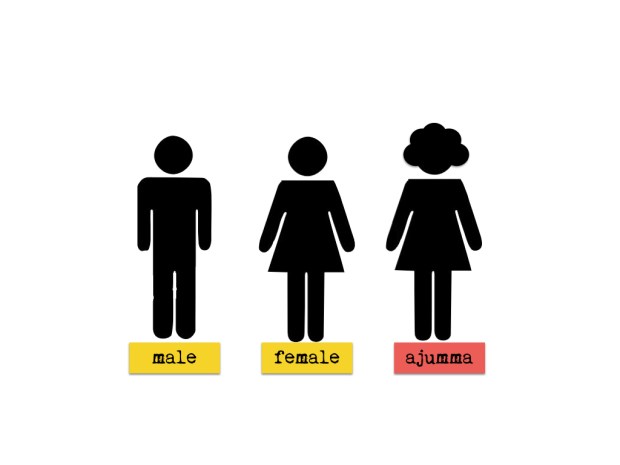
Ajummarous elements are prevalent but stereotyped view about ajummas somewhat disdained ajummas. This perspective on an ajumma that judges ajummas by their characteristic appearances can cause a slated and biased view.

In a popular Korean joke, there are three different genders-men, women and ajumma. Ajumma is categorised as the third gender-neither male nor female. Analogically, we can assume that the general awareness of Korean society about the collectiveness of ajummas’ existence and the distinct characteristics of ajummas are not very positive. In other words, ajumma is recognised as not a woman, rather just ajumma itself.

3rdgender.001

For next post, I will give you examples that explain how ajummas are treated in Korea (with biased views about them).

Ajummas are superwomen

Screen Shot 2015-12-16 at 11.23.52 AM

There are many characteristics that define ajummas but their appearance is the one most easily identified. For example, if single women or men wear ajummorous outfits or have ajummorous hairstyles, their friends will say to them “you look like an ajumma!” However, while people categorise others as ajummas there is no exact or official definition for ajummas or ajummorous characteristics. Categorisation is based on pre-conceived views learnt through society and shared and reinforced continuously.

While appearance is the most obvious characteristic by which people are identified as ajummas, I would like to tell you that being an ajumma is not limited to appearance but includes other characteristics.

Firstly, ajummas are superwomen.

They are wives and mothers who take their roles very seriously and put great effort into supporting their children and husbands. They consider themselves the pillar supporting their family’s happiness and success. However do not imagine that self-sacrifice is their only pleasure. They know how to enjoy their lives.

In this way I consider them superwomen.