
아줌마분들!! 메리크리스마스! 아직은 많이 부족한 블로그 이지만 자주 그리고 재미있는 내용으로 블로그 채워가겠습니다. 대한민국 아줌마 화이팅!!
Happy Christmas to ajummas in Korea!!
아줌마와 그들의 디지털미디어 사용에 관한 이야기, The story about ajummas and their use of new media (e.g. smartphones)
아줌마분들!! 메리크리스마스! 아직은 많이 부족한 블로그 이지만 자주 그리고 재미있는 내용으로 블로그 채워가겠습니다. 대한민국 아줌마 화이팅!!
Happy Christmas to ajummas in Korea!!
앞에서 설명한 아줌마스러움 혹은 아줌마스러운 요소들은 우리 사회에서 아줌마와 아줌마가 아닌 사람을 구분하는데 있어서 만연하게 사용되고 있습니다. 우리는 보통 아줌마답다, 아줌마처럼 보인다를 이야기하는데 있어서 대부분 겉으로 보여지는 외모에 많은 비중을 두고 구분합니다. 하지만 이러한 아줌마에 대한 편견은 아줌마에 대한 부정적인 이미지를 만들어내기도 합니다. 사실 대한민국에서 아줌마에 대한 시각은 그리 곱지만은 않은게 사실입니다. 물론 우리의 어머니이고 대한민국의 경제발전에 큰 힘을 함께 실어준 없어서는 안될 분들이지만, 다양한 미디어로 보여지는 아줌마의 모습은 그리 긍정적인 것만은 아님이 사실입니다.
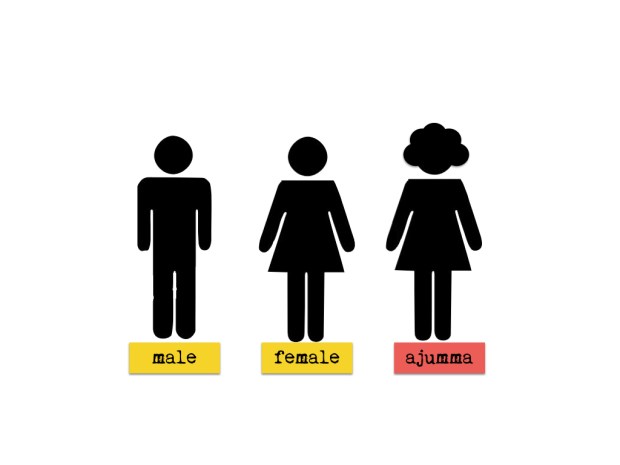
아줌마에 대한 유명한 농담중에 이런것이 있습니다. 대한민국에는 3가지의 성이 존재하는데, 첫째는 남성, 둘째는 여성, 그리고 마지막으로 아줌마가 있다. 아줌마는 대한민국에서 남성도 여성도 아닌 ‘아줌마’로 인식되어 지고 또한 아줌마라는 그룹 전체를 하나의 독립된 집단으로 보고 있음을 이러한 농담을 통해 알 수 있습니다. 물론 이러한 농담은 성차별적이고 아줌마를 매우 낮춰 보는 잘못된 것임에 분명하지만, 저는 이 농담을 조금이나마 ‘다른’ 시각으로 보고 싶기도 합니다. 이제껏 우리 사회는 이들을 그저 부정적인 시각으로만 바라봤지만, 만약 우리가 제대로 들여다본다면 아줌마라는 그룹은 매우 독특한 대한민국 사회만이 가진 중년여성그룹임이 분명하다는 점입니다. (이것에 대한 이야기는 앞으로 차차 풀어나가도록 하겠습니다)
다음 포스팅에서는 아줌마에 대한 부정적 시각에 대해서 예를 들어 이야기해 보겠습니다. 감사합니다.
Ajummarous elements are prevalent but stereotyped view about ajummas somewhat disdained ajummas. This perspective on an ajumma that judges ajummas by their characteristic appearances can cause a slated and biased view.
In a popular Korean joke, there are three different genders-men, women and ajumma. Ajumma is categorised as the third gender-neither male nor female. Analogically, we can assume that the general awareness of Korean society about the collectiveness of ajummas’ existence and the distinct characteristics of ajummas are not very positive. In other words, ajumma is recognised as not a woman, rather just ajumma itself.
For next post, I will give you examples that explain how ajummas are treated in Korea (with biased views about them).
Whenever I go to the market, I can observe the lives of various types of people. While I am staying in Melbourne or Seoul, going to the market on Saturday is a part of weekly routine for me. Now I more often go to the market since I’ve started doing my PhD research project about ajummas. In the market, I can meet so many types of ajummas who are yelling loudly to sell vegetables or haggling over the price of fruits between seller ajummas and customer ajummas. In addition, it is amazing that snack stall ajummas could remember every order without bills or calculators in the market! And there are strong ajummas who carry heavy shopping baskets for their family.
For last several years and even now, ajummas made contributions to Korean economic development. These ajummas in Korea, they are strong enough to support their family and Korean society.

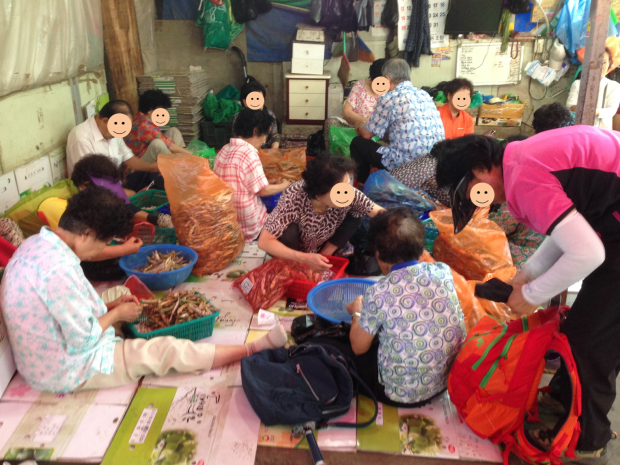

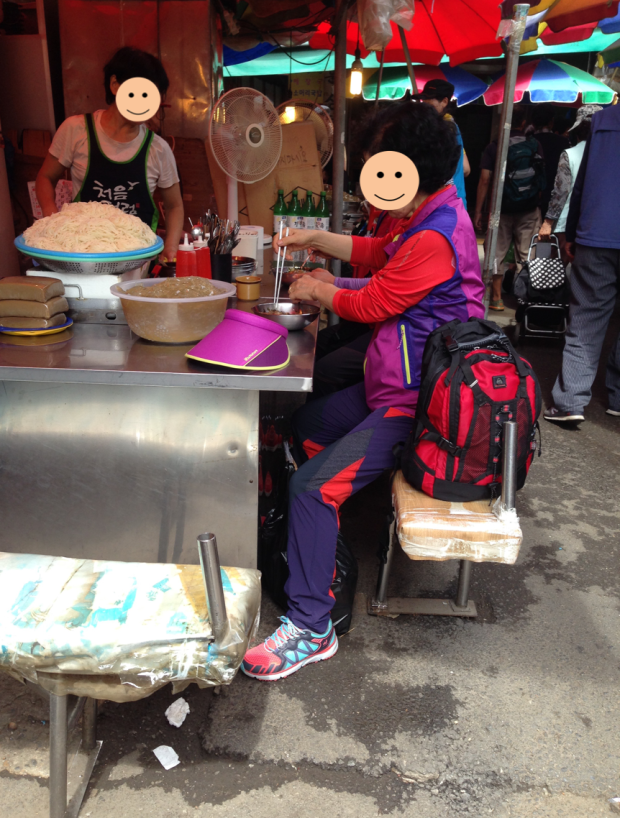
시장에 가면 다양한 사람들의 활기찬 삶의 모습을 볼 수 있습니다. 호주에서도 그리고 서울에 있을때도 주말마다 시장에 가는 일이 일과가 되어버릴 정도로 저는 시장에 가는 걸 좋아합니다. 특히, 아줌마에 대한 연구를 시작하면서 시장에 가면 많은 아줌마들을 만나뵐 수 있다는 이유로 더 자주 가게 되었습니다. 소리소리 지르며 물건을 파는 아줌마, 좀 더 나은 흥정을 위해 목소리를 높이며 실랑이를 벌이는 상인 아줌마와 물건을 사려는 아줌마, 계산기나 주문서 없이도 수많은 사람들의 주문을 받아 척척 잔치국수를 내주는 포장마차 아줌마, 무거운 짐을 양손에 들고도 씩씩하게 걸어가는 아줌마 등등.
지난 수년동안 한국의 역사와 함께하며 아줌마들은 한국의 경제발전에 큰 힘이 되었습니다. 물론 지금도!
억척스럽게 물건을 팔고 또 가족들을 위해 양손가득 장을 보고 한 푼 이라도 아끼기 위해 실랑이를 벌이면서 아줌마들은 그렇게 살아갑니다.
Arts Hub video playing at VCA 2015 from Jung Moon on Vimeo.
My videos, ‘Digital Ppal-let-ter’ were played in Arts Hub foyer at VCA (University of Melbourne) at the beginning of December 2015. The videos will be uploaded in this blog soon.
Thank you.
디지털 빨래터 비디오 프로젝트가 지난 12월초에 멜번대학교 VCA 아트 허브 빌딩에서 전시 되었습니다. 제작된 비디오는 곧 블로그를 통해 보여드릴 예정입니다.
감사합니다.
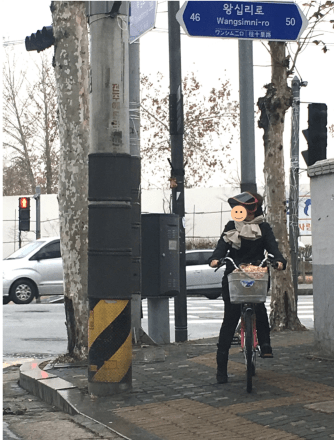
There are many characteristics that define ajummas but their appearance is the one most easily identified. For example, if single women or men wear ajummorous outfits or have ajummorous hairstyles, their friends will say to them “you look like an ajumma!” However, while people categorise others as ajummas there is no exact or official definition for ajummas or ajummorous characteristics. Categorisation is based on pre-conceived views learnt through society and shared and reinforced continuously.
While appearance is the most obvious characteristic by which people are identified as ajummas, I would like to tell you that being an ajumma is not limited to appearance but includes other characteristics.
Firstly, ajummas are superwomen.
They are wives and mothers who take their roles very seriously and put great effort into supporting their children and husbands. They consider themselves the pillar supporting their family’s happiness and success. However do not imagine that self-sacrifice is their only pleasure. They know how to enjoy their lives.
In this way I consider them superwomen.

아줌마스러움에 대한 지난 포스팅은 주로 아줌마의 ‘외모’에 관한 것이었습니다. 대부분의 사람들은 아줌마들의 외모나 보여지는 행동에 의해서 아줌마 그리고 아줌마가 아닌 사람을 구분하고 있습니다. 사실 아줌마에 대한 메뉴얼도 없으면서 오랜 시간동안 우리사회는 아줌마스러움을 갖춘 중년여성들을 무조건 ‘아줌마’로 분류해놓고 있었던 것입니다. 예를 들어, 아줌마가 아닌 싱글여성 혹은 남성이 ‘아줌마스러운’ 머리스타일이나 옷을 입었다면 ‘야 너 아줌마 같아 보여’ 라고 말을 합니다. 이처럼 아줌마스러움에 대한 명확한 정의는 없지만 우리는 무엇이 아줌마스러운 패션인지 또 어떠한 행동이 아줌마스러운 것인지를 자연스럽게 익히고 배워가고 있습니다.
사실, 아줌마스러움은 보여지는 것에만 국한되어 있는것이 사실입니다. 하지만, 이번 포스팅에서는 그러한 ‘아줌마처럼 보이는’것 뿐만이 아닌, 아줌마들에게는 또 다른 면이 있다는 것을 알려드리고 싶습니다.
첫째로, 아줌마는 수퍼우먼 입니다.
누군가의 딸로 태어나서 한 남자의 아내로 그리고 자녀들의 엄마로, 또 다시 여자로 더불어 한 인간으로 살아가는 아줌마는 멀티태스킹이 가능한 수퍼우먼 입니다. 가족을 위해 희생만 하는 것이 아닌 자신의 삶을 즐길 줄 아는 아줌마들.
그들은 우리들의 수퍼우먼 입니다.

(원본 이미지 출처: http://www.iworldtoday.com/news/articleView.html?idxno=176220, Keynote를 사용해 재편집한 이미지)
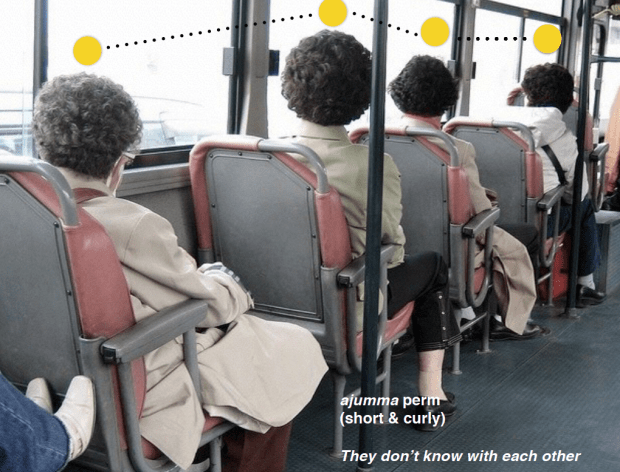
대부분의 경우, 사람들은 보여지는 이미지를 통해 아줌마스러운 여성, 즉 아줌마를 구별합니다. 예를 들어,
–아줌마 파마, 아줌마 패션 그리고 아줌마 메이크업 스타일
–아줌마 스러운 행동 (말투, 큰 목소리, 지하철에서 다리 벌리고 앉아있기, 오지랖이 넓은 성격 등)
특히, 오지랖 넓은 성격은 아줌마다움 성격을 나타내주는 대표적인 성격입니다. 지하철안에서나, 버스 정류장, 병원 그리고 까페나 식당 같은 공공장소에서 모르는 아줌마들에게 질문을 받아 본 경험이 있으실 겁니다. 저 또한 그런 경험이 있지요.
사실, 모르는 아줌마들이 저에대한 지극히 사적인 질문을 하는 경우도 많고 그로인해 불편함을 느끼는 경우도 때론 있지만, 아줌마들의 그러한 오지랖 넓은 성격은 ‘무례함’보다는 ‘다정함’ 혹은 ‘친근함’으로 보여지는 경우가 더 많습니다. (제 경험에서는 그렇습니다)
또, 그러한 ‘넓은 오지랖’이 아줌마들 만의 소통방식이라고 여겨지기도 합니다. 지하철을 타고 다니다보면 서로 만난 적 없는 아줌마들끼리 별의별 이야기를 다 하며 같은 공간에서 다양한 주제로 이야기를 나누는 경우를 많이 봅니다. 호주에서 오래 살다온 경험에 비춰보면 이러한 오지랖 소통방식은 아줌마들 만이 가능한, 매우 아줌마스러운 요소라고 생각되어 집니다.
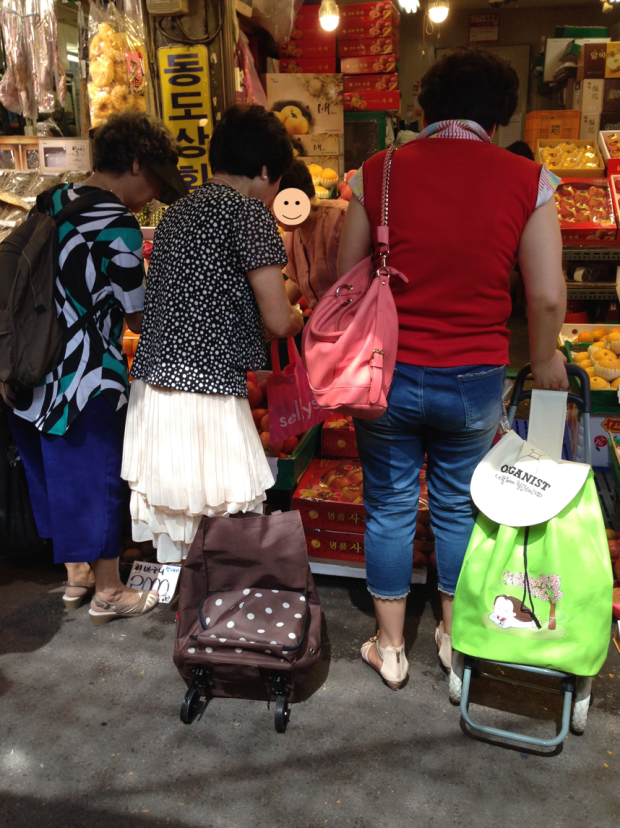
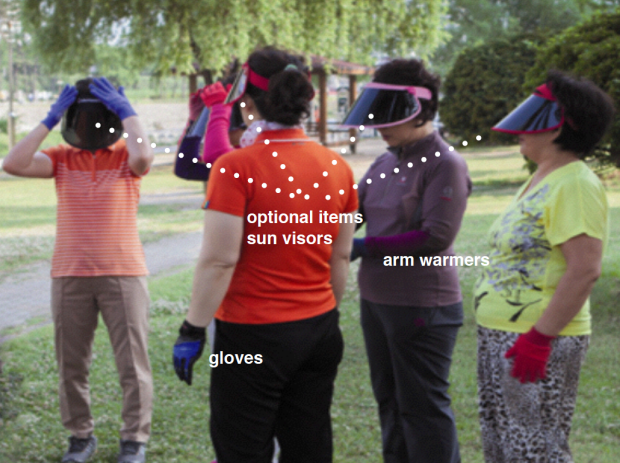
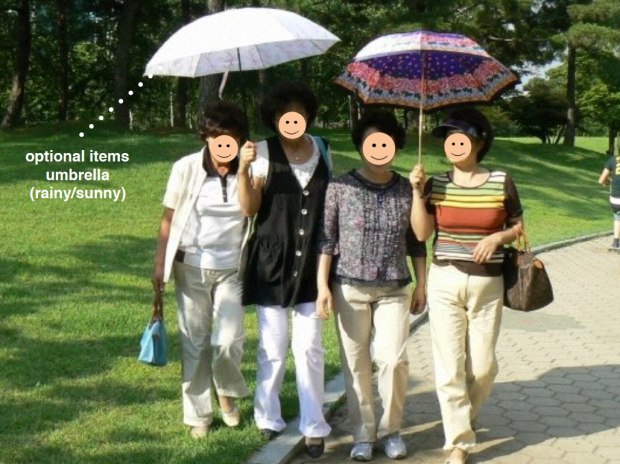
아줌마들 만의 다양한 소통방식에 대해서는 차차 이야기 하기로 하고, 아줌마스러움을 (일반적으로) 나타내주는 ‘아줌마스러운 요소’에 대한 이해를 돕고자 아래 사진을 첨부합니다.
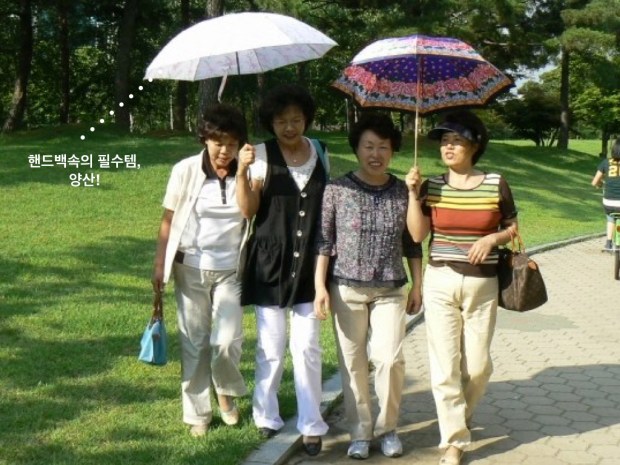
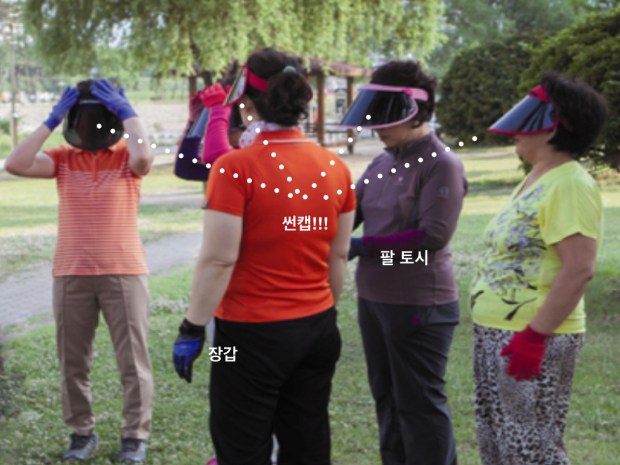

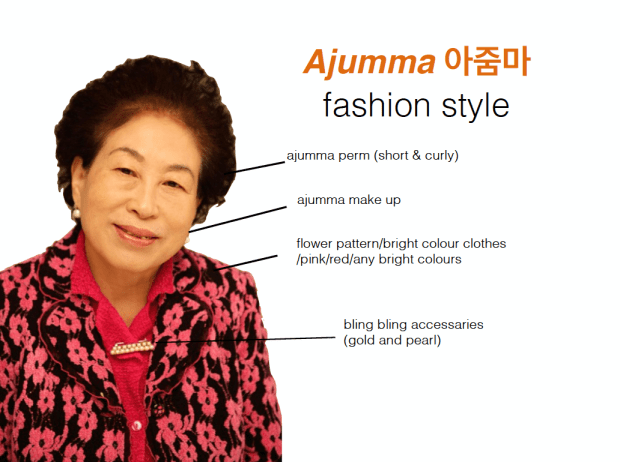
(original image from http://www.iworldtoday.com/news/articleView.html?idxno=176220 and I re-edited this image in Keynote)
In most cases, ajummarous women are judged by their appearance.
–ajumma hair, fashion and make up style
–behaviours (way of talking, loud voice, sitting with their legs apart in the subway, being meddlesome)
Especially, they are being meddlesome. So if you are in the subway and sitting in the cafe or restaurants, ajummas keep talking to you and even asking some personal questions as well. Whenever I travel on the subway in Seoul, I heard ajummas’ conversations. Interestingly, these ajummas never met with each other before, rather they just met on the subway. Their conversations were about everything, such as cooking, children, weather, culture, politics, etc. It might be strange if strangers talk to you on the subway. However, this is their ways of communication which is very ajummarous ways of communication that exists only in Korea.
With one of these ajummarous elements (of course there are more ajummarous elements than I mentioned above), any women can be called or recognised as an ajumma in Korea.
Here are some photos that help you understand what ajummarous elements which define ajummas in general.
아줌마는 누구인가?
사실 아줌마에 대한 정의는 없습니다. 사전을 찾아봐도 ‘아줌마’에 대한 정의를 찾아보기 힘듭니다. 일반적으로 ‘중년 여성’ 혹은 ‘아주머니를 낮춰 부르는 말’과 같은 뜻으로만 풀이되어 있습니다. 그렇다면, 우리가 흔히 아줌마와 아줌마가 아닌 사람을 분류하는, 법적으로 정해지지 않았으나 사회적으로 암암리에 퍼져있는 아줌마를 구분하는 일반적인 기준은 무엇일까요?
위에 나열된 것들은 우리가 아줌마와 아줌마가 아닌 사람을 구분할때 일반적으로 사용되는 기준입니다. 하지만 이들은 아줌마를 정의하는 절대적인 요소가 될 수 없기에, 반드시 한국의 사회적 그리고 문화적 특성이 함께 고려되어야 아줌마에 대한 깊은 이해를 할 수 있을것입니다. 아줌마는 단순히 특정한 외모적 특성과 성격을 지닌 기혼의 중년 여성그룹이 아니기 때문입니다.
따라서, 우리가 아줌마를 좀 더 이해하기 위해 제가 ‘아줌마스러운 요소 (ajummarous elements)’에 대해서 다음 포스팅에서 알아볼께요!
There is no exact definition for an ajumma but there are several general characteristics that help to define an ajumma.
1.Age range (mid-30s to late-60s)
2.Married
3.Appearance
4.Behaviour
5.Women (must be)
These characteristics will help you to recognise ajummas however ajummas must be considered in the context of Korean culture and society to be fully understood.
I will explain more about ‘ajummarous elements’ in my next post.
 스마트 아줌마 Smart Ajumma