Ajummas are superwomen

Screen Shot 2015-12-16 at 11.23.52 AM

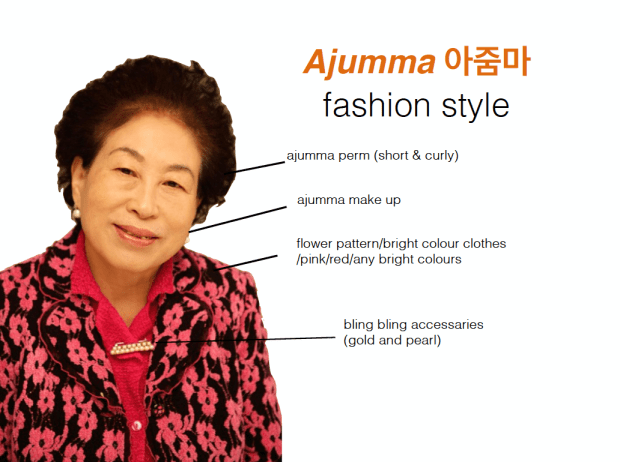
There are many characteristics that define ajummas but their appearance is the one most easily identified. For example, if single women or men wear ajummorous outfits or have ajummorous hairstyles, their friends will say to them “you look like an ajumma!” However, while people categorise others as ajummas there is no exact or official definition for ajummas or ajummorous characteristics. Categorisation is based on pre-conceived views learnt through society and shared and reinforced continuously.

While appearance is the most obvious characteristic by which people are identified as ajummas, I would like to tell you that being an ajumma is not limited to appearance but includes other characteristics.

Firstly, ajummas are superwomen.

They are wives and mothers who take their roles very seriously and put great effort into supporting their children and husbands. They consider themselves the pillar supporting their family’s happiness and success. However do not imagine that self-sacrifice is their only pleasure. They know how to enjoy their lives.

In this way I consider them superwomen.


Are you ‘ajummarous’?

Screen Shot 2015-12-14 at 4.48.25 PM

(original image from http://www.iworldtoday.com/news/articleView.html?idxno=176220 and I re-edited this image in Keynote)

In most cases, ajummarous women are judged by their appearance.

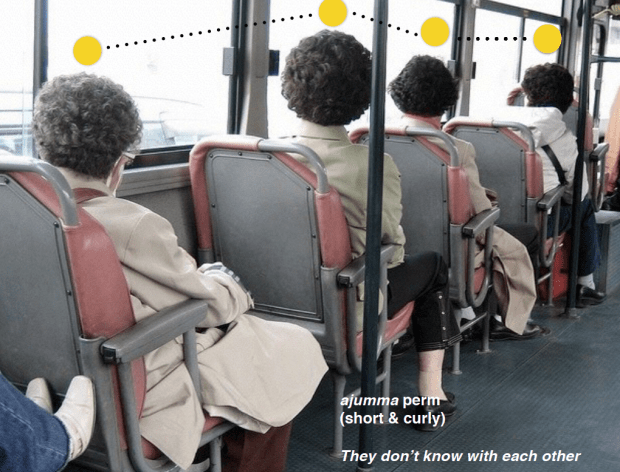
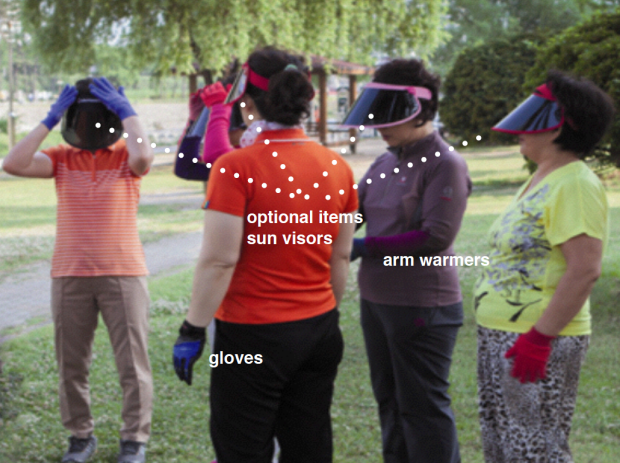
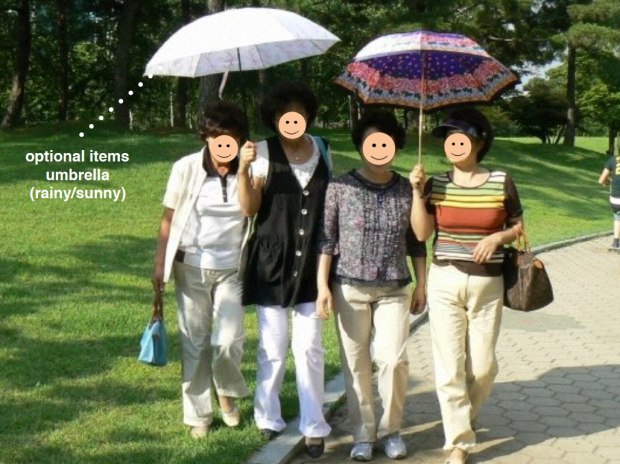
ajumma hair, fashion and make up style

behaviours (way of talking, loud voice, sitting with their legs apart in the subway, being meddlesome)

Especially, they are being meddlesome. So if you are in the subway and sitting in the cafe or restaurants, ajummas keep talking to you and even asking some personal questions as well. Whenever I travel on the subway in Seoul, I heard ajummas’ conversations. Interestingly, these ajummas never met with each other before, rather they just met on the subway. Their conversations were about everything, such as cooking, children, weather, culture, politics, etc. It might be strange if strangers talk to you on the subway. However, this is their ways of communication which is very ajummarous ways of communication that exists only in Korea.

With one of these ajummarous elements (of course there are more ajummarous elements than I mentioned above), any women can be called or recognised as an ajumma in Korea.

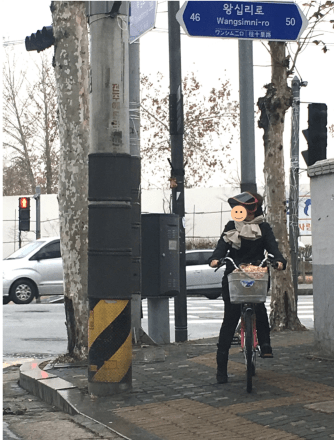
Here are some photos that help you understand what ajummarous elements which define ajummas in general.


Screen Shot 2015-12-14 at 4.56.10 PMScreen Shot 2015-12-14 at 4.56.00 PMScreen Shot 2015-12-14 at 4.55.51 PM