#Ajummastagram in everyday

Instagram is now a big thing which is known as a visual communication platform. Before I use the Instagram, Flickr was one of the biggest visual communication platform through photo sharing on each user’s Flickr page. In my case, I uploaded various photos that were mostly taken by professional cameras (includes film and digital cameras). Compared with these days, Flickr users mostly uploaded photos that have more specified topics or stories than mundane and ordinary records by Instagram users. And Instagram is a sort of a common ‘thing’ or “ambient play” (Hjorth 2015) which people take photos, upload them and share them with others in their everyday life through using their smartphones (or computers). They rather record everyday objects, every moment and everything they want to take,upload and share. Thus, Instagram is not just a photo sharing application. It becomes a visual communication platform that allows its users to communicate with each other visually through sharing photos and videos. Furthermore, using hashtag (#) enables them to get to know other users whom never met before. Sharing the same interest through hashtag allows these strangers to have chance to know each other slightly.


Screen Shot 2016-06-26 at 7.46.51 PM
(This page above was captured on Instagram website  <https://www.instagram.com/explore/tags/아줌마스타그램/> and I put stickers on each face for privacy reasons)

There are innumerable kinds of hashtags are sharing among Instagram users every second. I can’t enumerate every single hashtag in this post but I would like to talk about hashtag of ajummas in Korea. Yes, there are hashtags about ajummas as well. These hashtags are mostly written in Korean (#Ajummastagram, #Ajumma, #Jummagram, etc.). I do check the hashtags about ajummas almost everyday because I’m curious how many Ajummas are now using Instagram. Well, there are many Ajumma hashtags but these ajummas are very young. I mean Ajummas in Instagram are younger than ajummas in my research. I think the age range of these ajummas in Instagram are from mid 20s to mid 40s. Compared with ajummas in my research, they are from mid 40s to late 60s (yes, older than ajummas in Instagram). The ajummas in Instagram are more likely a group of ‘mom’ I can tell. They share photos of babygoods, restaurants, shopping tips (cosmetics, shoes, sale information), selfies, etc.

Surprisingly, they put themselves as ‘ajummas’ in hashtags. I can’t say ‘everyone’ but most of them (married women who are between 20s to 40s) don’t want to be called as ajummas in general through my research and various media. But why do they call themselves as ajummas??? I don’t know why they identify themselves as ajummas in Instagram (mobile space) but I keep thinking about this. And another interest things is that Instagram is not as popular as Kakao Talk or Kakao Story for ajummas who are between mid 50s to late 60s. It is hardly found the ajumma users of those ages in Instagram yet. Why?

I should keep thinking about this.


Ajumma fans at the concert, so what?

Fandom culture is very strong in Korea as well as other countries. A variety types of fan clubs are formed and those fans do many activities for their ‘stars’. Like other communities, fan clubs are considered as one of communities with people who got the similar interests each other. In this case, similar interest should be a ‘star’. A star could be sportswoman/man, actors, artists, singers, models, writers, filmmakers, politicians (maybe?), or even characters of animation or comic books whom are living in the imaginary space. Among these examples of fan club, I would like to talk about a case of one of band’s fan club in Korea.

Twitter is a sort of an intersection for people to share common or uncommon ideas and thoughts. I didn’t use tweeter for last few years but now I’m one of active users of tweeter. There are many reasons why I use twitter but one reason could be that it is useful to share information from other fans about my favourite singer. At the same time, we could share the concert review with each other after every concert. Actually I’m not a very active fan like other fans, but I could be an active fan through interactive communication with other fans on twitter whom I followed. Even though we never tweetup before but we meet almost everyday on twitter. It is so glad to know someone who have same interests with me and share our thoughts about the same thing together.

However, it happened few days ago. There is another online community website for this singer and a sort of a quarrel between fans was occurred. These fans argue about something related to the singer on the BBS. I have no interest in this online community website at all, so I didn’t know about this website that much. But one thing I knew about this website is that most of them who take very active roles are quite younger than other old fans of the singer. Anyway, there’s a quarrel between fans and one of fans wrote her or his thought on the BBS. I was outraged at the way she/he had written. Here is a sentence that makes me uncomfortable.

“Some of old fans are annoying and they’re mean towards younger fans, and you know what? The concert was teeming with ajumma fans!!!”

Well, it was interesting to me to know what younger people consider old woman (they think over 30s is ‘old’, she/he wrote). And it’s not shocking the way this kind of people think about ajummas or old woman because I’m a researcher or a sort of expert of ajumma research, so I know. But I was angry to read that sentence because of their old-fashioned mind or thinking about women, especially old women (over 30s is OLD? of course it is not young age but not too old yet?).

TI000080752_APP.jpg

(Ajumma fans at the Yong Pil Cho‘s concert, image from: http://5505.ohmynews.com, or click the image to visit the website)

What’s wrong with old women? (over 30s?) Is there any law and regulations that old women (over 30s) are prohibited to come to the concert? And what’s wrong with ajummas? Okay, if they’re official ajummas, SO WHAT? You know what? The singers you like are over 30s too. Then, why do you think only female fans who are over 30s should be treated as annoying ajummas? As I mentioned in previous post, I think they have a sort of misogynistic perspective towards women, especially non-younger women.

According to them, I’m an ajumma because I’m over 30. But I will keep going and enjoying their concert as much as I can. I don’t care what others think about ajummas (women who are over 30s, they said). But one thing that I feel disappointed is their prejudiced and outdated view of ajummas. Oh, don’t forget! You’ll be an ajumma very soon, too.


Grandparenting (2)

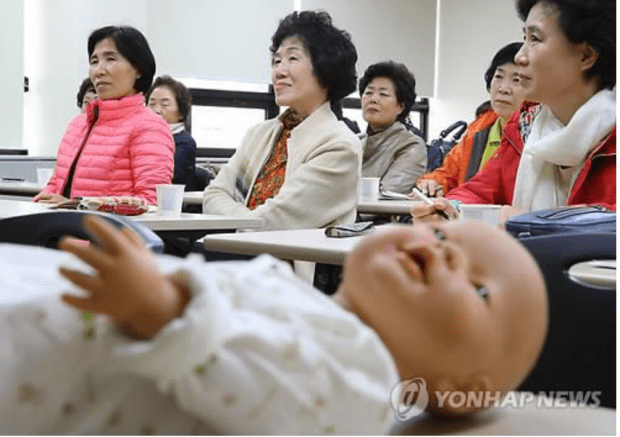
Grandparenting is not an easy thing at all. But it is unavoidable to both parents and their married sons and daughters because of the poor childcare system for working parents in Korea. There are public and private childcare system that people can get in Korea, but they’re still insufficient to support those working parents. Besides, the reason why those working parents ask their parents to raise their children is because most of them believe that being raised by grandparents is more truthworthy in many ways than a babysitter from the list. I mean, grandparents are more reliable to place their children than babysitters for them. (Of course there are many wonderful babysitters!) Because of many reasons (I can’t write every single reason why people ask their parents to raise their children), grandparenting is becoming a very common thing in Korea and many of my neighbours are actually spend the most of the day time with their grandchildren, I can see. These grandparents are professional at childrearing or babysitting because they’ve already done before for their children. They are experienced parents so they should be better than first time parents (their son and daughter) in childrearing. However, there is a saying, ‘Ten years is an epoch’, various things were disappeared and newly created again and again. Childrearing is not an exception of being affected by the development of technology.

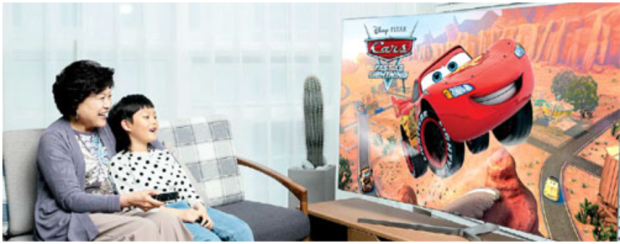
The fundamentals of childrearing is still the same, but the ways of childrearing and the tools for childrearing are evolved rapidly. In other words, grandparents are now making use of the new tools to get new ways of childrearing for their grandchildren. For example, they  do mobile shopping to order baby goods, show mobile audio-visual programs for kids and to have mobile chat with their son and daughter about grandchild through using their smart devices (i.e. smartphones) It is called ‘Smart Parenting’. The photo below shows that a grandmother enjoy watching animation on Smart TV with her grandson. People can get various contents especially for their grandchild through Smart TV.

Screen Shot 2016-06-21 at 11.30.58 AM.png

(Click the image then it goes direct to the webpage about Smart TV and grandparenting, image from http://vip.mk.co.kr/news/view/21/20/1397293.html)

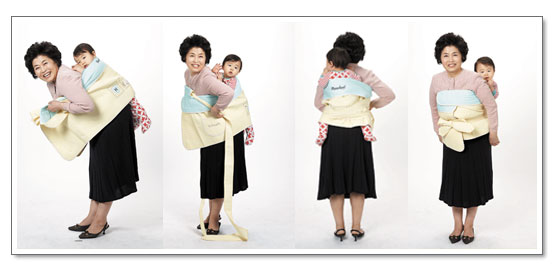
According to the report of mobile shopping site, Tmon (http://tmon.co.kr), the analysis of the sales of babygoods by age group showed that customers who are aged over 50s are increased significantly  compared with other age groups. The number 1 item they purchased is Podaegi (baby carrier), http://www.ticketmonster.co.kr.  (click the link if you want to see that actual product they purchased)

201303_podaegi2.jpg

(This is a podaegi in Korea, image from http://namyangi.com (click the image to see the original webpage))

Besides, the mobile shopping for grandchildren is not only limited to Korea. If you read this article on ‘grandparents.about.com‘ it tells you about ‘6 ways your smartphone can help you shop for grandchildren’. I will continue to talk more about ‘grandparenting’ and digital media in the next post.

Grandparenting (1)

It is busy in the morning because their grandson comes every morning around 8 am. A grandmother walks her grandson to the kindergarten by 9 am. Until 2pm, it is her free time. At 2 pm, she picks up her little grandson from the kindergarten, they head to home and a grandmother prepares snacks for him. They play together by watching TV, reading books, or playing game on a grandmother’s smartphone. At 6 pm, they have a dinner together and finally his parents come back home to pick up their son.

Screen Shot 2016-06-16 at 12.49.48 PM.png

(image from Yonhapnews.co.kr)


This is a summary of daily life of a normal grandparent in Korea today. Of course, I don’t mean all Korean grandparents are doing ‘grandparenting’ now.But I can say that the number of grandparents are grandprenting for their sons and daughters, who are unable to childrearing because most of people in Korea are now two-career families. At the same time, the shortage of day care centres is a major obstacle for these working parents in Korea. For this reason, many of young parents (I mean younger generation than their parents’ generation- over 60 years old) ask  their parents to take care of their children.

In my aunty’s case, she also does grandparenting during day time for 5 days a week. She knew how to take care of her grandchild because she already done with her children many years ago. But, the childrearing these days needs more variety.

Ajumma-Selca by Incheong Lee 2008

Screen Shot 2016-06-13 at 10.49.48 AM

(Click the photo above, there are more photos of Ajumma-Selca and information about this project (but in Korean))

I found Korean artist Incheong Lee’s Ajumma-Selca by chance this morning. There aren’t enough references or related articles about her ‘Ajumma-Selca’ but I realised that how her artwork and Digital Ppal-let-ter (and Smart Ajumma research) are similar with each other in some ways. Of course these two different project are about Ajummas but they’re not only talking about a profound discourse of Ajummas. Rather I (and maybe she as well) tried to express the daily life of ajummas pleasantly. (I know there was, is and will be a controversy over talking about ajummas, using the title of ajummas, and etc.)

Anyway, Lee’s Ajumma-Selca is about a tiring and tedious (or sometimes enjoyable as well) daily life of ajummas. She put the wooden-ajumma doll in the situated frame (e.g. kitchen) of photos to reflect her (or other ajummas) lives. Thus, the each photo is a sort of ‘ajumma-selca’ that shows ajumma-selves through a wooden ajumma doll.


아줌마-셀카, 이인청 2008


Screen Shot 2016-06-13 at 10.49.48 AM

(위 그림을 클릭하면 이인청,아줌마-셀카에 대한 자세한 정보가 나와있는 네오룩 홈페이지로 이동합니다)

이인청 작가의 아줌마-셀카 라는 작품을 우연히 보게되었다. 관련자료가 충분하지는 않지만 이 전시를 다녀온 분들의 개인적인 글, 뉴스기사 그리고 작품해설에 실려있는 작가의 의도등을 읽어보면서 내가 이 아줌마 연구를 하고 있는 이유와 이 작품들이 몇몇 닮아있음이 보였다. 아줌마에 대한 위대하고 심오한 담론을 끌어내기 위함도 중요하지만, 나는 스마트아줌마 그리고 디지털빨래터라는 프로젝트를 통해서 우리의 지금 현시대를 살아가는 아줌마들의 모습을 유쾌하게 풀어내어서 보여주고 싶었다. (물론 아직도 지금도 아니 이후에도 아줌마를 단순히(그들의 시각에서) 유쾌하게 풀어내는 것에 대한 논쟁은 계속 될지도 모르지만)

이인청 작가의 아줌마-셀카는, 고되고 같은일이 반복되는 지루한 아줌마의 일상을 ‘목각으로 만든 아줌마’를 이용하여 보여주고 있다. 사진속의 아줌마의 모습이 곧 우리 아줌마들의 모습을 보여주는 아줌마-셀카인 것이다.


Yakult Ajumma is now on The Wall Street Journal!

Screen Shot 2016-06-08 at 8.13.39 PM

(Click the image to read the news article about Yakult Ajumma by The Wall Street Journal)


The Wall Street Journal reported about Korean Yakult Ajumma (delivery women they described) and their mobile yakult cart. It is so exciting to read about our Yakult Ajumma in the wall street journal! I’ve already written about them in my blog, ‘Smart Yakult Ajumma(25/01/2016)‘.

A trot song is for ajummas?

I’ve already posted this video of Digital Ppal-let-ter project that is a part of my research project. For this video, I used two trot songs as a background music. When I chose these trot songs as bg music, I thought that using this kind of songs for my video should enhance people to get inspired for better understanding about Korean culture. Well, we have K-Pop (idols, girl groups, etc.) but for me, these songs are inadequate to support my video project that is about Ajummas who are women in Korea. I consider choosing songs and I finally found one song that is about ajummas. The song called, Ajumma by Jinah Tae has very simple lyrics but it encourages ajummas to keep enjoying their lives as ajummas in Korea. Also, there’re not enough (maybe this song is the only song about Ajummas with positive lyrics as far as I know) songs about ajummas. I’ve changed songs for the video several times and I discussed carefully about choosing music with my supervisors all the time. Finally, I put that song for my video and I believed and still believe that the song supports the story (or research) of the video. Moreover, it enhances people (audiences) to somewhat better understand Korean ajummas’ culture. But, some people criticised the usage of this song for the video about ajummas. They thought this song (trot songs) is cheesy and it could remind audiences about stereotypes of ajummas. In other words, the trot songs are cheesy and not classy songs. So the purpose of choosing the cheesy trot song for the video is because ‘I (a researcher)’ look down upon Ajummas.

Okay, I accept those feedback or criticism from others. But, let me talk about this again. The problem is not about a song in this video, I think. The problem is ourselves. I know how women in Korea were persecuted under patriarchal society for ages so Korean women had to receive unfair treatment only because we were women. One of Korean female group, ajummas, they were also treated, showed, described and accepted negatively. For many reasons, being ajummas and calling as ajummas is not pleasant. But, in my experiences, we (women) disdain ajummas, being ajummas and living as ajummas so many times and cases. In the case of using that trot song for the video, I never assume that trot songs are for ajummas and ajummas have no interest of listening pop songs, hiphop or electronic music. My mum loves listening to classical music and one of my friend enjoys listening to trot musics. I don’t generalise any thing between different generations. Of course, there are preferences of something between different generations, but I always think I shouldn’t generalise people only because their age differences.

If they (people who criticised me of using trot songs for this video) think the usage of trot songs for this video is because I have a prejudice against ajummas, then I want to say them to break your biased perspective about ajummas first. It will take time to change but I want to keep writing that calling as ajummas and being ajummas are not that unpleasant thing what some people detest to be ajummas.

need ideas

It is terrifying to wait for the result of my thesis but there’s nothing I can do for this time without just waiting for it. These days, I’m thinking what I can write for this blog and what I can do for the next research. Also, I should keep updating about ajummas and their own ways of mobile communicating by using smartphones or other digital devices. So far, I couldn’t find any ‘big’ differences from my findings that I’ve done 2 years ago for the thesis yet. The pattern’s of mobile communication in their online communities (mostly Kakao Talk’s group chat room) is still quite similar compared to 2 years ago. But I keep researching about them and their usage of smartphones.


need ideas! from Jung Moon on Vimeo.

블로그를 쓴다는 것

지금 내 페이스북피드를 뜨겁게 달구고 있는 이슈는 호주의 한 대학교수에 관한 것이다. 아주 짧게 요약해보자면, 그 교수가 개인적인 소셜미디어에 남긴 댓글이 문제가 되면서 학교측에서 교수의 자질을 문제삼아 말그대로 쫓겨날 위기에 놓여있다는 것이다. 찬반의 의견들이 나오기 시작했고, 내 주변 대부분의 호주인들 (대학에서 일하고, 가르치고, 공부하고 있는)은 그 교수를 지지하는 운동을 시작하였다. 이번 일이 궁금해지면서 많은 ‘블로거’들의 글들을 읽어보았는데, 이 블로깅이라는것이 그리고 소셜미디어를 사용한다는 것이 얼마나 어려운 일인가를 새삼 생각해보게 되더라. 블로깅이나 소셜미디어는 지극히 개인적인 공간이고, 특히 나같은 경우에는 소셜미디어, 트위터나 페이스북 같은 경우 매우 유용하게 사용하고 있는, 즉 소셜미디어에 감사하고 살아가는 사람 중 한명이다. 소셜미디어 중독에 관한 문제나 온라인 세계에서의 어긋난 인간관계등의 어디서 그렇게 잘못된 것들만 미디어에서 보여주는지 몰라도, 우리나라는 대부분 소셜미디어에 꽤 부정적이다 (내 생각에는).

예를들어,  인스타를 얼른 끊어야 한다는둥, 오늘부터 한달간 페북금지! (이건 또 뭔소리야?) 어머 너 트위터해? 그런걸 왜해? 시간낭비야 라는 이야기는 자주 들려오고 또 직접 들어본 적도 있다. 소셜미디어를 어떻게 사용하고 있길래 저런 소리들이 나오는지 몰라도, 나는 논문자료찾거나, 새롭게 업데이트되는 내 관련분야에 관한 뉴스등 또는 황당한 이야깃거리나 그냥 무한루핑 하면서 보게되는 귀여운 동물들 비디오나 GIF등도 다 소셜미디어를 통해서 볼 수 있기 때문에 나는 매우 잘 쓰고 있다. 아무튼, 이러한 소셜미디어에 내가 개인적인 이야기를 풀어놓게 되면 어떻게 될까?

사실 나부터도 지극히 사적인 이야기나 사진등은 올리지 않는다. 왜? 우리가 다 알고 있는 그 무서운 ‘개인정보 털리기’가 싫어서. 또 인터넷에서 (옛날 하이텔시대부터도 그랬었지만) 익명성을 무기로 하고싶은말 마구잡이로 막 하는 인간들도 많기 때문에, 그리고 자기와 생각이 다른 사람의 의견을 가지고 물고 뜯는 인간들, 또한 나의 ‘일’과 관련하여 내가 일하는 곳에 피해가 가지 않게 하기 위해서 등등의 이유로 개인적이지만 어느정도 내 스스로의 판단에 의해 이미 필터링이 된 글들만 올리게 되더라. 인스타의 경우도 그렇지 않은가? ‘나의 공간’이라고 해놓은 그곳에서 사실 더 예쁘고 멋진 사진을 올리기 위해 수없이도 셔터를 누르고 있을걸 다들? 소셜미디어라는 곳이 그런곳이다. 매우 사적이지만 동시에 매우 공적인, 매우 안전하지만 또 매우 위험한 그런 공간이 바로 소셜미디어.

대학의 교수 신분으로 도가 지나친 정치적 발언을 자신의 소셜미디어에 올린것은 잘못이 아니다. 내가 이쪽이냐 저쪽이냐의 문제는 민주주의 국가에서 내 마음대로 선택할 수 있는 것이고, 또한 내가 지지하는 쪽에 힘을 실어주는 말이나 혹은 반대하는 쪽에 대해서 비판의 말을 때로는 비난의 말을 할 수 있는 것이다. 왜? 내 개인적인 생각을 내 공간에서 풀어놓는 것이니까! 하지만, ‘좀 더 조심하지 그랬어’ 라는 말을 우리는 이러한 경우에 하곤 한다. ‘아 왜 그랬어!’ 라던가 ‘그런말을 왜 했어!’ 라는 말도.

좀 더 신중하게 글을 올렸어야 하는게 맞을지도 모르지만, 사실 그 사람은 큰 잘못이 없다. 어떠한 것에 대해 자신의 생각을 친구와의 대화중에 그냥 글로 옮긴것 뿐인데 말이지. 그리고 이렇게 모든 개인적인 행동들이 (소셜미디어에 올린 댓글까지도) 문제가 된다면, 우리는 앞으로 어떻게 해야하는가? 마치 초딩학교때 쓰던 비밀일기장에 열쇠라도 하나 달아서 써놓고 나만 몰래 읽고 써야 하는 건가? (사실 그 열쇠도 마음만 먹으면 쉽게 열리는 열쇠다)

앞으로 이 일이 어떻게 진행될지는 모르지만, 다들 ‘내 일이 될 수도 있기에’ 그 교수를 지지하기 시작했고, 그 지지가 인터넷상에서 시작되고 있다. ‘블로그를 해서 직장에서 잘렸다’ 이건 정말 아니다. 내가 다 볼 수 없었던 유용한 자료들이나 세계 곳곳에서 일어나고 있는 크고 작은 일들 그리고 직접만나지 않아도 어떠한 일에 대한 개개인의 생각들을 함께 공유할 수 있는 소셜미디어와 블로깅은 매우 중요하다. 하지만 글을 쓸때마다 누군가의 눈을 의식해서 써야만 한다면, social 미디어는 사람들을 sociable 할 수 없게 할것이다. blogging도 곧 blocking이 되겠지.

miso-ajumma?

“Don’t call us as ajumma!”, “You just try to glorify ajummas!”, “Ajummas are different people from us, they’re low-educated and from the countryside!”

I can’t write every single reaction from people when I presented my research about Ajumma in one conference last time. Yes, I was pretty shock to get those reactions. They were Korean middle-aged women. They’re all working moms and I don’t want to specify their personal backgrounds any more.

When I wrote about Yeohyeom (misogyny in some way) before, I thought there is ‘miso-ajumma in Korea as well. Misogyny is combined by two words, miso+gyny so I just combined miso and ajumma which means dislike of ajummas. I know the people (not every one) are not happy about ajummas and people don’t want to be (or called as) ‘ajummas’ at the same time. The title of ajumma is for middle-aged women in Korea. I already explained the origin of the word ajumma, there’s no such negative meanings are included with the word ajumma. One of the women from the conference argued that using the word ajumma is only for the maid women or women who served in the restaurants.  And another woman also told me that the word ajummas should be used only for older women who are low-educated, full-time housewives with ajummarous fashion style. WHAT?????

I know calling as ‘ajummas’ are still unwelcome thing for women in Korea because of biased perspective about ajummas through various types of media (TV dramas, commercials, blogs, social media etc.) we meet everyday. But I don’t understand why calling women as ‘ajummas’ is such insulting remarks? And why those middle-aged women (who don’t want to be called as ajummas) have condescending attitude and thought about ajummas? (the maid, low-educated, etc.)

I found miso-ajumma from this experience. Why did they think ‘middle-aged women’ are better than ‘ajummas’? What kind of standards do they base their conclusion on? Like an example of Kim Yeo-sa (Mrs. Kim), some or many of ajummas are the target of hatred only because they are ajummas. (I don’t mean that ‘Kim Yeo-sa’ have no problem at all, you should read the related article about Kim Yeo-sa (pink coloured linked one just above)). It was very difficult to keep writing this post about misoajumma or misogyny. Maybe it is still complicated to understand what misogyny is in contemporary society in Korea. At the same time, it is very careful to write about this issue in Korea at this time. So it takes so long to finish this post and I will write more about this later for sure.


Misogyny=?=Yeohyeom

In the previous post, I wrote about Yeohyeom that means people (mostly men I can say) hate women without obvious reasons. Then, we can say the Korean term “Yeohyeom” can be translated to misogyny in English. Well, both terms present similar meanings (e.g.strong dislike of women) but I think they’re a bit different in some ways. Whenever I have to write my thesis about some Korean cultural things, I felt difficult to find the right word. I’m not sure how the word ‘Misogyny’ is using in English-speaking world. But the word misogyny has more complex meaning about ‘dislike of women’ I understand. However, the word Yeohyeom is now too fragmentarily understood and spoken by people (mostly men) who strongly dislike women in Korea. In social media, some of men said, “I don’t have Yeohyeom because I like women, lol (laugh)”. It doesn’t matter whether you “LIKE WOMEN” or not when we talk about Yeohyeom. It is about your thinking, attitude, perspective, respect to women as human beings like you.

Women in Korea fight against the Yeohyeom phenomenon since ‘Sora.net‘ (crime site name). We gathered signatures to reveal that crime site and further to shut the Sora.net in the end. Now women in Korea stand together against unfair ‘Yeohyeom’ and especially in various social media (e.g. Facebook and Twitter) through sharing information, articles, videos and photos. (I’m still understanding and researching about this issue so I will keep updating about Yeohyeom and Korean women’s against Yeohyeom especially in social media continuously)

Through this, I could think about another type of misogyny which is different from this Yeohyeom (dislike of women). It is a ‘strong dislike of Ajumma’. Regardless of men, women or other genders, (of course not every one in Korea) people in Korea have biased perspective about Ajummas and some of them hate Ajummas without an obvious reason. For the next post, I will talk about the ‘dislike of ajummas’, ‘Ajumma-Hyeom’. (Hyeom-O means ‘Strong Dislike’ in Korean)