금 모으기 운동

IMF (International Monetary Funds)로 인한 나라의 경제적 손실은 그 당시의 수많은 가정과 개인에게 엄청난 피해와 고통을 안겨다 주었다. 이 전 포스팅에서도 언급했듯이 사업채의 부도, 어쩔 수 없이 직장을 잃은 사람들, 학비가 없어서 학업을 그만둬야 했던 학생들 그리고 나라의 경제위기 때문에 고통받아야 했던 수많은 사람들은 그럼에도 불구하고 나라를 살리기 위해 하나로 뭉치기 시작했다. 그렇게 시작 된 것이 바로 ‘금 모으기 운동’ 이었고, 전국 각지에서 금을 가지고 남녀노소 구분 할 것 없이 대한민국의 모든 사람들이 한 곳에 모였다.

단 이틀만에 10여톤의 금이 모이게 되었다!

비디오 출처는 KBS News 1998년 1월 6일  <https://www.youtube.com/watch?v=P5puNUKcL3s>

장롱 속에 고이 넣어두었던 소중한 금을, 아무런 댓가를 바라지 않고 그저 나라를 살린다는 일념하에 대한민국 국민들은 모여들었다. 우리의 아줌마들 (어머니들)도 이 금 모으기 운동에 물론 동참하셨다. 자식의 소중한 돌바지 부터 그들의 결혼반지 까지, 도움이 될 수 있는 금은 모조리 들고 나와 줄을 서서 금을 기부했다. 이 금 모으기 운동은 얼마전 그리스의 사태에서도 언급되었던 적이 있었는데, 세계적으로 이렇게 국민모두가 금을 모아 나라의 경제위기를 구한 적은 대한민국 뿐이라고 한다.

Screen Shot 2016-01-18 at 5.22.32 PM.png

이러한 한국인의 금 모으기 운동은 한국인의 ‘집단주의’로 설명이 될 수 있다. 한국의 ‘집단주의’는 다양한 곳에서 찾아볼 수 있는데, 예를 들어 ‘붉은 악마’, ‘촛불 시위’등의 좋은 예들이 이러한 한국인의 집단주의를 잘 설명해 주고 있다. (다음 포스팅에서 집단주의에 관한 이야기를 하겠습니다)


Gold Collection

IMF (International Monetary Funds)  brought serious economic pain to every Korean family but people in Korea became one to overcome this economic crisis together at the same time.

Ten tons of gold was collected by people only in 2 days

video from KBS News in 6th January 1998 <https://www.youtube.com/watch?v=P5puNUKcL3s>

Gold collection is one of the representative examples of campaigns during the IMF, from 1997 to 1998. The gold collection campaign was diffused to the whole nation regardless of age and gender. In particular, many housewives gave up their wedding rings and their children’s first-birthday rings to support the nation’s economy.

Screen Shot 2016-01-15 at 4.24.11 PM

People in Korea brought and donated their gold to the government with no string attached during 1997 to 1998. The only reason to donate their gold was for saving their country and “becoming a powerful nation”. This movement can be explained with Korean collectivism.

Ajumma 아줌마 by Pixcel

Ajumma! from Jung Moon on Vimeo.

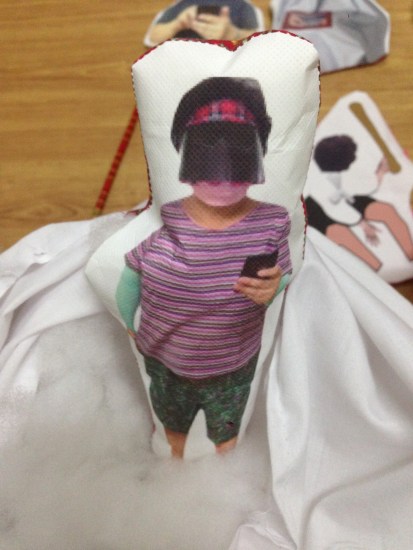
아줌마 이미지를 Pixcel이라는 앱을 통해 만들어 보았습니다. 다음에는 좀 더 정교하게 한 번 더 만들어 볼께요. 아줌마 화이팅!

I tried to make an animated ajumma by using an app called ‘Pixcel’ on my smartphone. I will try better ‘ajummarous animated image’ for next time. Ajumma Fighting!

Have a good weekend all ajummas! 모든 아줌마분들! 좋은 주말 보내세요!

Have a good weekend all ajummas!

좋은 주말 보내시길 바랍니다. 우리 아줌마분들!

image

‘Ajumma Locksmith’ in Seoul

‘아줌마 열쇠’ 서울의 한 열쇠가게 이름

Women in Korea (3) IMF 1997

We had IMF in 1997. IMF (International Monetary Funds), this economic crisis leads to the “reversal of traditional gender roles and endangered the stability of the patriarchal nuclear family system” (Kim 2008, p.392). Due to the worsening of economic conditions, women had to come out of the houses to work rather than being good mothers and wives at home. They had to be good mothers and wives at home and at the same time, these women had to work outside of home to earn money. In other words, women in Korea during IMF, they became breadwinners as well. However, most ajumma were part time  lower-paid workers such as cashers at supermarkets.

Screen Shot 2016-01-15 at 4.23.54 PM

image from the movie ‘Cart (2014)’, <http://www.asiae.co.kr/news/view.htm?idxno=2014103011094055036>

Even though they were part time workers who got low pay, they worked really hard because they believed that the improvement of each family’s economic condition can be a cornerstone of Korea’s economic growth. People in Korea during IMF, they tried to overcome the IMF together. However, still it blew to every family’s economy. In May 1998, more than 80% of households in Korea suffered very much in the reduction of income. Fathers lost their jobs so they could not fulfil the role of fathers and husbands in their family.

1101_b084_8.jpg

image from Monthly Chosun <https://monthly.chosun.com/client/news/viw.asp?nNewsNumb=201101100071>

In 1998, there were 42% increase of suicide rate compared to the previous year. Male had higher percentage than female in the report. It could be assume that fathers couldn’t able to do their duties to their families because of unemployments and crippling debts. Therefore, mass media encourages people to recognise the importance of their fathers in the family. For example, “save the head of the family”, “encourage men” and “support and cheer up our fathers”. Besides, people do various campaigns for the nation and gold collection was one of them. I will post about ‘gold collection’ campaign soon.


TV Commercial in 1997 by KIA motors “We can do it!”

Reference: (1) Kim, S 2008, ‘Feminist Discourse and the Hegemonic Role of Mass Media’, Feminist Media Studies, vol. 8, no. 4, pp. 391-406.


Digital swish of skirt

In the previous post, I talked about ‘Women in Korea (2)-1: swish of skirt in 1980s’. This education fever still remains in Korean society but mothers (ajummas) today followed different ways that I called ‘digital swish of skirt’. Compared with non-smartphone era which is from 1980s to early 2000, the use of smartphones change our life styles in many ways likewise the enthusiasm of education among ajummas. This means that ajummas could be able to get involved in supporting their children’s education easily through using their smartphones. There are various apps that helps mothers (ajummas) to share useful information about their children’s education for example, “Which Hak-won (private educational institution) do you go?“. This app provides people’s various opinions and useful information about private educational institutions for parents and their children. So it helps both parents and their children to choose better private educational institutions. This app determines the ranking of private educational institutions according to the actual statistical data. Parents can ask questions or answer others’ questions interactively through using app on their smartphones in real time.

Screen Shot 2016-01-13 at 7.42.07 PM.png

There are many types of apps for parents who concern their children’s education in Korea. I cannot enumerate every app in this blog but one thing that I can say is these types of apps for parents are increasing significantly. The term ‘swish of skirt’ is not used broadly today but I can see the swish of skirt phenomena still remains today. I call it ‘Digital swish of skirt’. Ajummas (mothers) are overly involved in their children’s education today through using education related apps on their smartphones. They becomes smart ajummas.

Women in Korea (1) 1970s

To talk about women in Korea is not easy and  complicated to explain in this blog post. However, one thing that I can say is Korean women became  great power to support whenever we have difficulties and they were backbone of the growth of Korean economy. So I will write about ‘Women in Korea’ and I categorised by chronological order because ‘Women in Korea’ is a big topic to write in one post.

(1)1970s (After the Korean War)

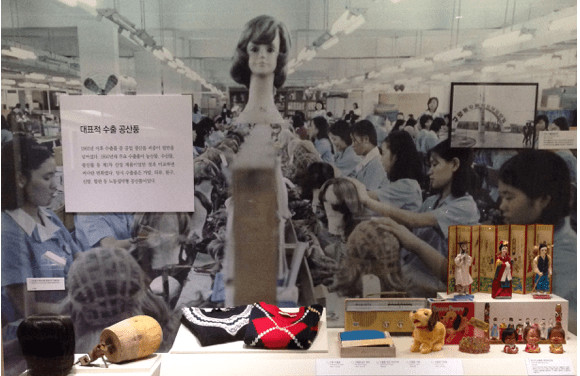
Screen Shot 2016-01-07 at 12.28.16 PMWomen in Korea, they have contributed to the country’s economic development. Just after the Korean War during 1950s to 1970s, large numbers of female factory workers made a significant contribution to export-led industrialisation. Today, there are so many things or almost everything is made in China, but during that time, especially 1970s made in Korea products were famous in the world. One of my aunty lives in the USA and she said that many of made in Korea products were easily found such as stuffed dolls (e.g. teddy bear), wigs, socks, etc.

Screen Shot 2016-01-07 at 12.38.03 PM.png

Representative Exports during 1960s-1970s (taken in Seoul Museum of History)

Young girls worked in the factory instead of going to schools because they had to earn money for their family. They stayed in the factory dormitory and worked all day. Those young girls are now became ajummas today and they are aged over 60s like my mother’s generation.

Screen Shot 2016-01-07 at 12.28.26 PM

I will talk about ‘Women in Korea (2) Before IMF (International Monetary Funds)’ for next post.

Ajumma vs Nuna (older/big sister)

It’s 2016!

I start blogging since last December as a part of my PhD project, ‘Smart Ajumma’. In this blog, I would like to introduce various photos of ajummas in Korea and the blog posts are more similar to written records like diary rather than academic thesis. I hope people in Korea and anywhere get chances to comprehend who ajummas are and redefine what ajummas are through having interactive communication on this blog for example making comments. So please come to this blog often and feel free to share your ideas about ajummas or Korea. Happy New Year again!

I went to Namdaemun Market today. Namdaemun Market is always my favourite to visit since I was very young (with my mum). There are small old shops in every alley ways and especially I loved to buying some imported snacks (e.g. sweets from USA) in Namdaemun. These days I can find them everywhere but it was rarely sold when I was very young.

Going to Namdaemum Market is not difficult by public transport (e.g. bus) from my town. Whenever I go to Namdaemun Market, I can have a chance to visit variety of shops in Myeong-dong because they are located close with each other. In addition, I can see many ajummas in Namdaemun Market especially a small shopping mall that is called ‘Common Plaza’. They sell mostly women’s clothing especially for middle-aged women, ajummas, whose age range is around over 50. Whenever I visit there, I never seen a male or a  younger female customer except me.

In that shopping mall (it is located in Namdaemun Market), I feel like I’m visiting an island of ajummas. It looks like someone bring all of those ajumma customers from somewhere (special planet) we never been before. So many ajummas with having similar hair styles, fashion styles and even body figures! (similar height etc.)

Screen Shot 2016-01-04 at 6.40.21 PM

Screen Shot 2016-01-04 at 6.40.15 PM

Unfortunately, I couldn’t see many ajummas today because the weather wasn’t good and I arrived there almost at closing time (1:30 pm). For this reason, I headed to the street stall where it sells red bean porridge nearby that shopping mall. There are no table neither chair but customers still can enjoy their porridge. And most customers of this porridge stall are ajummas. Thus, I brought my porridge and leaned against the wall like other ajummas also do.

Then, a young male was selling cosmetics to those ajummas who were having red bean porridge. Those ajummas looked like over 50 and 60 years old. That young male seller said,

“Nuna! (older/big sister) You have pretty face! Why don’t you concern ‘skin care’ with this product! I guarantee you will be look like 10 years younger than your actual age with using this product!”

Ajummas were laughing together and one of them bought a facial cream from him. This ajumma asked the young male seller taking a selfie together and they took a photo with her smartphone. (Well, that young male seller is a lesser-known comedian so this ajumma wanted to take a selfie together). After selling a facial cream to one of ajummas, he left that place and said to ajummas,

“Nuna! I hope to see you all for next time again!”

Ajummas continued to eat red bean porridge and talked about that comedian who sold cosmetics few minutes ago. I really enjoyed that situation as an observer. How amazing this situation is! The ajummas and a young male seller who wanted to sell cosmetic products to ajummas! He called ajummas as ‘Nuna!’ instead of ‘Ajumma!’ and those ajummas were happy to be called as ‘Nuna!’ rather than ‘Ajumma’.

Yes, ajummas are women. If he call them, “Ajumma!”, was he still able to sell the facial cream? I think these ajummas felt happy because that young male seller call them as ‘Nuna’. Of course these ajummas know this young male seller call them as ‘Nuna’ because he tried to make these ajummas happy as a sort of marketing strategies. However, ajummas still enjoy that moments through communicating with other ajummas and a young male seller.

Why ‘ajumma’ became an unwelcome word to be called among women in Korea?

Screen Shot 2016-01-04 at 6.40.26 PMScreen Shot 2016-01-04 at 6.40.33 PM

Screen Shot 2016-01-04 at 6.40.05 PM

The return of an ajumma

image.jpeg

This photo is a campaign poster for the National Assembly that I’ve taken on Sunday. It says, “The return of an Ajumma”

I reckon ajummas are normally recognised as superwomen who care their family, friends and neighbors. And they know how to enjoy their lives in their own ways as well.

I’m not interested in this party and the election rather I’m posting this photo only because she uses the ‘ajumma’ and their identity for the campaign. That’s it. And this poster tells how ajummas are recognised among people in Korea in a positive way.

“The return of an ajumma”

Well, they didn’t return to us. They are always with us.

Sorry, I’m not an ajumma

#1

In several years ago, I worked as a casual lecturer at university in Seoul. At that time, I was preparing for applying PhD and some required documents for the applications (i.e. research proposal) were stored in my laptop. The document folder for research proposal was named ‘ajumma’ and it was on my laptop. One day, after the class two students came to me and hesitated for a moment. Few seconds later, they finally asked, “Are you an ajumma?”

I said “No, why?”

“Then why you have so many ajumma folders on your laptop?”

I replied “No, I’m not, I’m not an ajumma (laugh)”


They thought I was an ajumma for sure because there are so many folders named as ‘ajumma’.

image

#2

During my field research in Seoul, South Korea, I participated in the ‘ajumma day'(http://www.azoomma.com) on 31st May. I suffered from chronic back pain so I walked very slowly at that time so I almost missed the elevator. (I planned to catch the next elevator because I didn’t want to run or walk faster)

Suddenly, a caretaker for that building saw me and he tried to hold an elevator for me. The elevator was jam packed with ajummas and all of them includes a kind caretaker were waiting for me. (Oh no)

And he yelled at me, “Ajumma!! I hold an elevator for you so walk slowly!!”

I looked around and I realised that ‘ajumma’ was me. Yes, that ajumma was me…I was an ajumma…he reckon…

Thanks for his kindness, I could catch that elevator but I felt awkward. I know I research about ajummas and I really admire them in many ways but when I was called as an ajumma by someone, I felt strange. I reckon maybe I still have prejudice about ajummas? I still think being recognised as an ajumma is unwelcome thing? Why did I feel strange?


The third gender

Ajummarous elements are prevalent but stereotyped view about ajummas somewhat disdained ajummas. This perspective on an ajumma that judges ajummas by their characteristic appearances can cause a slated and biased view.

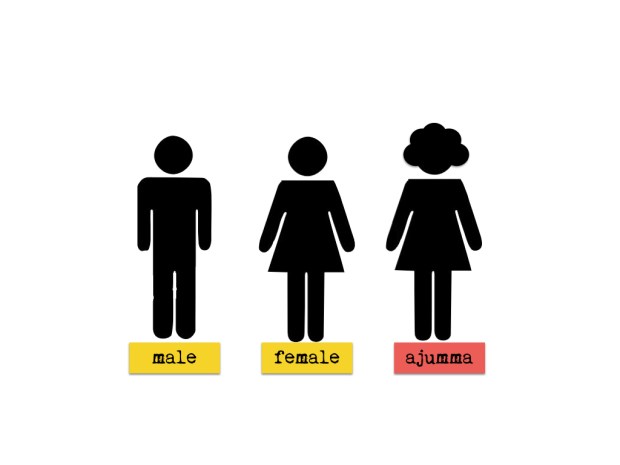
In a popular Korean joke, there are three different genders-men, women and ajumma. Ajumma is categorised as the third gender-neither male nor female. Analogically, we can assume that the general awareness of Korean society about the collectiveness of ajummas’ existence and the distinct characteristics of ajummas are not very positive. In other words, ajumma is recognised as not a woman, rather just ajumma itself.

3rdgender.001

For next post, I will give you examples that explain how ajummas are treated in Korea (with biased views about them).