Selca or Selfie? (1)Haduri

Yes, I bet you know what selfie is. Selfie is a self-portrait photograph taken with digital camera or camera phone (e.g. smartphone). The term selfie is now used by almost everyone who take selfie by using their digital cameras or camera phones. Taking, uploading and sharing selfies on various social media such as Instagram is a sort of everyday practices for us now. Besides, like the selfie sticks or selfie drones enhance people to get better (of course there are increases of accidents because of taking selfies in dangerous locations) selfies. However, I’m still familiar with using the term selca than selfie.

Selca means ‘self camera’ and it is equivalent to the term selfie. In Korea, we used to use the word selca in last (almost) 10 years ago. People went to PC Bang (room) to use computers (e.g.PC games, Webcam) during 1990 to 2000. In PC Bang, people took selca on Haduri and webcam on PC. Haduri is a webcam software for PC so people were able to take their selca through seperate webcams on PC or builtin webcams in PC. As the growth of the Internet penetration and various online clubs or online communities, more and more people use Haduri to take their selcas and to show them to their friends in online clubs or online communities. Since that time, people knew how to take ‘better selca’ through using Haduri. In other words, they know the best ‘angle’ to get the best selca on Haduri.

20151113212138_34.jpg
example of Haduri selca

image from <http://www.sportsseoul.com/news/read/319719>

More about Haduri,

(1)Haduri website http://www.haduri.com

(2)What is Haduri? https://afspot.net/forum/topic/307970-what-is-haduri/

Washing machine in Ppal-let-ter (Wash place)

20070917152714.928.0.jpg

LG Tromm washing machine is in Hong Do Kim’s Wash place (late 18th century), 2015

image from <http://www.newswire.co.kr/newsRead.php?no=282581>

빨래터와 아줌마는 억지다.

스마트아줌마의 연구를 통해서 현재를 살아가는 우리의 아줌마들은 어쩌면 디지털 빨래터라는 공간에서 그들만의 소통을 이어가고 있는 것인지도 모른다고 생각했다. 그 생각을 크리에이티브 프로젝트로 표현해내기 위해 비디오로 만들었고 그렇게 스마트아줌마와 디지털 빨래터는 함께 보여지고 설명되어져야 하는 연구 프로젝트이다. 빨래터라는 공간을 생각하면서 누군가는 억지스럽다고 말할수도 있겠다 싶긴 했다. 빨래터와 여성의 소통공간을 연결시켜서 이야기하는 것 그리고 빨래터와 디지털 커뮤니케이션을 연결시켜 이야기하는 것에 대해 확신이 없었던 것이 아니라, 늘 새로운 생각은 누군가의 비판을 받게 마련이기 때문에 걱정이 들었던 것이었다. 하지만 이러한 누군가의 ‘공격’을 막아내기 위한 것이 바로 연구논문이고, 그 논문을 통해서 내가 왜 이시대의 아줌마들을 스마트 아줌마라고, 그리고 그들만의 소통공간이 바로 디지털 빨래터인지에 대해 조목조목 대답하기 위해 오랫동안 문헌연구를 하고, 질적/양적 연구를 했던 것이다.

빨래터에 대한 억지라는 부분. 누군가 그랬다. 빨래터라는 곳이 그 당시 여성이 가사노동, 육아, 시집살이등의 고단한 삶을 풀어내는 매우 슬픈 장소인데, 이 연구에서는 빨래터라는 공간을 너무 단순하게 즐거운 곳으로 표현했다 라고. 우선 빨래터가 여성들의 즐거운 소통공간이라고 표현한것은 맞고, 내가 의도한 바이다. 빨래터는 여성들이 이야기를 풀어놓는 공간임이 분명하다. 물론, 기쁨, 슬픔, 고달픔등의 여러 감정이 섞인 그들만의 인생이야기들이 풀리는 곳이다. 하지만 왜 슬픈장소여야만 하는지? 아직도 여성의 인권이 존중받기위해서는 더 많은 사회적인 노력과 개선이 필요하지만, 그 당시 즉 1950-60년도에는 지금보다 더 열악한 여성의 삶이 있었던건 사실이다. 하지만 과연 무조건 여성의 삶을 슬프게만 혹은 불쌍하게만 봐야하는건지? 또한 이 연구는 ‘아줌마들의 소통과 소통공간’에 관한 연구이지 ‘한국 여성의 역사’ 이런게 아닌데, 여성학을 너무 가볍게 다뤘다는 둥, 나이브하게 일차원적인 접근으로 여성을 우습게 보고 있다는 등 (excuse me?)의 ‘비판’이 아닌 ‘비난’이라고 생각되었다.

여성에 대한 연구는 다양하다. 여성의 인권에 관한 연구도 중요하고 또한 훌륭한 연구들이 계속 진행되고있지만, 나는 대부분의 미디어 연구에서 늘 제외되었던 중년여성과 그들의 디지털 미디어 사용에 대한 연구를 해보고 싶었던 이유로 이 연구를 하게 된 것이다. 아줌마라는 단어로 중년여성의 이미지를 깎아내린다는 누군가의 말, 아마 그 사람에겐 ‘아줌마’라는 존재가 매우 하찮게 자리잡고 있나보다. 아줌마라는 호칭 자체가 여성을 우습게 보는 말이라고 생각하는 그 사람 자체가 이미 아줌마에 대한 편견과 오해를 가득품고 살아가는 사람이라고 생각할 수 밖에. 요즘은 교육수준이 높아지고 패션감각이 뛰어나서 아줌마같은 사람들이 별로 없다는 말, 그럼 아줌마는 교육수준이 낮고 패션감각이 뒤떨어지는 중년여성인가요? 여성 스스로가 아줌마에 대한 편견을 계속 낳고 있는건 아닌지…생각해 본다. 씁쓸하다.

(전에 써 놓은 글 중에서)


Ajummas and plastic surgery

I’m not sure whether I can write about the topic of ‘plastic surgery’ in this blog or not. But I think plastic surgery could be categorised as a part of ‘beauty’ or ‘beauty industry’ in Korea (and many other countries) so I can concern about this issue in this blog. Well, plastic surgery is a very common thing for most Koreans (not every Koreans I have to say) in these days. There are various types of plastic surgery that help people to be satisfied with their appearances and sometimes inner sides,too. As they change or (I can say) upgrade their appliances through plastic surgery, people are able to have more confidences than before (especially, people who are not happy with their appearances). Of course there is side effect of plastic surgery but one thing we surely know that plastic surgery is a sort of popular culture in Korea now.

Before I wrote this blog entry today, I did research how ajummas concern about plastic surgery in Korea. Well, I still need to do a lot more and deeper research about the relationship between ajummas and plastic surgery, but one thing I found that many of ajummas are interested in doing plastic surgery and many of them also already experienced of having plastic surgery as well. And (I need to do more research about this but at this stage but) I found that the purposes of doing plastic surgery and preferred body part (or face part) are quite different according to different age group. For example,  married middle aged women (it didn’t specify the actual age range in its report) wanted to do liposuction surgery (especially for reducing abdominal fat) the most according to the report. (http://bntnews.hankyung.com/apps/news?popup=0&nid=05&c1=05&c2=05&c3=00&nkey=201103291205063&mode=sub_view)

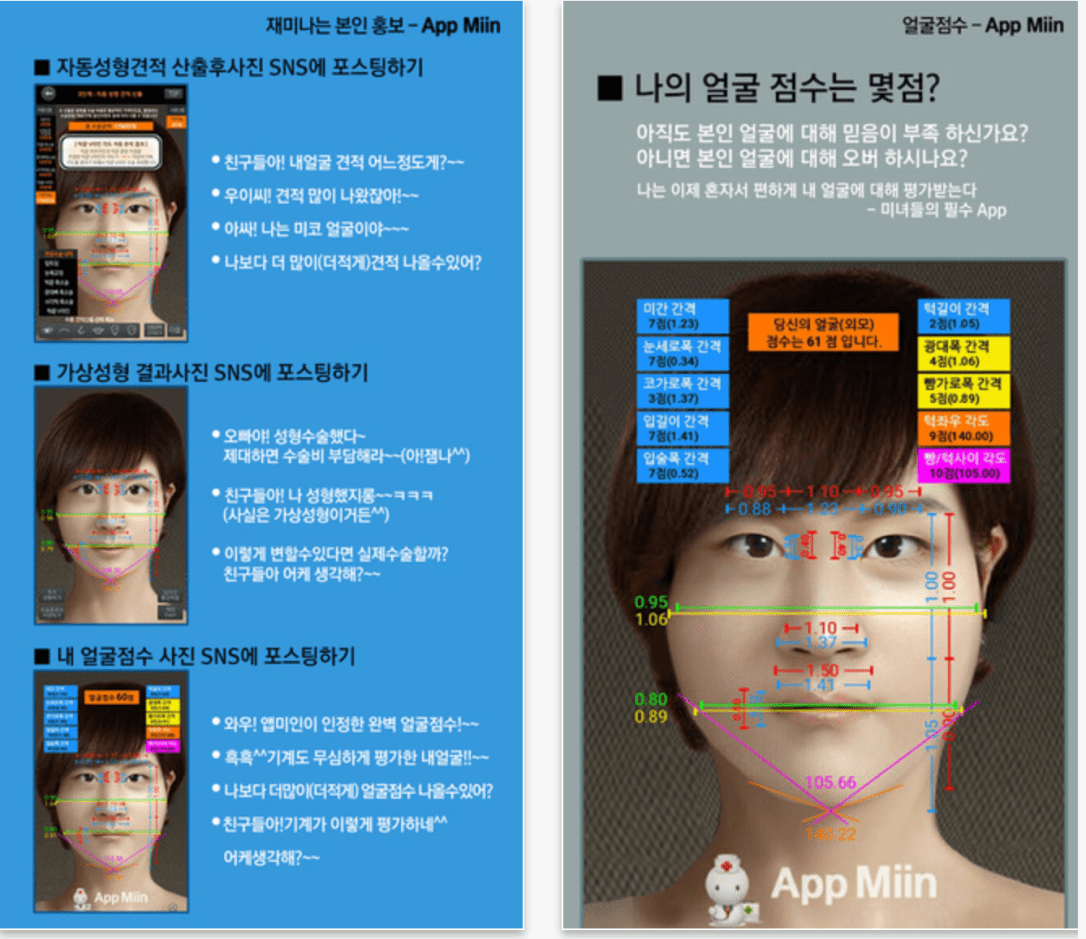
In addition, there are apps for plastic surgery as well. I just found some of them and need to research more about this ‘beauty app’ asap. Here is an example of plastic surgery app that is called, ‘App Miin’. App is for application and Miin means a beauty in Korean. So it means application beauty. Users are able to try virtual plastic surgery through using this app and they can make estimate for the plastic surgery in the future as well.

Screen Shot 2016-07-05 at 7.28.03 PM.png

(click the image above, it goes to the website of App Miin, https://itunes.apple.com/kr/app/aebmiin)

I take a profound interest  in the things that are related to beauty industry, women and digital media. Thus I keep thinking about the research that I will do for the next. (another research idea is in my mind, too)

Ajummas are in Live Photo

Music credit: Peppertones, ‘For all dancers’ (less than 5 seconds, looping)

I just played with the keynote to create a live photo video for this blog. All the videos are made with (include Digital Ppal-let-ter project) photos and keynote. This looping live photo video reminds me a rhizome movie (by Adrian Miles) that we’ve learnt at RMIT almost 10 years ago. I’m thinking to create short video clips (like this) through using keynote, live photo and maybe photo collage.


#Ajummastagram in everyday

Instagram is now a big thing which is known as a visual communication platform. Before I use the Instagram, Flickr was one of the biggest visual communication platform through photo sharing on each user’s Flickr page. In my case, I uploaded various photos that were mostly taken by professional cameras (includes film and digital cameras). Compared with these days, Flickr users mostly uploaded photos that have more specified topics or stories than mundane and ordinary records by Instagram users. And Instagram is a sort of a common ‘thing’ or “ambient play” (Hjorth 2015) which people take photos, upload them and share them with others in their everyday life through using their smartphones (or computers). They rather record everyday objects, every moment and everything they want to take,upload and share. Thus, Instagram is not just a photo sharing application. It becomes a visual communication platform that allows its users to communicate with each other visually through sharing photos and videos. Furthermore, using hashtag (#) enables them to get to know other users whom never met before. Sharing the same interest through hashtag allows these strangers to have chance to know each other slightly.


Screen Shot 2016-06-26 at 7.46.51 PM
(This page above was captured on Instagram website  <https://www.instagram.com/explore/tags/아줌마스타그램/> and I put stickers on each face for privacy reasons)

There are innumerable kinds of hashtags are sharing among Instagram users every second. I can’t enumerate every single hashtag in this post but I would like to talk about hashtag of ajummas in Korea. Yes, there are hashtags about ajummas as well. These hashtags are mostly written in Korean (#Ajummastagram, #Ajumma, #Jummagram, etc.). I do check the hashtags about ajummas almost everyday because I’m curious how many Ajummas are now using Instagram. Well, there are many Ajumma hashtags but these ajummas are very young. I mean Ajummas in Instagram are younger than ajummas in my research. I think the age range of these ajummas in Instagram are from mid 20s to mid 40s. Compared with ajummas in my research, they are from mid 40s to late 60s (yes, older than ajummas in Instagram). The ajummas in Instagram are more likely a group of ‘mom’ I can tell. They share photos of babygoods, restaurants, shopping tips (cosmetics, shoes, sale information), selfies, etc.

Surprisingly, they put themselves as ‘ajummas’ in hashtags. I can’t say ‘everyone’ but most of them (married women who are between 20s to 40s) don’t want to be called as ajummas in general through my research and various media. But why do they call themselves as ajummas??? I don’t know why they identify themselves as ajummas in Instagram (mobile space) but I keep thinking about this. And another interest things is that Instagram is not as popular as Kakao Talk or Kakao Story for ajummas who are between mid 50s to late 60s. It is hardly found the ajumma users of those ages in Instagram yet. Why?

I should keep thinking about this.


Ajumma fans at the concert, so what?

Fandom culture is very strong in Korea as well as other countries. A variety types of fan clubs are formed and those fans do many activities for their ‘stars’. Like other communities, fan clubs are considered as one of communities with people who got the similar interests each other. In this case, similar interest should be a ‘star’. A star could be sportswoman/man, actors, artists, singers, models, writers, filmmakers, politicians (maybe?), or even characters of animation or comic books whom are living in the imaginary space. Among these examples of fan club, I would like to talk about a case of one of band’s fan club in Korea.

Twitter is a sort of an intersection for people to share common or uncommon ideas and thoughts. I didn’t use tweeter for last few years but now I’m one of active users of tweeter. There are many reasons why I use twitter but one reason could be that it is useful to share information from other fans about my favourite singer. At the same time, we could share the concert review with each other after every concert. Actually I’m not a very active fan like other fans, but I could be an active fan through interactive communication with other fans on twitter whom I followed. Even though we never tweetup before but we meet almost everyday on twitter. It is so glad to know someone who have same interests with me and share our thoughts about the same thing together.

However, it happened few days ago. There is another online community website for this singer and a sort of a quarrel between fans was occurred. These fans argue about something related to the singer on the BBS. I have no interest in this online community website at all, so I didn’t know about this website that much. But one thing I knew about this website is that most of them who take very active roles are quite younger than other old fans of the singer. Anyway, there’s a quarrel between fans and one of fans wrote her or his thought on the BBS. I was outraged at the way she/he had written. Here is a sentence that makes me uncomfortable.

“Some of old fans are annoying and they’re mean towards younger fans, and you know what? The concert was teeming with ajumma fans!!!”

Well, it was interesting to me to know what younger people consider old woman (they think over 30s is ‘old’, she/he wrote). And it’s not shocking the way this kind of people think about ajummas or old woman because I’m a researcher or a sort of expert of ajumma research, so I know. But I was angry to read that sentence because of their old-fashioned mind or thinking about women, especially old women (over 30s is OLD? of course it is not young age but not too old yet?).

TI000080752_APP.jpg

(Ajumma fans at the Yong Pil Cho‘s concert, image from: http://5505.ohmynews.com, or click the image to visit the website)

What’s wrong with old women? (over 30s?) Is there any law and regulations that old women (over 30s) are prohibited to come to the concert? And what’s wrong with ajummas? Okay, if they’re official ajummas, SO WHAT? You know what? The singers you like are over 30s too. Then, why do you think only female fans who are over 30s should be treated as annoying ajummas? As I mentioned in previous post, I think they have a sort of misogynistic perspective towards women, especially non-younger women.

According to them, I’m an ajumma because I’m over 30. But I will keep going and enjoying their concert as much as I can. I don’t care what others think about ajummas (women who are over 30s, they said). But one thing that I feel disappointed is their prejudiced and outdated view of ajummas. Oh, don’t forget! You’ll be an ajumma very soon, too.


Grandparenting (2)

Grandparenting is not an easy thing at all. But it is unavoidable to both parents and their married sons and daughters because of the poor childcare system for working parents in Korea. There are public and private childcare system that people can get in Korea, but they’re still insufficient to support those working parents. Besides, the reason why those working parents ask their parents to raise their children is because most of them believe that being raised by grandparents is more truthworthy in many ways than a babysitter from the list. I mean, grandparents are more reliable to place their children than babysitters for them. (Of course there are many wonderful babysitters!) Because of many reasons (I can’t write every single reason why people ask their parents to raise their children), grandparenting is becoming a very common thing in Korea and many of my neighbours are actually spend the most of the day time with their grandchildren, I can see. These grandparents are professional at childrearing or babysitting because they’ve already done before for their children. They are experienced parents so they should be better than first time parents (their son and daughter) in childrearing. However, there is a saying, ‘Ten years is an epoch’, various things were disappeared and newly created again and again. Childrearing is not an exception of being affected by the development of technology.

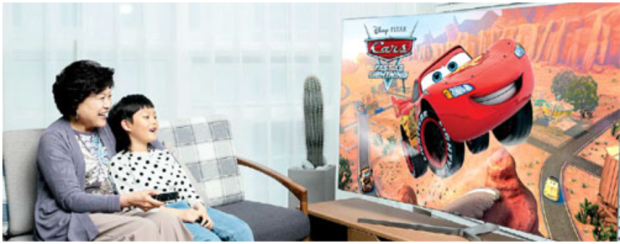
The fundamentals of childrearing is still the same, but the ways of childrearing and the tools for childrearing are evolved rapidly. In other words, grandparents are now making use of the new tools to get new ways of childrearing for their grandchildren. For example, they  do mobile shopping to order baby goods, show mobile audio-visual programs for kids and to have mobile chat with their son and daughter about grandchild through using their smart devices (i.e. smartphones) It is called ‘Smart Parenting’. The photo below shows that a grandmother enjoy watching animation on Smart TV with her grandson. People can get various contents especially for their grandchild through Smart TV.

Screen Shot 2016-06-21 at 11.30.58 AM.png

(Click the image then it goes direct to the webpage about Smart TV and grandparenting, image from http://vip.mk.co.kr/news/view/21/20/1397293.html)

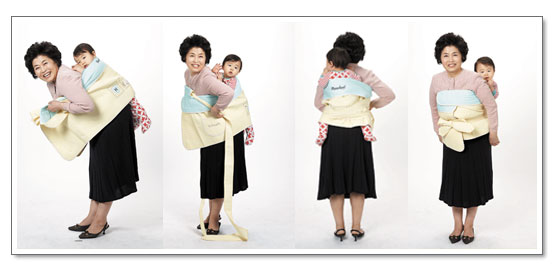
According to the report of mobile shopping site, Tmon (http://tmon.co.kr), the analysis of the sales of babygoods by age group showed that customers who are aged over 50s are increased significantly  compared with other age groups. The number 1 item they purchased is Podaegi (baby carrier), http://www.ticketmonster.co.kr.  (click the link if you want to see that actual product they purchased)

201303_podaegi2.jpg

(This is a podaegi in Korea, image from http://namyangi.com (click the image to see the original webpage))

Besides, the mobile shopping for grandchildren is not only limited to Korea. If you read this article on ‘grandparents.about.com‘ it tells you about ‘6 ways your smartphone can help you shop for grandchildren’. I will continue to talk more about ‘grandparenting’ and digital media in the next post.

Grandparenting (1)

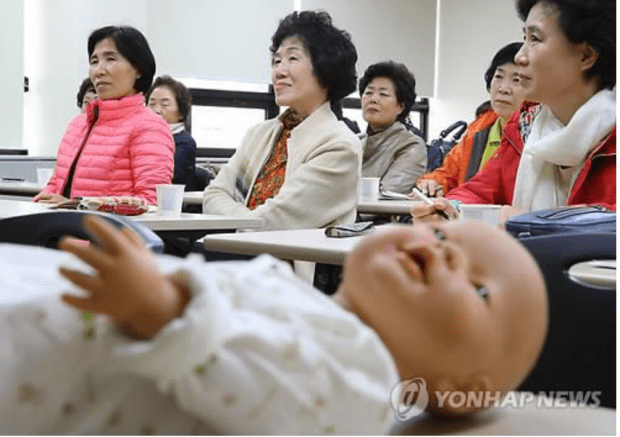
It is busy in the morning because their grandson comes every morning around 8 am. A grandmother walks her grandson to the kindergarten by 9 am. Until 2pm, it is her free time. At 2 pm, she picks up her little grandson from the kindergarten, they head to home and a grandmother prepares snacks for him. They play together by watching TV, reading books, or playing game on a grandmother’s smartphone. At 6 pm, they have a dinner together and finally his parents come back home to pick up their son.

Screen Shot 2016-06-16 at 12.49.48 PM.png

(image from Yonhapnews.co.kr)


This is a summary of daily life of a normal grandparent in Korea today. Of course, I don’t mean all Korean grandparents are doing ‘grandparenting’ now.But I can say that the number of grandparents are grandprenting for their sons and daughters, who are unable to childrearing because most of people in Korea are now two-career families. At the same time, the shortage of day care centres is a major obstacle for these working parents in Korea. For this reason, many of young parents (I mean younger generation than their parents’ generation- over 60 years old) ask  their parents to take care of their children.

In my aunty’s case, she also does grandparenting during day time for 5 days a week. She knew how to take care of her grandchild because she already done with her children many years ago. But, the childrearing these days needs more variety.

Ajumma-Selca by Incheong Lee 2008

Screen Shot 2016-06-13 at 10.49.48 AM

(Click the photo above, there are more photos of Ajumma-Selca and information about this project (but in Korean))

I found Korean artist Incheong Lee’s Ajumma-Selca by chance this morning. There aren’t enough references or related articles about her ‘Ajumma-Selca’ but I realised that how her artwork and Digital Ppal-let-ter (and Smart Ajumma research) are similar with each other in some ways. Of course these two different project are about Ajummas but they’re not only talking about a profound discourse of Ajummas. Rather I (and maybe she as well) tried to express the daily life of ajummas pleasantly. (I know there was, is and will be a controversy over talking about ajummas, using the title of ajummas, and etc.)

Anyway, Lee’s Ajumma-Selca is about a tiring and tedious (or sometimes enjoyable as well) daily life of ajummas. She put the wooden-ajumma doll in the situated frame (e.g. kitchen) of photos to reflect her (or other ajummas) lives. Thus, the each photo is a sort of ‘ajumma-selca’ that shows ajumma-selves through a wooden ajumma doll.


아줌마-셀카, 이인청 2008


Screen Shot 2016-06-13 at 10.49.48 AM

(위 그림을 클릭하면 이인청,아줌마-셀카에 대한 자세한 정보가 나와있는 네오룩 홈페이지로 이동합니다)

이인청 작가의 아줌마-셀카 라는 작품을 우연히 보게되었다. 관련자료가 충분하지는 않지만 이 전시를 다녀온 분들의 개인적인 글, 뉴스기사 그리고 작품해설에 실려있는 작가의 의도등을 읽어보면서 내가 이 아줌마 연구를 하고 있는 이유와 이 작품들이 몇몇 닮아있음이 보였다. 아줌마에 대한 위대하고 심오한 담론을 끌어내기 위함도 중요하지만, 나는 스마트아줌마 그리고 디지털빨래터라는 프로젝트를 통해서 우리의 지금 현시대를 살아가는 아줌마들의 모습을 유쾌하게 풀어내어서 보여주고 싶었다. (물론 아직도 지금도 아니 이후에도 아줌마를 단순히(그들의 시각에서) 유쾌하게 풀어내는 것에 대한 논쟁은 계속 될지도 모르지만)

이인청 작가의 아줌마-셀카는, 고되고 같은일이 반복되는 지루한 아줌마의 일상을 ‘목각으로 만든 아줌마’를 이용하여 보여주고 있다. 사진속의 아줌마의 모습이 곧 우리 아줌마들의 모습을 보여주는 아줌마-셀카인 것이다.


Yakult Ajumma is now on The Wall Street Journal!

Screen Shot 2016-06-08 at 8.13.39 PM

(Click the image to read the news article about Yakult Ajumma by The Wall Street Journal)


The Wall Street Journal reported about Korean Yakult Ajumma (delivery women they described) and their mobile yakult cart. It is so exciting to read about our Yakult Ajumma in the wall street journal! I’ve already written about them in my blog, ‘Smart Yakult Ajumma(25/01/2016)‘.