Kakao Talk vs Wash place

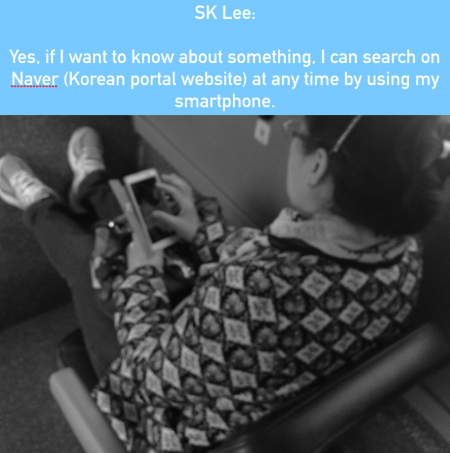
After survey and Focus group interview, I suddenly realised that Kakao Talk can be a women’s communal space in these days. Of course Kakao Talk is not designed for only women and many people use it every day regardless of the age and genders. However, their group chat rooms, the chat rooms for ajummas where they’ve created and they’re involved in. That can be a women’s communal place, I reckon. So I started to find a women’s communal spaces. Hair shop, Sauna, etc. But I want to find a ‘Korean’ women’s communal spaces. For this reason, I found the wash place.

Screen Shot 2016-02-19 at 12.03.16 PM


Screen Shot 2016-02-19 at 12.03.05 PM

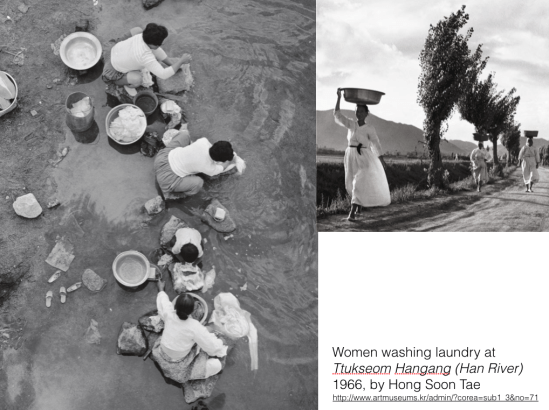
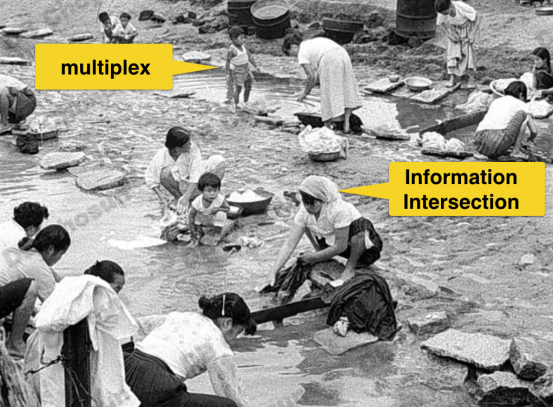
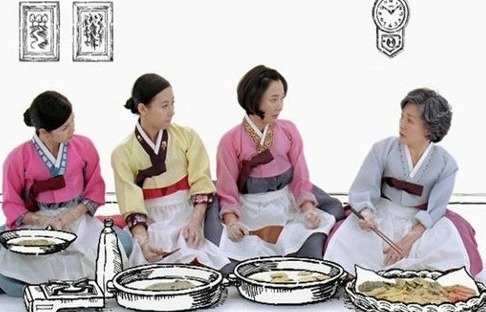
Of course, every country has or had the wash place. But, Korean wash place was a bit different from any others’. We don’t have to go to the wash place to do laundry today due to almost every house have technologically developed and upgraded washing machines. Or there are coin laundry shops nearby our houses. Whereas, back in 1960s, going to the wash place and doing the laundry is must do thing for women in Korea. And this wash place was like a multiplex where women not only do their laundry but also meeting others and even taking bathes.

Screen Shot 2016-02-19 at 12.03.27 PM

They don’t make an appointment for meetings, but they expected to meet someone whoever they go to the wash place and of course they could meet someone in that place. As a social place, women in Korea they could share useful information or sometimes just mundane gossips about their mother-in-law, etc.

Thus, wash place for women in Korea during 1960s was not a place only for doing their laundry. It is more like a communal space at that time. Wash place during 1960s in Korea was considered as a ‘women-only communal space’ even though there was no law and regulations that prohibited men to come in.

Kakao Talk and Ajumma (3)

Yes, there are so many things that I would like to talk about Kakao Talk (Ka-Talk). And plus, the relationship between Kakao Talk and Ajumma is much more interesting to talk about. Through survey and focus group interview, I realised that Kakao Talk became one of the key mobile communication apps among ajummas in Korea. More than 95% of ajumma participants responded that they’re using Kakao Talk the most among various other apps on their smartphones. They were allowed to choose multiple answers for the question of ‘Which applications do you use the most’ in the survey. Anyway Kakao Talk ranked the top application among ajumma participants for my research. They use the Kakao Talk mostly due to its convenience and instantaneity. They usually use the group chat room where many people can talk together in the same place at the same time. I can’t say all of ajummas in Korea are now using Kakao Talk as their primary communicative application, but I can say that some of ajummas bought smartphones to use Kakao Talk. My mom also did.

So, ajummas are having communication in both offline (e.g. cafe, restaurant, etc.) and online (e.g. Kakao Talk’s group chat room, blog, etc.). This means that their spaces for communication are extended from offline to online (mobile). And at the same time, they do have more opportunity to meet their contacts (friends or family) through various spaces (offline/online) without having barriers of time and space today. In other words, Kakao Talk’s group chat room allows ajummas to keep having their offline meetings continuously even though they cannot meet with each other face-t0-face. Also the communication in Kakao Talk’s group chat room leads ajummas to plan to have following offline meetings. So Kakao Talk’s group chat room is like a bridge which links between offline meetings and online meetings and pre-meetings and post-meetings.


Kakao Talk and Ajumma (2)

So now you know or you got an idea what Kakao Talk is through reading a previous post, ‘Kakao Talk and Ajumma (1)‘. I know it might be hard to understand what it is exactly before you actually use that application. If you know more about Kakao Talk, you should try to download Kakao Talk app and use it. It is a global and free service so anyone can use it through their smartphones. But I’m sure that using Kakao Talk in Korea have more various options (such as Kakao Shop, Kakao Pay etc.) that bring you to have a lot of fun. Anyway, try to use Kakao Talk first, I recommend.

Today, I want to talk about Kakao Talk more deeply. Having communication through using Kakao Talk is pervasive in Korea because it is a sort of main tool for communication in our everyday practices. In short, we communicate with each other on Kakao Talk everyday. So we say “Let’s do Ka-Talk!”, “Send me Ka-Talk!” or “See you in Ka-Talk!” etc.

참고이미지-1-카카오톡-4.0-스플래시-이미지Koreans love abbreviations and we call Ka-Talk instead of Kakao Talk. And when you see the sentence of “Let’s do Ka-Talk!”, you can tell ‘Ka-Talk’ is a kind of act. Ka-Talk in this case means ‘doing communication in Kakao Talk’s chat room’ or ‘we will talk about something in our Kakao Talk’s chat room’, etc. Thus the word Ka-Talk means not only one of applications, but also an actual action of having mobile communication in Kakao Talk’s chat room through using their smartphones.

In my experience, I could be connected to my parents and friends all the time because of using Kakao Talk. Even though we were physically separated from each other, we could still be together technologically or mentally in the third space (e.g. Kakao Talk’s chat rooms). Compared with few years ago when there were no smartphones or Kakao Talk’s, (pre-smartphone era, I named) I had to buy international phone card to call my parents in Korea every time. This (sort of) traditional way of phone call communication restricted our time and space whenever we have a talk on the phone. However, Kakao Talk sets us free from the barriers of time and space whenever we have conversations on Kakao Talk’s chat rooms. This means that we can do mobile communication on Kakao Talk’s chat room regardless of time and space if there is wifi connection. And it is free.

For next post, I will talk more about how ajummas use Kakao Talk with their family and friends.

Kakao Talk and Ajumma (1)

Have you heard about Kakao Talk? For me and Koreans Kakao Talk is an inextricable mobile communication app today. Kakao Talk is an application for smartphones which allow people to have instant mobile chatting without having barriers of time and space. If there is wifi connection with your smartphones, you can have message chatting, voice chatting, video chatting and sending various types of files (e.g. photos) in your chatting rooms. Kakao Talk is similar to WhatsApp , but Kakao Talk has more functions than WhatsApp. For example, Kakao Talk has Kakao Shop (buy gifticon), Kakao Pay, Kakao Style, Kakao TV, Kakao Taxi (you can call taxi through your Kakao Talk app whenever you need to take a taxi) and etc.

File 11-02-2016, 1 06 37 PM


File 11-02-2016, 1 06 56 PMVarious brands of ice cream shops you can choose and send gifticon through using Kakao Talk to your friends or family.

Gifticon has a diverse selection to choose from such as a range of clothes, accessories, foods, e-coupons for cafes or restaurants etc. People who receive gifticon from their friends through Kakao Talk, can simply show the e-code of those gifticon to the counter of the shops when they want to use them.

Kakao Talk is a one of apps for mobile communication on smartphones.  Kakao talk allows people to have constant mobile communication whenever they need and wherever they want to communicate with their contacts. It becomes a huge mobile communicative tool for Koreans. Group chat rooms are good example to explain how Kakao talk became a major mobile communicative application for Koreans. For example, companies have mobile meetings on their group chat rooms, family discusses their next meeting on their group chat rooms and especially ajummas love group chat rooms! Through using group chat rooms in Kakao Talk, people can do ‘group chatting’ with their friends or colleagues easily. They don’t have to send the same messages to each person one by one.

Screen Shot 2016-02-11 at 1.25.49 PM.png

Y Kim: 

Yes, Kakao Talk’s group chat room is so convenient to organise meetings with friends.

J Han:

All I need to do is just create a group chat room. And then it is very easy to send a message to everyone at once! It’s so easy!

Interviewees responses of a question about using group chat room of Kakao Talk

According to the interview above, the main reason to use group chat room of Kakao Talk was for sending messages to several friends at once and organising meetings as well. As it is easier to send the messages to everyone who are in the same group chat room, it is convenient to organise meetings without hassle rather than send the same messages to each person separately. Besides, people in the group chat room can discuss or manage together to set a place and time for a meeting with ease. This means that, everyone can see the content of conversation at one view and even though they might miss the conversation, people can come back to read those conversations at any time with their smartphones. The advantages of using Kakao Talk’s group chat room attracts ajummas who used to call to each friend to organise the regular meetings.

The beginning of every month, my mom’s smartphone gets busy because of Kakao Talk’s alarming sound. Her friends send Kakao Talk messages endlessly to organise their regular meeting. My mom wasn’t familiar with using her smartphone and Kakao Talk before. But now she is an expert of Kakao Talk! She purchased another cute emoticon for Kakao Talk few days ago. She told me that her friends got so many emoticons so my mom also want to buy another new released emoticon to send her friends in the group chat room. How cute she is! And how cute our ajummas are!


Holiday Syndrome?

Time flies and it’s already February in 2016! Of course we had new year holidays at the beginning of this year, January. However, we (Koreans) have another new year on this coming Monday (8th Feb 2016). From yesterday we’re having a new year holiday until mid of next week. Most people (non-Koreans) think this late new year is called ‘Chinese New Year’. It is so true but we say Korean new year or just Lunar new year. I love holiday (who doesn’t?) especially Korean holidays because I can meet my cousins, aunties, uncles etc. Sadly, my grandma had passed away two years ago so I can’t see her lovely smile any more but still I love to meet my relatives.

Whenever I say I love Korean holidays to my friends especially married ones, all of them told me, “if you are married, you couldn’t love Korean holidays any more, for sure!”. I know what they mean because this is very controversial topic for every Korean woman (especially married women). It is ‘Holiday Syndrome’!

File 6-02-2016, 4 55 21 PM.jpeg

Ajummas in the supermarket to do grocery shopping for Korean New Year 2016

Traditionally, we have a memorial service for ancestors (e.g. great-great-grandparents, great-grandparents, grandparents) on every Korean holiday such as Korean new year, Chuseok (Korean Thanksgiving day) etc. On these holidays, we have to prepare food for ancestral rites table and at the same time for ourselves (family members). This is very good Korean tradition to admire our ancestors on every Korean holiday and relatives could be able to reunite together regularly through enjoying these Korean holidays. However, there is a big problem.

As I mentioned before in my blog post about Women in Korea (2) Before IMF on 11th Jan 2016, Korean society was severe patriarchal society from 1980s to 1990s. Women (mothers, wives, ajummas) had to sacrifice their lives to support husbands and children. This happened in the past and now the society has been changed a lot. Women are also working outside and they push themselves hardly to build their careers. They’re not staying at home to support their family by sacrificing their lives any more. I don’t mean that sacrificing their lives to support husbands and children like our mothers in the past were worthless. I mean the women in today have more opportunities to build their careers than 1980s so they can’t just be a stay-at-home mother rather they should work outside for their careers.

However, the problem is that the social structure and people’s mind haven’t changed a lot. It is like we can do real-time free video chatting through our smartphones  but people still use only voice calling with their high-tech smartphones. Society forces women to build their careers and get higher education but this society doesn’t allow women to be free from their family affairs that the society thinks ‘women’s full time job’. This can be a jump of logic but I think Korea is still very much patriarchal society even though there are so many opportunities for women, especially married women to work outside to build their careers compared with before in 1980s.

Holiday syndrome was also came from this patriarchal social structure, I think. All the daughters-in-law must go to their mothers-in-law’ houses to prepare food for their ancestors on every Korean holiday. And the problem is that many of husbands (or sons of mother-in-law, father-in-law or any ‘male’ human beings) don’t support, help or assist their wives at all. They think preparation of food for their ancestors are entirely ‘women’s duty’ for a very long time so these husbands never try to help their wives. Also mother-in-law don’t want their sons to work in the kitchen. This is also related to the Korean concept of predominance of man over woman. For this reason, there was a saying that ‘male must not come in the kitchen’. 
1.jpg

daughters in law with a mother in law prepare food
image from <http://blog.daum.net/youngho7995/99>

I understand how Korean society had the feudalistic convention of regarding men as superior to women in the past. But the past is past and now is now. We have to change our wrong feudalistic thinking about men and women. Korean holidays are more than worth to enjoy because we can learn our histories, traditions and even ‘Jeong’ with our family and relatives. We are also allowed to think about our ancestors and our roots as well. If our mothers and daughter in law can’t enjoy these holidays, preparing food for other family members can’t be women’s duty any more. It become just women’s stressful work.

110206_18_2.jpg

image from <http://news.kmib.co.kr>

The news reports about holiday syndrome of married women can be seen on TV or in the Internet every year. Our ajummas are suffering from Korean holiday syndrome for many years. The resolution is very simple. Holidays are for everyone. Please do prepare together and enjoy together.

‘Male must come in the kitchen. You’re more than welcome’

297223_8.jpg

image from Pocket Monster, <http://bbs2.ruliweb.daum.net/gaia/do/ruliweb/family/230/read?bbsId=G005&articleId=7994370&itemId=75>

Smartphones for Smart Ajummas

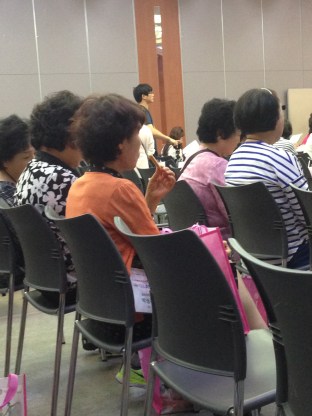
I did focus group interview with 10 ajummas from 2014 to 2015. I asked them ‘How has your life been changed after using smartphones?’ And here are answers of ajummas (aged mid-50 to mid-60). The photos are not related to the interviewees at all. I took photos of ajummas on the street randomly.

Screen Shot 2016-02-04 at 7.06.57 PM

Screen Shot 2016-02-04 at 7.25.23 PM

Screen Shot 2016-02-04 at 7.25.43 PM

Screen Shot 2016-02-04 at 7.25.55 PM


The findings from focus group interview with smart ajummas will be continued via this blog. Thank you.

Ajumma day

In this blog, everything is about ajummas because this blog is for ajummas and I really want to share who ajummas are to both Koreans who already knew about ajummas and others who never heard about ajummas before. In the previous blog postings, I  wrote mostly about ajummas who were in pre-smartphone era (times when ajummas didn’t use smartphones, from early-1960s to early-2000s). Now I will talk more about ‘Smart Ajummas’ because that is my biggest concern why I do this blogging and I would like to share ideas and information how Korean ajummas are becoming ‘Smart Ajummas’ and what these ‘Smart Ajummas’ are doing in their everyday lives with the use of smartphones.

ajummaday_blogimg.001.jpeg

Anyway, today I’ll talk about ‘Ajumma Day’ in Korea. Actually I had no idea what ‘Ajumma Day’ was before I’ve been there in 2014. Ajumma day was established in 2000 by one of the biggest website for ajummas azoomma.com and now many of ajummas in Korea love Ajumma day on the 31st May in every year. May is for family month in Korea for example, 5th is Children’s day, 8th is Parents’ day and 15th is Teacher’s day. And the reason why they chose the last day of May as Ajumma day is because Ajummas (mothers at home) are the most important people in every family so they chose the 31st of May (family month).

Sand art for Ajumma Day, 2014


Ajumma Manifesto (I translated from Korean)

As an ajumma in the digital information age of the 21st century, I pledge that I will endeavour to do my best as an independent being for myself, my family as well as the social changing and progress.

  1. I am an independent ajumma who loves myself and recognise the value of my life. I love myself the way I am now and I am proud of myself as an ajumma. I do my best to find the right to live happily as a woman.

  2. I am a leader ajumma who takes care of my family and lead the healthy family  culture creation. I do my best for family life that a wife and a husband loves, understands and helps each other.  Ajumma, as the pillar of the family, I practice from the small thing to create the healthy family culture.

  3. I am an active participant ajumma for social change and progress and I am concerned about neighbours all the time.  I always think about my neighbours beside the family egoism. I show compassion to my neighbours in need and stand valorously against social injustice

  4. I’m a active ajumma who recognise my role in the digital information age and challenge to the new world through the Internet. As a principal agent of home information, I endeavour to do my best to inform my children. I actively embrace new technology and try to use it according to social change and progress.

For the research, I went to Ajumma day in 2014 and I was really impressed. I was more than happy that there is a special day only for ajummas in Korea. And the programs for that day were fully enjoyable and at the same time they gave very useful information for ajummas. Most of all, I think this ajumma day encourages ajummas to be proud of themselves through various actives on that day. Also these ajummas can have opportunities to meet other ajummas who are in the same boat. So ajummas can become one big ajumma group through ajumma day or any other various events for ajummas.

IMG_3615

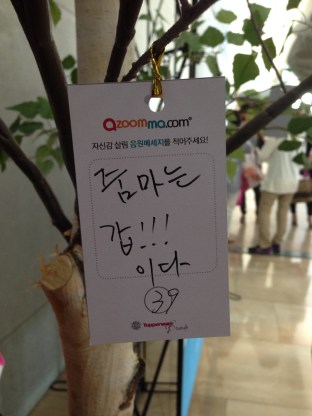
 “Ajumma is the best!!” a message from a wish tree on Ajumma Day, 31st May 2014
IMG_3623
Ajummas on Ajumma Day, 31st May 2014

I enjoyed a lot on Ajumma day in 2014, but I still feel that some more contents or events should be developed and improved more. And I believe it will be getting much better and richer. Further, Ajumma day will be an one of representative days of May in Korea because our ajummas are precious. (:

IMG_3609

A cool Ajumma photographer on Ajumma day 2014

(애니메이션) 코드네임 아줌마! Code name azumma

코드네임 아줌마 라는 우리나라에서 제작한 클레이 애니메이션 입니다. 아줌마에 관한 애니메이션이라 너무 반가운 마음에 이렇게 공유하고 싶어서 유투브 링크 올려드립니다.

클레이애니메이션 감독 홍석화 님의 인터뷰를 보시고 싶으면 이곳을 클릭해주세요.

Here is a clay animation that is called, Codename Azumma! I found this animation especially about ajumma and wanted to share it with you all. I hope you enjoy watching this animation.

director Hong, Seok Hwa 


Smart Yakult Ajumma

d0021441_490bb49034d0b

I still remember when I was very young I was more than exciting to drink small bottle of yakult every morning. Since 1971, yakult ajummas delivered yakult to door to door in Korea. These yakult delivery women are called as ‘yakult ajumma’ and they wear uniforms that are similar to the colour of ‘yakult’ which is light pinky apricot. There is no Yakulk Ajeossi (middle-aged men, sort of opposite meaning of ajumma) because the company only hired ajummas for ‘yakult ajumma’. Yes, they do yakult delivery but they are not simply delivery ajummas. They do various social-minded activities to help disadvantaged people such as elder who lives alone, adolescent heads of family etc. As yakult ajumma, they sell yakult to customers but they are more than just ‘yakult delivery women’ rather yakult ajumma as ajummas, they are like our mothers, ajummas who live our next doors. And this friendly and motherly image of ajumma accords with what company aims, for example ‘yakult ajummas deliver health to your door every morning’.

Mother of Working Mom, Yakult Ajumma, YTN TV News, <https://www.youtube.com/watch?v=r1JIYmu33bE>

In the past (1980s to early 2000s), yakult ajummas’ biggest customers are ajummas because they handle the household mostly, so ajummas paid the price of yakult once a month, usually paid by cash to yakult ajumma directly. However, these yakult ajumma changed to smart yakult ajumma since 2013 because they hold hands with digital mobile devices and system.

yakult.001

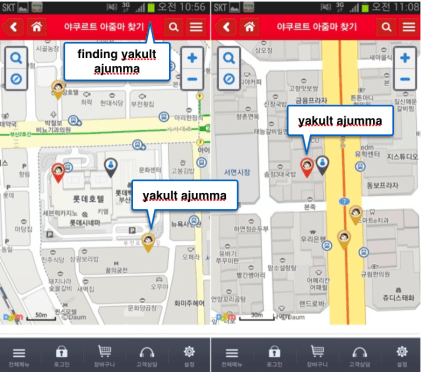
Thus ajumma customers now can order their yakult and pay the price of yakult through using an yakult app on their smartphones. For example, ajumma customers simply put their smartphones on card reader machine of yakult ajumma’s mobile cart, then the money will be charged to their smartphone bill every month. This is convenient for both an ajumma customer and yakult ajumma. In addition, it is innovation of mobile shopping markets because they designed this mobile payment system for the yakult customers, who are the majority of ajummas.

Screen Shot 2016-01-24 at 2.54.37 PM

Screen Shot 2016-01-24 at 2.54.53 PM

image from Yakult365.com <http://yakult365.com/150>

Through this example of yakult ajumma (smart yakult ajumma) and their digital mobile app, I can see how our ajummas engage with mobile digital technology in daily lives. Also these yakult ajummas are using mobile cart and digital technology to sell yakult, their image of yakult ajumma that is ‘friendly and motherly’ still makes customers to feel warmheartedness of yakult ajumma.

Unknown.jpeg

image from Yakult365.com <http://yakult365.com/395>

Actually they tried to change the name of yakult delivery women in 2014. They thought the name of ‘yakult ajumma’ cannot be matched with digital way of yakult ajumma (with mobile cart and smartphone app). So the company invited public participation to create a new name for yakult ajumma. However, people in Korea ask the company for keeping the ‘yakult ajumma’ instead of getting a new funky name for those ajummas. Fortunately, the company keeps ‘yakult ajumma’ and we are able to keep call and see ‘yakult ajumma’ continuously. Yakult ajumma will be staying to deliver health to us everyday but the ways of delivering yakult are evolving constantly as development of new technology. Yes they are now Smart Yakult Ajumma like our Smart Ajummas. Go Ajummas!


Ajumma mobile shoppers

Smartphones are now mundane communication device among ajummas in Korea. They use smartphones not only for communicating, but also for consuming digital products as well. The number of ajumma mobile shoppers are growing and they purchase both tangible and intangible products for example, clothes (tangible) and apps or ebooks (intangible). They were used to be TV home shopping lovers so there were various products aimed specifically at ajumma customers on TV home shopping channels. Ajummas are still important customers for TV home shopping in Korea but these ajummas are not watching TV home shopping channels on the couch any more. They are now shopping at mobile shops through their smartphones without barriers of time and space.

Screen Shot 2016-01-22 at 7.28.25 PM.png

ajummas are ‘smartphoneing’ in the subway, Seoul 2014

Young women (younger than ajummas, I can say their age range is from early-20s to mid-30s) and Moms (early 30s to early 40s, usually they have young children-infants to around 15 years old-these Moms are not to be yet ajummas, it is like pre-ajumma level I can say), they are biggest consumers of mobile shopping but now ajummas become ‘mobile shoppers’. For this reason, many of mobile shopping sites provide specified products that are aimed for ajumma consumers.

2016-01-22 19.35.03.png

image from ‘Azmang’ :department store for ajumma (they said) of Mobile Auction.co.kr (http://itempage3.auction.co.kr/DetailView.aspx?itemno=B299375605).


File 22-01-2016, 7 53 49 PM

image from ‘Madame Sense’ of Mobile Gmarket.co.kr (http://item2.gmarket.co.kr/item/detailview/Item.aspx?goodscode=341536165&pos_class_cd=111111111&pos_class_kind=T&pos_shop_cd=SH&keyword_order=madame+sense&keyword_seqno=8931769789&search_keyword=madame+sense).

Like photos I attached above, those mobile shops sell clothes especially for ajumma customers. They actually categorise those clothes as ‘Mom’s clothes, Ajumma clothes etc’. You can tell those clothes are very ajummarous items (according to stereotyped images of ajummas as I mentioned before). This is good development that mobile shops concern ajumma customers and it tells the number of ajumma mobile shoppers are increasing constantly. However, I would like say something about this.

Well, I don’t feel happy with some mobile shops that target to especially ajummas. Some of mobile shops sell limited items. I mean those sellers (maybe) have biased views about ajummas’ fashion tastes. When I google mobile shops for ajummas (or middle-aged women) I can find shops like above. I don’t know what I have to say exactly but I feel those mobile shops for ajummas (especially shops for fashion items) are quite different from shops for younger women (or non-ajummas I can say).

Whenever I go to Namdaemun market with my mum, there are several fashion malls especially for ajummas and their clothes are really fashionable (good designs, better quality, beautiful combination of colours and textures, trendy etc.). But what do you think about those clothes that I uploaded above? I think mobile shops especially for ajummas are not good enough yet. I’m sure they’re improving continuously but unfortunately there are not various choices for ajummas when they do mobile shopping yet.

Ajummas are not smart ajumma, I said. They’re using smartphones in their everyday practices in many ways for various purposes. Mobile shopping is no exception. Ajumma mobile shoppers will be increasing dramatically and I really hope there will be more and better mobile shops for ajummas.

Remember, ajumma power is amazing.

아줌마들이 스마트아줌마가 된 이유는?

Screen Shot 2016-01-21 at 6.54.28 PM.png

아줌마들이 점점 스마트해지고 있다.  일상생활 속에서 스마트폰을 사용함으로써 아줌마들은 똑똑한 소통을 하게 된 것이다. 아줌마들의 스마트폰 사용이 증가하게 된 이유는 물론 기술의 발달이 한 몫을 했고 거기에 더불어 스마트폰을 이용한 모바일 커뮤니케이션에 아줌마들이 동참하였기 때문이다. 사실 뉴테크놀로지와 뉴미디어에 관련된 연구는 대부분 ‘젊은층’을 타겟으로 , 아니면 ‘노년층’에 초점을 두었었다. 하지만 이제 우리는 ‘아줌마’에 주목해야 한다. 왜냐하면, 아줌마들의 움직임이 심상치 않기 때문이다. 스마트 아줌마들이 몰려오고 있다!

Screen Shot 2016-01-21 at 6.51.11 PM

위의 표를 보면 알 수 있듯이 한국의 스마트폰 보급율은 세계 평균의 값보다 월등히 높다. 그리고 2015년 Digieco의 통계자료에 따르면, 대한민국은 스마트폰 보급율이 83%로 스마트폰 보급률이 세계 4위인 것으로 조사되었다 (Yonhap News 2015). 즉 한국은 스마트폰 천국인 것이다. 다시 말하면 ‘당신은 한국에서 스마트폰으로 뭐든지 할 수 있다!’ 는 뜻이다. 하지만 테크놀로지는 결코 우리에게 편리함만 가져다 주지 않는다. 편리함이라는 장점을 줌과 동시에 불편함이라는 단점도 함께 주는, 인터넷과 같이 양날의 검이 바로 테크놀로지라고 생각한다. 물론 스마트폰으로 뭐든지 할 수 있겠지만 이는 달리 말하면, 스마트폰이 없으면 아무것도 할 수 없음을 말해주는 것이다.

예를 들어, 얼마 전에 집에 가스검침을 해주시는 분이 왔었는데, 앞으로는 도시가스 앱을 다운받아서 거주자가 직접 스마트폰을 통해 정보를 입력하는 시스템으로 바뀔 것이라는 이야기를 하셨다. 검침원 분들이 가가호호 방문해야하는 번거로움이 사라지는 ‘장점’이 생기겠지만 동시에 스마트폰에 익숙하지 못한 분들 혹은 아직 스마트폰이 없는 분들은 이러한 새로운 시스템을 이용하기 위해 스마트폰을 새로 구입해야한다거나 아니면 앱 사용법을 익혀야 하는 번거로움이 새롭게 생겨나는 것이다. 사실 요 몇년 동안 가끔 한국에 들어올때마다 놀라는 점은, 대부분의 시스템이 매우 ‘스마트 (스마트폰을 이용해야하는)’하다는 것이었다.  ‘스마트폰’을 이용해야하는 시스템을 거의 대부분의 경우에서 사용하고 있어서 스마트폰이 없거나 앱의 사용이 불편한 사람들에게는 ‘노스마트 (non smart)’한 경험을 해야만 하는 것이다. 마트에가서 디스카운트를 받을때도 앱을 설치해야하고, 내가 좋아하던 커피빈의 핑크카드도 무조건 앱으로만 써야했고, 보험사에 필요한 서류를 보낼때도 카톡 친구를 맺은 뒤에 사진을 찍어 블라블라 보내라는 등의 ‘스마트폰 없이는 안되는’ 일상생활이 되어 있었다.

사실 이렇게 일상생활 속에서의 스마트폰 이용은 간편하고 즉각적이라는 장점이 있지만, 위에서도 계속 언급했듯이 그렇지 못한, 즉 스마트폰이 없거나 그것의 이용에 불편함을 느끼는 사람에게는 그야말로 ‘디지털 소외’를 느끼게 하는 ‘디지털 소외층’을 만들어 내게 되는 것이다. (이 말이 너무 길어지는 듯해서 이것에 대해서는 다음에 또 한 번 더 이야기를 해볼께요)

아무튼, 스마트폰은 이미 우리의 일상생활에 스며들어 좀 더 편리하고 간편한 모바일 소통을 할 수 있게 해준 디지털 기기이다. 또한 단순한 ‘소통’ (전화통화등의 보이스 커뮤니케이션) 뿐만이 아닌 다양한 활동을 통해 나의 지인들이나 가족 친구들과 ‘언제 어디서나’ 소통을 할 수 있게 도와주는 매우 고마운 커뮤니케이션 기기이다. 하지만 과연 아줌마들도 스마트폰 사용을 많이 하고 있을까?

우리 엄마, 엄마의 친구분들, 동네분들, 길에서 만나게 되는 아줌마들을 보면 확실히 거의 모두가 스마트폰을 사용하고 있다고 생각된다. 사실 3-4년전만 하더라도 스마트폰을 쓰는 아줌마들 반, 그리고 일반 피쳐폰을 쓰는 아줌마들 반 으로 생각되어졌었다. 우리 엄마와 친구분들도 그랬으니까. 하지만 이 짧은 3-4년 만에 아줌마들의 스마트폰 사용은 급격히 증가한 느낌이었다. 주위 분들만 봐도 그렇고…

그렇다면, 과연 정말 아줌마들의 스마트폰 사용은 증가했을까? 그걸 어떻게 증명하지?

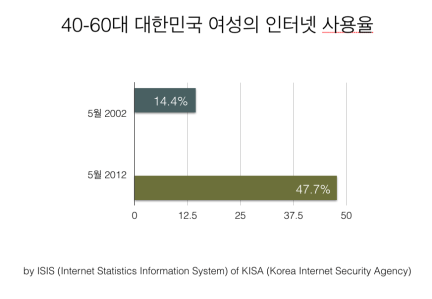
그래서 찾아본 결과, 아줌마들의 스마트폰 사용에 관한 데이터는 아직 없었고, (2015년 당시) 대신에 인터넷 사용에 관한 자료는 찾아볼 수 있었다.

Screen Shot 2016-01-21 at 6.52.07 PM.png

사실 이렇게 ‘자료’들이 나오면 너무 지루한 느낌이 든다. (논문이 아니라고 하고 이렇게 논문같이 쓰면 어쩝니까? 라고 물어보는 사람이 있을수도 있다) 하지만 스마트 아줌마들에 관해 이야기 하면서 ‘~것이다’ 라고 단순히 내 주관적인 생각과 경험으로 말 할 수는 없는 노릇! 따라서 내 의견을 뒷받침 해주는 자료가 필요했고 (물론 이들은 모두 내 논문에서 사용한 자료들이다) 그러한 이유로 이렇게 ‘사실자료’를 첨부하는 것이다.

아줌마들의 스마트폰 사용에 관한 자료는 없지만, 위의 자료를 통해  아줌마들의 인터넷 사용이 급격히 늘었음을 알 수 있다. 그리고 인터넷 사용이 늘었다는 자료를 통해 아줌마들이 ‘스마트폰’을 사용하고 있음을 유추해 볼 수 있는 것이다.


How did they become Smart Ajumma?

Screen Shot 2016-01-21 at 6.53.44 PM.png

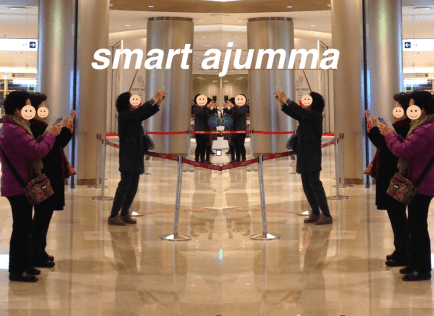
Ajummas are now becoming smarter, especially in the way of they communicate due to their use of new technology in their everyday practices such as smartphones. They are now smart ajummas and becoming smarter constantly according to the development of new technologies. However, it ought not be concluded that smart ajummas are named so only because they use new technology. They also actively attempted to acquaint themselves with new technology in daily lives.

Screen Shot 2016-01-21 at 11.17.15 AM

The penetration of smartphones in Korea is significantly higher than the average in the world and it reach 83 percent as of end-March, according to the data compiled by Digieco (Yonhap News 2015). For me, Korea is like a heaven of smartphone because ‘you can do almost everything with your smartphone’ in Korea. But convenience is not only technology’s best friend, I mean there are always problems to use convenient technology, such as smartphones. Yes, smartphone is a double-edged sword, like the Internet! If you can do almost everything with your smartphones in Korea, this means that you can’t do anything without smartphones. (I won’t talk too much about smartphones because this blog is more about smart ajummas)


Anyway, smartphone is a pervasive mobile communicative devicenow. People use smartphones in their everyday practices regardless age and gender. Ajummas are no exception. There are exact data about penetration rate of smartphone users of middle-aged women in Korea yet, it can be assumed there are increase of using Internet among middle-aged women.

Screen Shot 2016-01-21 at 11.17.22 AM

I know this is not a thesis but I think if I put an actual ‘data’ in this post, it might be powerful to support my idea why I can call ajummas as smart ajummas. I can’t just assume ajummas in Korea became smart ajummas because they use smartphones a lot. So I attached these data which help you to understand my argument (or thought) how I can call ajummas as smart ajumma.

For next post, I will explain in detail why ajummas should be considered as ‘smart ajummas’ today in Korea.