Jeong

Jeong is an ambiguous and amorphous concept. There is no word that replaces the meaning of Jeong in Korean vocabulary. Also I can’t find any equivalent English word to Jeong. According to Kim ,

“Jeong encompasses the meaning of a wide range of English terms: feeling, empathy, affection, closeness, tenderness, pathos, compassion, sentiment, trust, bonding and love… Koreans considers jeong an essential elements in human life, promoting the depth and richness of personal relations… With jeong, relationships are deeper and longer lasting… Jeong is what makes us say “we” rather than “I”, “ours” than “mine” (U Kim 1994, cited in Kim 1996, p.14)”.

If someone asks me what jeong means, I probably cannot answer immediately not only in English, but also in Korean. To explain what jeong is not simply thing at least for me. I might say, to know what jeong means should be realised through experiencing Korean culture rather than learning by books or any academic theories.

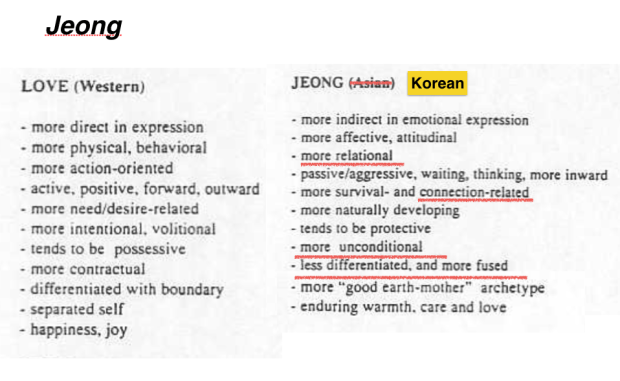
Jeong is similar to love but jeong is different from love. (see below)
Screen Shot 2016-01-19 at 6.28.40 PM.png

Figure 1. (Kim 1996, p.15)

Jeong is ‘more relational’,  ‘more connection-related’,  ‘more unconditional’ and ‘less differentiated and more fused (think about ‘Korean collectivism’ that I mentioned in previous post)’ than love according to figure 1 that I attached above.

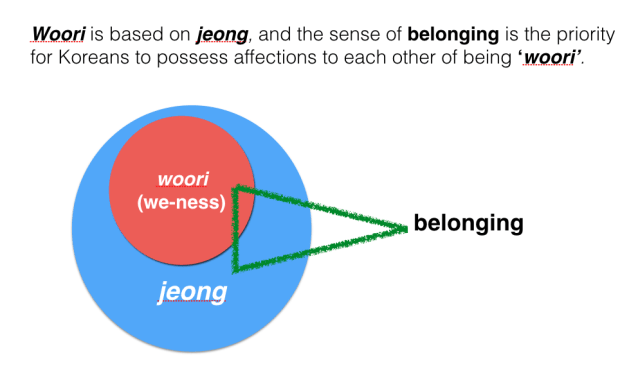
So, Koreans or ajummas could do gold collection campaign to support Korean economic during IMF because this Korean collectivism led them to feel being woori (we-ness). And being woori (we-ness) was possible because they were connected to jeong with each other.
Screen Shot 2016-01-19 at 6.41.02 PM.png

Thus, they could be ‘woori (we-ness)’ because of having jeong with each other and also they belong to the same group (Korea society).

Screen Shot 2016-01-19 at 6.47.08 PM.png

In Korea, there are various groups and sub-groups. For example, when I was a uni student, I belonged to catholic church group, high school friends group, ski group, uni friends group, English study group, home town friends group etc. Like me, many Koreans belong to various groups and sub-groups because belonging is important for us. And this belonging allows us to have relationships with others to become ‘woori (we-ness)’ and sharing ‘jeong’ with each other. (Think about examples that I’ve posted in previous post, Group Singing is also a good example of ‘woori, jeong and belonging’)

If I apply this theory to the group of ajummas, ajummas can be one of sub-groups of Korean society. They become woori (we-ness) through having jeong with each other and they belong to similar interests, age and gender group. So ajummas could be considered as a kind of sub-groups of Korean society that are intertwined with jeong. 

For next post, I will (finally) talk about Smart Ajumma!!
 

Korean collectivism (we-ness)

The gold collection  campaign were possible because of Korean collectivism which is We-ness, Uri (or Woori). Uri,  we-ness, or in group-ness as a more essentially relevant feature of Korean collectivism. The social relationship among Korean in-groups are based on social networks, the sophisticated genealogical system, the power of school connections, or regionalism. For Koreans, group is very important. To explain or talk about Korean collectivism in one blog post is not enough but this blog is not a ‘thesis’ rather a blog that I would like to share my research project, especially about ‘ajummas and their usage of smartphones in everyday practices’. In addition, I need to mention about Korean collectivism to support some ideas (e.g. gold collection campaign). Moreover, it might be helpful to you to understand Korea and ‘ajummas’ in Korean society if you know what Korean collectivism (we-ness) and Jeong means.

Screen Shot 2016-01-19 at 11.44.46 AM.png

This image explains how ajummas have similar hair styles in Korea. More stories about ajummas will be posting continuously.

image from <http://kfoodtalker.tistory.com/3442>


Of course, there are negative opinions how Korean collectivism ignores everyone’s individuality and force to be standardised. For me, Korean collectivism can be pros and cons in many ways. It leads people to be united and do something together such as Red Devils (supporting group for the Korea Republic national football team), Group Singing or Gold collection campaign. This Korean collectivism brought people to feel like ‘We are Koreans’ or ‘We are  one’. And in my experience, this Korean collectivism doesn’t allow me to be different from others. In other words, being different from others is not an ideal thing to be in certain groups. Thus I have to become similar with others in groups to stay in certain groups. This is just my opinions so there should be various ideas about Korean collectivism.

Screen Shot 2016-01-19 at 11.32.50 AM.png

image from Koreatimes.co.kr <http://www.koreatimes.co.kr/www/news/biz/2014/01/291_67541.html>


Group Singing

Screen Shot 2016-01-19 at 12.34.41 PM

High school students wear the same North Face jumpers at graduation ceremony

image from: photohistory.tistory.com  <http://photohistory.tistory.com/11401>

Screen Shot 2016-01-19 at 12.34.10 PM

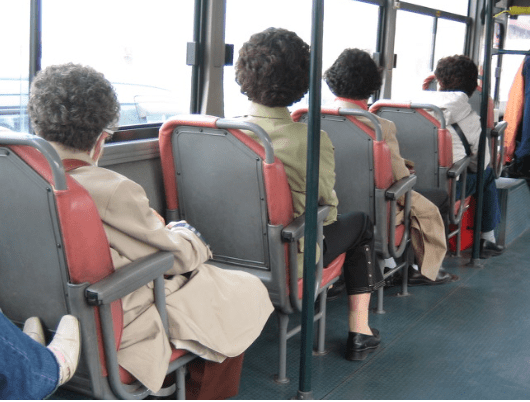
Ajummas wear similar mountain-climbing clothes in the subway


This Korean collectivism can be explained with the concept of ‘Woori (we-ness)’.

Woori (we-ness)

Screen Shot 2016-01-19 at 11.06.19 AM.png

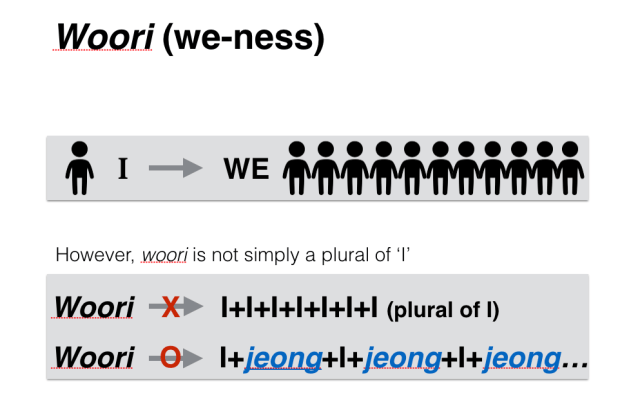
We is a plural of ‘I’ in linguistic. So a group of ‘I’ can be interpreted as ‘Woori’ (because Woori means ‘we-ness’ in English).

However, Woori is not simply a plural of ‘I’. As you can see above, woori is not a simply a plural of ‘I’, and it needs ‘jeong’ between ‘I’ to become woori.

Then, what is Jeong?


금 모으기 운동

IMF (International Monetary Funds)로 인한 나라의 경제적 손실은 그 당시의 수많은 가정과 개인에게 엄청난 피해와 고통을 안겨다 주었다. 이 전 포스팅에서도 언급했듯이 사업채의 부도, 어쩔 수 없이 직장을 잃은 사람들, 학비가 없어서 학업을 그만둬야 했던 학생들 그리고 나라의 경제위기 때문에 고통받아야 했던 수많은 사람들은 그럼에도 불구하고 나라를 살리기 위해 하나로 뭉치기 시작했다. 그렇게 시작 된 것이 바로 ‘금 모으기 운동’ 이었고, 전국 각지에서 금을 가지고 남녀노소 구분 할 것 없이 대한민국의 모든 사람들이 한 곳에 모였다.

단 이틀만에 10여톤의 금이 모이게 되었다!

비디오 출처는 KBS News 1998년 1월 6일  <https://www.youtube.com/watch?v=P5puNUKcL3s>

장롱 속에 고이 넣어두었던 소중한 금을, 아무런 댓가를 바라지 않고 그저 나라를 살린다는 일념하에 대한민국 국민들은 모여들었다. 우리의 아줌마들 (어머니들)도 이 금 모으기 운동에 물론 동참하셨다. 자식의 소중한 돌바지 부터 그들의 결혼반지 까지, 도움이 될 수 있는 금은 모조리 들고 나와 줄을 서서 금을 기부했다. 이 금 모으기 운동은 얼마전 그리스의 사태에서도 언급되었던 적이 있었는데, 세계적으로 이렇게 국민모두가 금을 모아 나라의 경제위기를 구한 적은 대한민국 뿐이라고 한다.

Screen Shot 2016-01-18 at 5.22.32 PM.png

이러한 한국인의 금 모으기 운동은 한국인의 ‘집단주의’로 설명이 될 수 있다. 한국의 ‘집단주의’는 다양한 곳에서 찾아볼 수 있는데, 예를 들어 ‘붉은 악마’, ‘촛불 시위’등의 좋은 예들이 이러한 한국인의 집단주의를 잘 설명해 주고 있다. (다음 포스팅에서 집단주의에 관한 이야기를 하겠습니다)


Gold Collection

IMF (International Monetary Funds)  brought serious economic pain to every Korean family but people in Korea became one to overcome this economic crisis together at the same time.

Ten tons of gold was collected by people only in 2 days

video from KBS News in 6th January 1998 <https://www.youtube.com/watch?v=P5puNUKcL3s>

Gold collection is one of the representative examples of campaigns during the IMF, from 1997 to 1998. The gold collection campaign was diffused to the whole nation regardless of age and gender. In particular, many housewives gave up their wedding rings and their children’s first-birthday rings to support the nation’s economy.

Screen Shot 2016-01-15 at 4.24.11 PM

People in Korea brought and donated their gold to the government with no string attached during 1997 to 1998. The only reason to donate their gold was for saving their country and “becoming a powerful nation”. This movement can be explained with Korean collectivism.

Ajumma 아줌마 by Pixcel

Ajumma! from Jung Moon on Vimeo.

아줌마 이미지를 Pixcel이라는 앱을 통해 만들어 보았습니다. 다음에는 좀 더 정교하게 한 번 더 만들어 볼께요. 아줌마 화이팅!

I tried to make an animated ajumma by using an app called ‘Pixcel’ on my smartphone. I will try better ‘ajummarous animated image’ for next time. Ajumma Fighting!

Have a good weekend all ajummas! 모든 아줌마분들! 좋은 주말 보내세요!

Have a good weekend all ajummas!

좋은 주말 보내시길 바랍니다. 우리 아줌마분들!

image

‘Ajumma Locksmith’ in Seoul

‘아줌마 열쇠’ 서울의 한 열쇠가게 이름

Women in Korea (3) IMF 1997

We had IMF in 1997. IMF (International Monetary Funds), this economic crisis leads to the “reversal of traditional gender roles and endangered the stability of the patriarchal nuclear family system” (Kim 2008, p.392). Due to the worsening of economic conditions, women had to come out of the houses to work rather than being good mothers and wives at home. They had to be good mothers and wives at home and at the same time, these women had to work outside of home to earn money. In other words, women in Korea during IMF, they became breadwinners as well. However, most ajumma were part time  lower-paid workers such as cashers at supermarkets.

Screen Shot 2016-01-15 at 4.23.54 PM

image from the movie ‘Cart (2014)’, <http://www.asiae.co.kr/news/view.htm?idxno=2014103011094055036>

Even though they were part time workers who got low pay, they worked really hard because they believed that the improvement of each family’s economic condition can be a cornerstone of Korea’s economic growth. People in Korea during IMF, they tried to overcome the IMF together. However, still it blew to every family’s economy. In May 1998, more than 80% of households in Korea suffered very much in the reduction of income. Fathers lost their jobs so they could not fulfil the role of fathers and husbands in their family.

1101_b084_8.jpg

image from Monthly Chosun <https://monthly.chosun.com/client/news/viw.asp?nNewsNumb=201101100071>

In 1998, there were 42% increase of suicide rate compared to the previous year. Male had higher percentage than female in the report. It could be assume that fathers couldn’t able to do their duties to their families because of unemployments and crippling debts. Therefore, mass media encourages people to recognise the importance of their fathers in the family. For example, “save the head of the family”, “encourage men” and “support and cheer up our fathers”. Besides, people do various campaigns for the nation and gold collection was one of them. I will post about ‘gold collection’ campaign soon.


TV Commercial in 1997 by KIA motors “We can do it!”

Reference: (1) Kim, S 2008, ‘Feminist Discourse and the Hegemonic Role of Mass Media’, Feminist Media Studies, vol. 8, no. 4, pp. 391-406.


Digital swish of skirt

In the previous post, I talked about ‘Women in Korea (2)-1: swish of skirt in 1980s’. This education fever still remains in Korean society but mothers (ajummas) today followed different ways that I called ‘digital swish of skirt’. Compared with non-smartphone era which is from 1980s to early 2000, the use of smartphones change our life styles in many ways likewise the enthusiasm of education among ajummas. This means that ajummas could be able to get involved in supporting their children’s education easily through using their smartphones. There are various apps that helps mothers (ajummas) to share useful information about their children’s education for example, “Which Hak-won (private educational institution) do you go?“. This app provides people’s various opinions and useful information about private educational institutions for parents and their children. So it helps both parents and their children to choose better private educational institutions. This app determines the ranking of private educational institutions according to the actual statistical data. Parents can ask questions or answer others’ questions interactively through using app on their smartphones in real time.

Screen Shot 2016-01-13 at 7.42.07 PM.png

There are many types of apps for parents who concern their children’s education in Korea. I cannot enumerate every app in this blog but one thing that I can say is these types of apps for parents are increasing significantly. The term ‘swish of skirt’ is not used broadly today but I can see the swish of skirt phenomena still remains today. I call it ‘Digital swish of skirt’. Ajummas (mothers) are overly involved in their children’s education today through using education related apps on their smartphones. They becomes smart ajummas.

Women in Korea (2)-1 Swish of skirt in 1980s

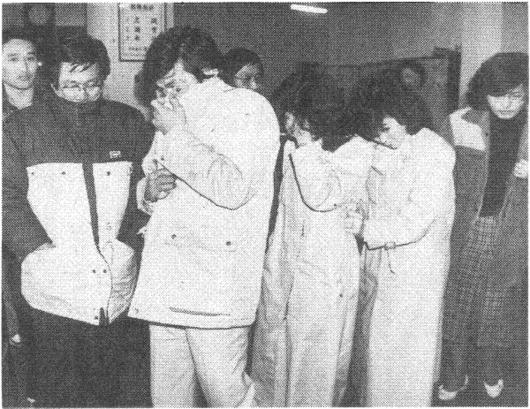
The ‘swish of skirt’ means that mothers are getting overly involved in the schooling for their children. During the 1980s swish of skirt phenomena was serious social problem in Korea. Some mothers move into areas concentrated with of private academic educational institutions such as Gang Nam School District 8. Also the expensive private lessons were prevalent in that area so Korean government conducted crackdown people who were related to those expensive private lessons.

9750aae7f9654f8eb10655cb80a79e87

Tutors who were involved in the expensive private lessons were brought to the police station in 1988
image from Kyung Hyang Newspaper, <http://news.zum.com/articles/25543690>

Mothers in 1980s, they thought that entering their children to good university (SKY, Seoul University, Korea University, Yonsei University) is their goal and duty as mothers because mothers believed that qualification (especially graduating a good university) determines their children’s lives.

43themes3_bg03.jpg

Mothers (ajummas) waited and prayed for their children to pass a university entrance examination withough leaving while students were taking the exam.
image from: Samsung & You Premium, <https://www.samsungnyou.com/7486/>


This education fever of South Korean mothers was continuously overheated to make their children entering the good universities. Thus, Korea stands the first regarding domestic expenses on education in the world. Since 1980s, women in Korea playing both roles, “professional mother” and “professional housewives”. They are like a superwomen. As I mentioned before, ajummas are superwomen.

We still have education fever and ajummas of course still concern their children’s education. For example, there are Helicopter mothers and Kangaroo mothers. They are overly involved into not only their children’s education, but also their private lives (e.g. hobby, a network of friends, jobs and even marriage).

365_331_2817

image from <http://www.opnews21.com/news/articleView.html?idxno=365>

6989811.1

 image from <http://news.donga.com/3/all/20061121/8375428/1>

But I think the way of ‘swish of skirt’ changes into sort of ‘digital swish of skirt’ in these days. In other words, mothers (ajummas) in these days became smart for their children’s education. This means that many of ajummas (mothers) use their smartphones to search information and useful sources for their children’s education. I will talk about ‘Digital swish of skirt’ in next post.

Women in Korea (2) Before IMF

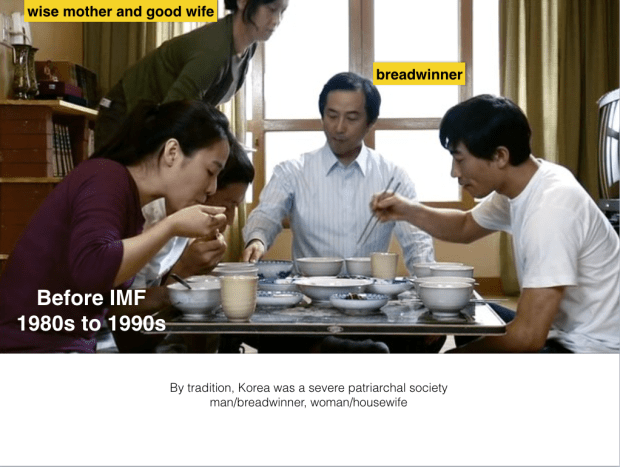
As I mentioned in the previous post, women in Korea after the Korean War during 1960s to 1970s (of course women workers were still working hard in 1980s as well) made a significant economic growth. After that period,  the majority of middle-aged males led the remarkable economic growth in manufacturing especially 1970s to 1980s. Men as breadwinners and women as housewives were considered as a matter of course. Thus becoming a full time housewives was a common thing after marriage for women and being a ‘wise mother and good wife’ was dreaming image for married women in Korea at that time. Most married women during 1980s had to quit their jobs because they had less opportunity to work in the company compared with married men.

Screen Shot 2016-01-11 at 1.22.16 PM.png

Married women became ‘wise mother and good wife’ to raise their children and support husbands at home, whereas married men’s duty was ‘working hard to support their family’ as breadwinners. So Korean men worked the longest hours in the world because they had to work from early morning to midnight and even during the weekends. For this reason, most Korean families became ‘father-absent and mother-involved’ family.

2015112100644_0.jpg

Screen Shot 2016-01-11 at 1.38.37 PM.png

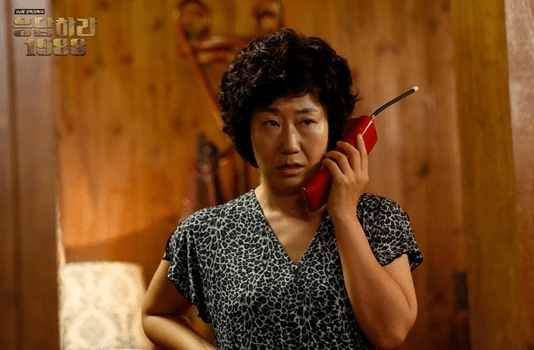
(image from ‘Reply 1988′ tvn http://program.interest.me/tvn/reply1988)

Role of mothers is increasingly significant for their children because most families were ‘father-absent and mother-involved’. At the same time, mothers made sacrifices for their children and they especially gave full support of their children’s education.

(This can’t be explained simply but I can assume that most Korean mothers were not working outside home at that time so they put their heart and soul into educating their children. They believed that entering good universities were the most important thing for their children in Korean society)

So ‘the swish of skirt’ was occurred among mothers in 1980s and 1990s. And it still remains. I will write about ‘the swish of skirt’ for next posting.


Ajumma is FAST! 아줌마는 빠르다!


Here is a TV commercial that describes how fast ajummas are. In this TV commercial, they emphasises that their LTE service is faster than ajummas in the subway. This means they’ve provided the fastest LTE service in Korea. In reality, ajummas are faster than Usain Bolt in the subway, for sure.

지금 보여지는 이 광고는 아줌마가 얼마나 빠른지에 대해서 보여주고 있다. 이 광고를 통해, 그들이 제공하는 LTE 서비는 아줌마보다 빠른, 즉 대한민국에서 가장 빠른 LTE서비스를 제공하고 있다는 것을 강조하고 있다. 진짜로 대한민국 아줌마들은 지하철에서만큼은, 우사인 볼트보다 빠르다! 정말로!


Women in Korea (1) 1970s

To talk about women in Korea is not easy and  complicated to explain in this blog post. However, one thing that I can say is Korean women became  great power to support whenever we have difficulties and they were backbone of the growth of Korean economy. So I will write about ‘Women in Korea’ and I categorised by chronological order because ‘Women in Korea’ is a big topic to write in one post.

(1)1970s (After the Korean War)

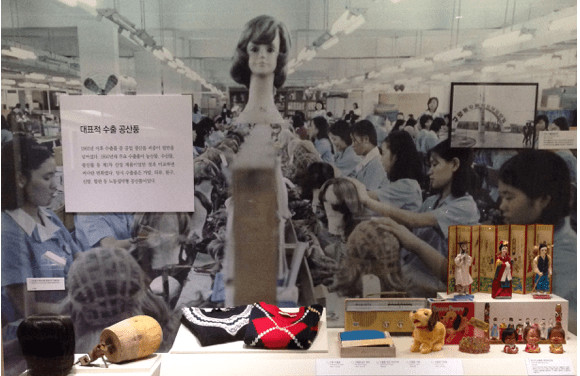
Screen Shot 2016-01-07 at 12.28.16 PMWomen in Korea, they have contributed to the country’s economic development. Just after the Korean War during 1950s to 1970s, large numbers of female factory workers made a significant contribution to export-led industrialisation. Today, there are so many things or almost everything is made in China, but during that time, especially 1970s made in Korea products were famous in the world. One of my aunty lives in the USA and she said that many of made in Korea products were easily found such as stuffed dolls (e.g. teddy bear), wigs, socks, etc.
Screen Shot 2016-01-07 at 12.38.03 PM.png

Representative Exports during 1960s-1970s (taken in Seoul Museum of History)

Young girls worked in the factory instead of going to schools because they had to earn money for their family. They stayed in the factory dormitory and worked all day. Those young girls are now became ajummas today and they are aged over 60s like my mother’s generation.

Screen Shot 2016-01-07 at 12.28.26 PM

I will talk about ‘Women in Korea (2) Before IMF (International Monetary Funds)’ for next post.