A trot song is for ajummas?

I’ve already posted this video of Digital Ppal-let-ter project that is a part of my research project. For this video, I used two trot songs as a background music. When I chose these trot songs as bg music, I thought that using this kind of songs for my video should enhance people to get inspired for better understanding about Korean culture. Well, we have K-Pop (idols, girl groups, etc.) but for me, these songs are inadequate to support my video project that is about Ajummas who are women in Korea. I consider choosing songs and I finally found one song that is about ajummas. The song called, Ajumma by Jinah Tae has very simple lyrics but it encourages ajummas to keep enjoying their lives as ajummas in Korea. Also, there’re not enough (maybe this song is the only song about Ajummas with positive lyrics as far as I know) songs about ajummas. I’ve changed songs for the video several times and I discussed carefully about choosing music with my supervisors all the time. Finally, I put that song for my video and I believed and still believe that the song supports the story (or research) of the video. Moreover, it enhances people (audiences) to somewhat better understand Korean ajummas’ culture. But, some people criticised the usage of this song for the video about ajummas. They thought this song (trot songs) is cheesy and it could remind audiences about stereotypes of ajummas. In other words, the trot songs are cheesy and not classy songs. So the purpose of choosing the cheesy trot song for the video is because ‘I (a researcher)’ look down upon Ajummas.

Okay, I accept those feedback or criticism from others. But, let me talk about this again. The problem is not about a song in this video, I think. The problem is ourselves. I know how women in Korea were persecuted under patriarchal society for ages so Korean women had to receive unfair treatment only because we were women. One of Korean female group, ajummas, they were also treated, showed, described and accepted negatively. For many reasons, being ajummas and calling as ajummas is not pleasant. But, in my experiences, we (women) disdain ajummas, being ajummas and living as ajummas so many times and cases. In the case of using that trot song for the video, I never assume that trot songs are for ajummas and ajummas have no interest of listening pop songs, hiphop or electronic music. My mum loves listening to classical music and one of my friend enjoys listening to trot musics. I don’t generalise any thing between different generations. Of course, there are preferences of something between different generations, but I always think I shouldn’t generalise people only because their age differences.

If they (people who criticised me of using trot songs for this video) think the usage of trot songs for this video is because I have a prejudice against ajummas, then I want to say them to break your biased perspective about ajummas first. It will take time to change but I want to keep writing that calling as ajummas and being ajummas are not that unpleasant thing what some people detest to be ajummas.

Ajumma, how much is it?

Today, I went out with my parents to have lunch together. We had Chinese food in Myeong-dong and headed to Dongdaemun area to visit Gwangjang Market. Gwangjang Market is famous with variety of street foods and other stuff such as Hanbok (Korean traditional dress). And this market is also well known to travellers who visit Korea.

We also love visiting Gwangjang Market just for browsing. When we visited to this market today, my mum wanted to buy a blanket for spring. Yes, they sell blankets in reasonable price but the quality is very good. Anyway, when my mum went into one shop to browse blankets, me and my dad were waiting for her outside because the shop was very tiny to fit ourselves into.

At that time, five foreigners were looking at pillows and blankets of that shop. They’ve asked price for those items to the shop owner.

“Ajumma! How much is it?”

I smiled when I heard that word, Ajumma! Then, the ajumma came out of the shop and told them (almost yelled) the price in Korean. They couldn’t understand and the ajumma tried to explain the price with her fingers. So I just translated the price from Korean to English. Both the ajumma and those travellers became happy because the ajumma could sell the blanket and they could buy the blanket.

The point what I want to tell you is how the word Ajumma is getting familiar with people even though they are foreigners! Ajumma is our culture and this word presents the familirity and warmness of middle-aged Korean women I think and I saw. I went to one of the conference in Korean last week and I got attacked from some of audiences about using the word Ajumma. They mentioned that using the word of ajumma could be lead disdaining the Korean middle-aged women. (I will write more about this issue for next blog post, there are so many things that I really want to write about).

Anyway, ajummas are our culture I no longer thinking the word ajummas are the one that disdains the middle-aged women in Korea.

Any apps especially for ajummas?

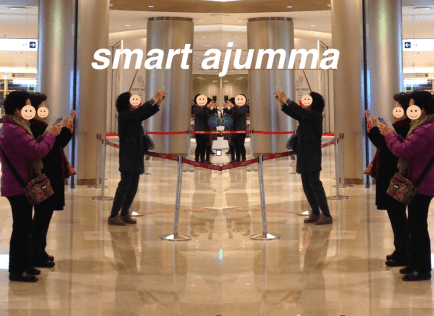
Ajummas are now smart ajummas. They do mobile communication through using their smartphones in their daily lives. It is not a special thing to meet ajummas use their smartphones to take photos on the street or playing games in the bus while they’re travelling, etc. They are not outsiders of new technology any more. Who knows? They will be techno-savvy someday soon in the future, I sure. But I think there’s not enough apps for ajummas now! In my mother’s case, she loves playing Anipang and her friends send ‘hearts (lives to play Anipang)’ with each other almost every hour or more than three times per day. (my mum loves Anipang)

Anipang was very popular about 5 years ago and people rarely play that game any more, but my mum and her friends do! My mum said that Anipang is a simple to play but still very exciting. And I just ask her trying other games as well but she said other games are too complicated to play. And she and her friends use almost same apps everyday. I know and you know there are plenty of apps are inventing and developing every seconds and overtime it is so hard to choose one app among thousands of apps. But this story is only for us, not my mother and her friends at all.

Of course, she uses various apps such as public transport tips, schedule, radio, etc. But I think there’s not enough apps were developed that targets for only ajummas, middle-aged women in Korea. The biggest problem (I think) is there’s not enough research about ‘needs for ajummas’ has done yet. Ajummas and Ajeossi (middle-aged married men) are just use apps that were developed for younger people the most, I can say.

If I have any chance, I really want to research and develop the apps, especially for ajummas and ajeossis. I really hope. Then my mother, her friends and ajummas in Korea will enjoy and enrich their mobile communication through using smartphones.

Inspiration for Digital Ppal-let-ter Project

Digital Ppal-let-ter is a new digital space which illustrates the interactively remediated space and time of both the wash place before the 1960s and Kakao Talk’s group chat room in the 21st century. Digital Ppal-let-ter will encourage audiences to consider the existence of  middle-aged and married women’s communal space that has formed and has been developed by those women from the non-digital (pre-smartphone) era before the 1960s to the digital (smartphone) era in 2015.

Digital Ppal-let-ter will take both analogue and digital technology to present a new digital space where ajummas communicate with each other. It is an imaginary space located in a time of coexistence between the face-to-face communication era and the mobile digital communication era. In other words, Digital Ppal-let-ter is located in an in-between space and time of actuality and digitality. For this reason, the creative project of Digital Ppal-let-ter is a converged metaphorical space of communication that transcends time and space among middle-aged and married women in Korea.

dpt_inspiration_image_blog.001.jpeg

I tried to do an installation art but I’ve changed to produce a video instead.


Digital Ppal-let-ter is an imaginary space that does not exist in the real world. However, it asks audiences to think about how communication amongst middle-aged and married women in Korea has always existed even though various communication tools and the locations of communal spaces have changed over time. Digital Ppal-let-ter aims to emphasise that specific features of communication have developed subliminally through continuous interactive communicating among middle-aged and married women in Korea.

Middle-aged and married women used to be considered a peripheral group by the digital technology industry in Korea whereas younger female groups were given attention. However, it is time to look intensively at how these middle-aged and married women, ajummas, communicate with each other in the pre-digital communication era before the 1960s to the digital communication era of today. In general, ajummas used to be considered a group of ordinary middle-aged and married women but they are not ordinary when people look at them with affection. The group ajummas now attract respectful attention from the digital technology industry and Korean society. The creative project Digital Ppal-let-ter presents how the ordinary but not ordinary ajummas build their own communal spaces and have their own ways of communicating which have developed in line with technological developments in communication

Digital Ppal-let-ter is based on Korean sentiment but the convergence of digital and analogue technology in the project is universally relatable. To create this complicated but poetic and new experimental media art project that includes interdisciplinary academic research and mixed media art forms.

Are you an ajumma?

IMG_7186.JPG

Well,  since I’ve started this research project people keep asking me a same question so many times. They asked me, “are you an ajumma?”

I put the URL of this blog (smart-ajumma.com) on my Twitter profile, Facebook and Instagram. People who follow me on these various SNS, they kept asking me a question that “Are you an ajumma??? I didn’t know that!!!”. Then I had to repeat the same answer that defend against this question. I replied or explained, “No! I’m not an ajumma, I’m just doing my research about ajummas and their use of smartphones in everyday practices…blah blah blah.”

I know being an ajumma is not a problem at all, but whenever people ask me a question like that, I always answer with a serious face to protect myself. (protect I mean!)

There’s one thing. I’ve already mentioned in one of blog entries that I uploaded previously, people are curious about the reason why I’m doing research about ajummas even though I’m not an ajumma yet! People think it is very strange when non-ajumma researcher researches about ajummas. Also they expect that research about ajummas is not an attract thing at all. For these many reasons, people keep asking the same question to me for many times and I had to explain to them whenever they asked questions.

IMG_6880

I’m still enjoying my research about ajummas and I will be doing this research continuously. Ajummas are attractive people in Korea and there are voluminous research topics to study about ajummas. Through this blog, I will keep doing my research about ajummas and their use of new media.

Screen Shot 2016-03-10 at 5.41.41 PM.png

Fighting ajummas!!


Kakao Talk and Ajumma (1)

Have you heard about Kakao Talk? For me and Koreans Kakao Talk is an inextricable mobile communication app today. Kakao Talk is an application for smartphones which allow people to have instant mobile chatting without having barriers of time and space. If there is wifi connection with your smartphones, you can have message chatting, voice chatting, video chatting and sending various types of files (e.g. photos) in your chatting rooms. Kakao Talk is similar to WhatsApp , but Kakao Talk has more functions than WhatsApp. For example, Kakao Talk has Kakao Shop (buy gifticon), Kakao Pay, Kakao Style, Kakao TV, Kakao Taxi (you can call taxi through your Kakao Talk app whenever you need to take a taxi) and etc.

File 11-02-2016, 1 06 37 PM


File 11-02-2016, 1 06 56 PMVarious brands of ice cream shops you can choose and send gifticon through using Kakao Talk to your friends or family.

Gifticon has a diverse selection to choose from such as a range of clothes, accessories, foods, e-coupons for cafes or restaurants etc. People who receive gifticon from their friends through Kakao Talk, can simply show the e-code of those gifticon to the counter of the shops when they want to use them.

Kakao Talk is a one of apps for mobile communication on smartphones.  Kakao talk allows people to have constant mobile communication whenever they need and wherever they want to communicate with their contacts. It becomes a huge mobile communicative tool for Koreans. Group chat rooms are good example to explain how Kakao talk became a major mobile communicative application for Koreans. For example, companies have mobile meetings on their group chat rooms, family discusses their next meeting on their group chat rooms and especially ajummas love group chat rooms! Through using group chat rooms in Kakao Talk, people can do ‘group chatting’ with their friends or colleagues easily. They don’t have to send the same messages to each person one by one.

Screen Shot 2016-02-11 at 1.25.49 PM.png

Y Kim: 

Yes, Kakao Talk’s group chat room is so convenient to organise meetings with friends.

J Han:

All I need to do is just create a group chat room. And then it is very easy to send a message to everyone at once! It’s so easy!

Interviewees responses of a question about using group chat room of Kakao Talk

According to the interview above, the main reason to use group chat room of Kakao Talk was for sending messages to several friends at once and organising meetings as well. As it is easier to send the messages to everyone who are in the same group chat room, it is convenient to organise meetings without hassle rather than send the same messages to each person separately. Besides, people in the group chat room can discuss or manage together to set a place and time for a meeting with ease. This means that, everyone can see the content of conversation at one view and even though they might miss the conversation, people can come back to read those conversations at any time with their smartphones. The advantages of using Kakao Talk’s group chat room attracts ajummas who used to call to each friend to organise the regular meetings.

The beginning of every month, my mom’s smartphone gets busy because of Kakao Talk’s alarming sound. Her friends send Kakao Talk messages endlessly to organise their regular meeting. My mom wasn’t familiar with using her smartphone and Kakao Talk before. But now she is an expert of Kakao Talk! She purchased another cute emoticon for Kakao Talk few days ago. She told me that her friends got so many emoticons so my mom also want to buy another new released emoticon to send her friends in the group chat room. How cute she is! And how cute our ajummas are!


Ajumma day

In this blog, everything is about ajummas because this blog is for ajummas and I really want to share who ajummas are to both Koreans who already knew about ajummas and others who never heard about ajummas before. In the previous blog postings, I  wrote mostly about ajummas who were in pre-smartphone era (times when ajummas didn’t use smartphones, from early-1960s to early-2000s). Now I will talk more about ‘Smart Ajummas’ because that is my biggest concern why I do this blogging and I would like to share ideas and information how Korean ajummas are becoming ‘Smart Ajummas’ and what these ‘Smart Ajummas’ are doing in their everyday lives with the use of smartphones.

ajummaday_blogimg.001.jpeg

Anyway, today I’ll talk about ‘Ajumma Day’ in Korea. Actually I had no idea what ‘Ajumma Day’ was before I’ve been there in 2014. Ajumma day was established in 2000 by one of the biggest website for ajummas azoomma.com and now many of ajummas in Korea love Ajumma day on the 31st May in every year. May is for family month in Korea for example, 5th is Children’s day, 8th is Parents’ day and 15th is Teacher’s day. And the reason why they chose the last day of May as Ajumma day is because Ajummas (mothers at home) are the most important people in every family so they chose the 31st of May (family month).

Sand art for Ajumma Day, 2014


Ajumma Manifesto (I translated from Korean)

As an ajumma in the digital information age of the 21st century, I pledge that I will endeavour to do my best as an independent being for myself, my family as well as the social changing and progress.

  1. I am an independent ajumma who loves myself and recognise the value of my life. I love myself the way I am now and I am proud of myself as an ajumma. I do my best to find the right to live happily as a woman.

  2. I am a leader ajumma who takes care of my family and lead the healthy family  culture creation. I do my best for family life that a wife and a husband loves, understands and helps each other.  Ajumma, as the pillar of the family, I practice from the small thing to create the healthy family culture.

  3. I am an active participant ajumma for social change and progress and I am concerned about neighbours all the time.  I always think about my neighbours beside the family egoism. I show compassion to my neighbours in need and stand valorously against social injustice

  4. I’m a active ajumma who recognise my role in the digital information age and challenge to the new world through the Internet. As a principal agent of home information, I endeavour to do my best to inform my children. I actively embrace new technology and try to use it according to social change and progress.

For the research, I went to Ajumma day in 2014 and I was really impressed. I was more than happy that there is a special day only for ajummas in Korea. And the programs for that day were fully enjoyable and at the same time they gave very useful information for ajummas. Most of all, I think this ajumma day encourages ajummas to be proud of themselves through various actives on that day. Also these ajummas can have opportunities to meet other ajummas who are in the same boat. So ajummas can become one big ajumma group through ajumma day or any other various events for ajummas.

IMG_3615

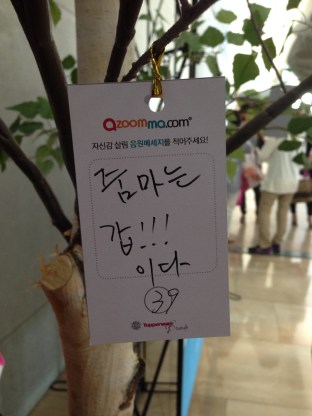
 “Ajumma is the best!!” a message from a wish tree on Ajumma Day, 31st May 2014
IMG_3623
Ajummas on Ajumma Day, 31st May 2014

I enjoyed a lot on Ajumma day in 2014, but I still feel that some more contents or events should be developed and improved more. And I believe it will be getting much better and richer. Further, Ajumma day will be an one of representative days of May in Korea because our ajummas are precious. (:

IMG_3609

A cool Ajumma photographer on Ajumma day 2014

Smart Yakult Ajumma

d0021441_490bb49034d0b

I still remember when I was very young I was more than exciting to drink small bottle of yakult every morning. Since 1971, yakult ajummas delivered yakult to door to door in Korea. These yakult delivery women are called as ‘yakult ajumma’ and they wear uniforms that are similar to the colour of ‘yakult’ which is light pinky apricot. There is no Yakulk Ajeossi (middle-aged men, sort of opposite meaning of ajumma) because the company only hired ajummas for ‘yakult ajumma’. Yes, they do yakult delivery but they are not simply delivery ajummas. They do various social-minded activities to help disadvantaged people such as elder who lives alone, adolescent heads of family etc. As yakult ajumma, they sell yakult to customers but they are more than just ‘yakult delivery women’ rather yakult ajumma as ajummas, they are like our mothers, ajummas who live our next doors. And this friendly and motherly image of ajumma accords with what company aims, for example ‘yakult ajummas deliver health to your door every morning’.

Mother of Working Mom, Yakult Ajumma, YTN TV News, <https://www.youtube.com/watch?v=r1JIYmu33bE>

In the past (1980s to early 2000s), yakult ajummas’ biggest customers are ajummas because they handle the household mostly, so ajummas paid the price of yakult once a month, usually paid by cash to yakult ajumma directly. However, these yakult ajumma changed to smart yakult ajumma since 2013 because they hold hands with digital mobile devices and system.

yakult.001

Thus ajumma customers now can order their yakult and pay the price of yakult through using an yakult app on their smartphones. For example, ajumma customers simply put their smartphones on card reader machine of yakult ajumma’s mobile cart, then the money will be charged to their smartphone bill every month. This is convenient for both an ajumma customer and yakult ajumma. In addition, it is innovation of mobile shopping markets because they designed this mobile payment system for the yakult customers, who are the majority of ajummas.

Screen Shot 2016-01-24 at 2.54.37 PM

Screen Shot 2016-01-24 at 2.54.53 PM

image from Yakult365.com <http://yakult365.com/150>

Through this example of yakult ajumma (smart yakult ajumma) and their digital mobile app, I can see how our ajummas engage with mobile digital technology in daily lives. Also these yakult ajummas are using mobile cart and digital technology to sell yakult, their image of yakult ajumma that is ‘friendly and motherly’ still makes customers to feel warmheartedness of yakult ajumma.

Unknown.jpeg

image from Yakult365.com <http://yakult365.com/395>

Actually they tried to change the name of yakult delivery women in 2014. They thought the name of ‘yakult ajumma’ cannot be matched with digital way of yakult ajumma (with mobile cart and smartphone app). So the company invited public participation to create a new name for yakult ajumma. However, people in Korea ask the company for keeping the ‘yakult ajumma’ instead of getting a new funky name for those ajummas. Fortunately, the company keeps ‘yakult ajumma’ and we are able to keep call and see ‘yakult ajumma’ continuously. Yakult ajumma will be staying to deliver health to us everyday but the ways of delivering yakult are evolving constantly as development of new technology. Yes they are now Smart Yakult Ajumma like our Smart Ajummas. Go Ajummas!


How did they become Smart Ajumma?

Screen Shot 2016-01-21 at 6.53.44 PM.png

Ajummas are now becoming smarter, especially in the way of they communicate due to their use of new technology in their everyday practices such as smartphones. They are now smart ajummas and becoming smarter constantly according to the development of new technologies. However, it ought not be concluded that smart ajummas are named so only because they use new technology. They also actively attempted to acquaint themselves with new technology in daily lives.

Screen Shot 2016-01-21 at 11.17.15 AM

The penetration of smartphones in Korea is significantly higher than the average in the world and it reach 83 percent as of end-March, according to the data compiled by Digieco (Yonhap News 2015). For me, Korea is like a heaven of smartphone because ‘you can do almost everything with your smartphone’ in Korea. But convenience is not only technology’s best friend, I mean there are always problems to use convenient technology, such as smartphones. Yes, smartphone is a double-edged sword, like the Internet! If you can do almost everything with your smartphones in Korea, this means that you can’t do anything without smartphones. (I won’t talk too much about smartphones because this blog is more about smart ajummas)


Anyway, smartphone is a pervasive mobile communicative devicenow. People use smartphones in their everyday practices regardless age and gender. Ajummas are no exception. There are exact data about penetration rate of smartphone users of middle-aged women in Korea yet, it can be assumed there are increase of using Internet among middle-aged women.

Screen Shot 2016-01-21 at 11.17.22 AM

I know this is not a thesis but I think if I put an actual ‘data’ in this post, it might be powerful to support my idea why I can call ajummas as smart ajummas. I can’t just assume ajummas in Korea became smart ajummas because they use smartphones a lot. So I attached these data which help you to understand my argument (or thought) how I can call ajummas as smart ajumma.

For next post, I will explain in detail why ajummas should be considered as ‘smart ajummas’ today in Korea.

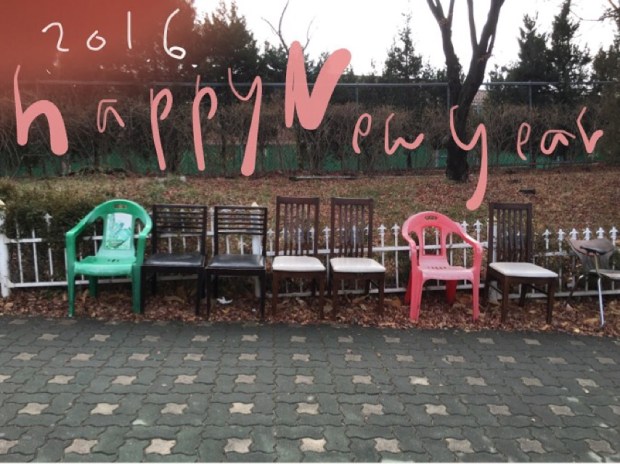
Happy New Year! 새해에도 아줌마 화이팅!

image

Happy New Year all the ajummas in Korea and everywhere!! Ajummas, you ROCK!!!

올 한해도 모두 수고하셨습니다. 아줌마 여러분! 새해에도 멋지고 즐겁게 그리고 건강한 인생을 즐기시길 바랍니다. 늘 응원합니다! 대한민국 아줌마 모두 화이팅!