Zoomatoon(1), Hello Ajumma!

IMG_0806IMG_0807IMG_0808

I can hear so many ajummas call other middle-aged women as ‘Ajumma’. For example, middle-aged women customers (ajummas) call other middle-aged women sellers, “Ajumma! How much is this?”. But when seller ajummas call customer ajummas, “Ajumma! Try some our Kimchi!”, customer ajummas feel uncomfortable. (I experienced so many times these situations when I went to market to buy something) In fact, the seller ajummas never call customer ajummas as ‘Ajumma’. Never!

This is irony because ajummas call other ajummas as an ajumma but those ajummas don’t want to be called as an ajumma by others include ajummas.

Why? What’s wrong with that?

아줌마는 억울하다.

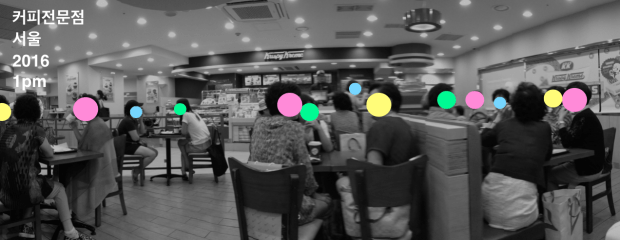
매일 하루하루를 폭염주의보와 열대야에 맞서 싸워야하는 여름더위의 하이라이트, 8월이 되었다. 백화점,마트,영화관등 더위를 피해 시원한곳을 찾는 사람들로 북적이는 이 시기에 나도 엄마랑 백화점 지하에 자리한 잘 가는 커피전문점에 자리를 잡았다. 지나가는 사람들도 구경하고, 점심도 먹고 수다도 떨며 ‘시원하게’보낼 수 있는 곳이라서 여름엔 특히 자리잡기 경쟁이 치열하다. 내가 특히 그곳을 좋아하는 이유는 바로 다양한 우리의 아줌마들을 많이 만나볼 수 있기 때문이기도 하다. 젊은 아줌마라고 할 수 있는 소위 ‘맘족’부터 손주 손을 잡고 온 ‘할줌마’ 그리고 얼핏 보면 매우 비슷한 옷차림과 헤어스타일을 한 것 같지만 각각의 개성을 살려 곱게 차리고 계모임에 온 한무리의’아줌마들’까지, 늦은 오전에서 이른 오후까지의 백화점, 마트, 그리고 커피전문점들은 온전히 아줌마들의 차지가 된다.
Screen Shot 2016-08-01 at 11.13.00 AM.png

백화점 지하에 아줌마들이 많은 이유는 간단하다. 정기모임 (예를 들어 계모임, 아이들 학교의 학부모 모임, 동네친구 모임, 동창모임 등)을 백화점에서 잡으면 서로가 만나기도 편하고, 또 백화점에는 식사부터 디저트까지 한번에 해결할수 있기 때문이기도 하다. 우리 엄마의 경우를 보면, 한달에 한번 꼭 만나는 아줌마들이 계시는데, 모임의 일정은 대부분 점심식사 전의 오전시간에 다같이 백화점에서 만나서 같이 쇼핑도 하고 식당가에 올라가서 밥을 먹은 뒤에 커피전문점에 가서 나머지 수다를 떨다가 먼저 가야할 분들은 먼저 자리를 뜨고, 백화점에 함께 위치한 마트나 백화점 식품코너에서 저녁 찬거리를 사가지고 오는 일정이 주를 이룬다. 백화점에서 한번에 쇼핑,모임,수다,그리고 식료품쇼핑이 가능하기 때문에 아줌마들은 백화점에서의 모임을 선호하는것 같고, 따라서 다른 곳과 달리 백화점내의 커피전문점은 오전에서 오후시간동안 아줌마 고객들로 붐비게 되는 것이다.

모임이 없는 날에도 아줌마들은 백화점에 온다. 단순히 쇼핑을 위한 목적이 아닌, 다른 문화생활을 하기 위함인데, 예를들어 노래교실과 같은 아줌마를 위한 문화센터 강좌가 다양하게 준비되어 있기 때문이다. 젊은 아줌마, (맘족)들의 경우에도 아이들과 엄마를 위한 문화센터, (aka 문센) 수업을 위해 백화점에 오는데, 이 모습이 또 장관이다. 비슷한 또래의 젊은 아줌마들이 비슷한 브랜드의 유모차를 끌고 비슷한 패션으로 아기들을 태우고 백화점을 다니는 모습 또한 ‘아줌마 문화’를 잘 보여주는 예라고 할 수 있다. 문센을 통해 또래 아기들을 키우는 엄마들끼리 정보공유도 하고 동시에 아기들은 친구를 만날 수 있는 사회생활도 할 수 있게 되는 것이다. 즉 젊은 아줌마들의 문센과 중년 아줌마들의 문화센터 강좌는 단순히 시간많은 아줌마들이 ‘놀러’다니는 것이 아니라 그들만의 사회생활을 이어나가고 있는 것이라고 봐야한다. 일부 혹은 많은 사람들은 백화점 커피전문점에 앉아서 수다를 떨고 또 아기를 데리고 유모차를 끌고 다니는 젊은 아줌마나 중년의 아줌마를 삐딱한 시선으로 보는 경우가 있는데, 이것은 속을 들여다 보지도 않고 그저 자신들이 갖고 있는 ‘아줌마’에 대한 편견으로 잘못 이해하고 있는 거라고 말하고 싶다.

전에도 이야기 했지만, 아줌마라는 호칭은 아직도 꽤 매우 퍽 부정적으로 받아들여진다. 누군가 중년의 여성을 ‘아줌마’라고 부른다면 듣는 사람은 이내 불쾌한 표정을 짓게 되는 경우를 흔히 볼 수 있다. 아줌마라는 호칭은 아무 죄가 없다. 미디어에서 잘못 만들어진 아줌마에 대한 부정적 시각, 그리고 개선의 여지없이 아줌마는 그저 무례하고 무식한 나이든 여성이라고 치부해버리는 우리사회의 변하지 않는 인식도 큰 문제이다. 아줌마라는 호칭에 대해서 누군가 이런말을 했었다.

‘요즘 서울에 아줌마가 어디있어요? 시골이나 뭐 교육수준이 낮은 여자들이나 아줌마라고 부르지! 요즘 여자들은 고학력에 그리고 도시에 살고 그러는데 무슨 아줌마예요? 그리고 나이든 아줌마들이나 시간많아서 놀러다니지, 워킹맘들은 얼마나 힘들게 사는줄 알아요?’ (끝이 없지만 이정도로 요약)

어이가 없어서 대답도 하지 않았다. 서울에는 워킹맘이고 시골에는 (시골이라는 단어도 웃기지만) 아줌마라뇨? 교육수준이 낮은 여자는 아줌마고 고학력 여성은 아줌마가 아니다? 나이든 아줌마들이 시간많아서 놀러다니고 워킹맘은 힘들게 산다고?

여기에서부터 벌써 여성이 여성에게 갖는 편견이 무섭다는 걸 알 수 있다. 서울여자/시골여자, 고학력/저학력, 나이든아줌마/워킹맘 으로 나누어 버리는 저런 사고 방식은 어디서 나온것인지? 아줌마는 왜 저학력/나이들고/시간많아서 놀기만 하는 여자로 그려지고 있는건지? 아줌마들은 힘들게 살지 않았나? 우리사회에서 여성으로 살아왔다는 것 그리고 현재의 여성들이 하루하루 살아가는 일이 얼마나 힘든지 모르는걸까? 왜 아줌마보다 워킹맘만 더 힘들다고 생각하는 건지? 모두가 다 힘들다고 생각할 수는 없는건지?

아줌마라고 부르지 마세요. 그래서 어딜가면 아줌마라고 부르는 사람을 무식한 사람으로 쳐다본다. 아줌마 대신에 아주머니, 사모님으로 불러야 한다고 누군가 그러더라. 아주머니, 사모님이 왜 더 우월한 호칭인건지 모르겠다. 그리고 아줌마라는 호칭은 어쩌다가 이런 대접을 받게 되었는지도 모르겠다.

“한 일간지의 특별취재팀이 서울시내 일대에서 40~60대 여성 120명을 대상으로 한 실험의 결과는 흥미롭다. 60명에 게는 ‘아줌마’라는 호칭을 사용하고, 다른 60명에게는 ‘아주머니’라고 부르며 말을 건 이 단순한 실험의 결과는 놀라웠다. ‘아줌마’라고 불린 60 명 중 18명은 불쾌해하거나 대답조차 없이 지나간 반면, ‘아주머니’라 고 불린 60명 중 그냥 스쳐 지나간 사람은 한 명도 없었던 것이다. ‘더 친근하다’는 반응도 있었지만 ‘여성성을 잃어버린 기분이 든다’, ‘사회적 지위와 인격을 송두리째 부정당하는 느낌’이라는 의견이 대부분이었다”.

Allure Korea, 대한민국 아줌마 보고서 중에서 <http://www.allurekorea.com/2014/09/04/>

아줌마라는 호칭의 부정적 시각은 잘못 만들어지고 잘못 인식되어진 것이다. 바뀌었으면 좋겠다. 아줌마는 중년여성을 무시하는 호칭이라는 인식이 사라져야 한다.

‘아줌마’라는 호칭은 억울하다. 아줌마를 그렇게 만든건 세상이다. 세상이 만든 그런 ‘아줌마’는 없다. 진짜 ‘아줌마’를 찾아야 한다.


Art project about ajummas

I found some art project about ajummas. These exhibitions were already over but I would like share some images and webpage links with anyone who are interested in art project about ajummas.

1.아줌마 부루스 展/ Ajumma Blues

Screen Shot 2016-07-26 at 10.05.14 AM

(click the image to visit the website)


2.괜찮아 잘될거야 조진성/It will be okay by Jin Sung Cho

NISI20151020_0006032987_web.jpg

(click the image to visit the website)

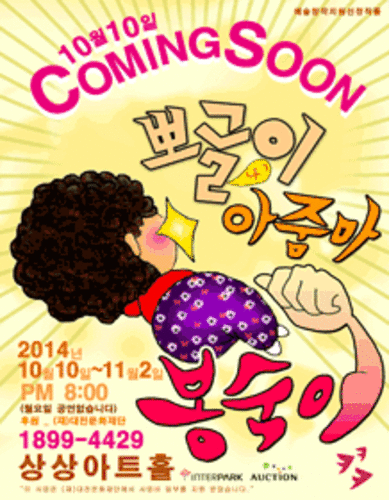
3.연극 ‘뽀글이 아줌마 봉숙이’/The play ‘Curly hair ajumma, Bong-Sook’

91_shop1_306979.gif

(click the image to visit the website)

I keep thinking about making any ‘art’ project about ajumma but I need some more time. The project should be related to my previous video, ‘Digital Ppal-let-ter’.

The trend of online first-birthday party among Korean mothers (mums)-(2)

As I mentioned how the first-birthday party (Dol Jan-chi) is important in Korea, most of parents (especially mothers) prepare the birthday party table with all their hearts for their birthday baby and the guests. At the birthday party, the party host (parents) share their baby’s growing diary during last 1 year through showing photos and a video. Furthermore, various interactive activities  about their baby between the guests and the host such as quiz bring the guests to enjoy the baby’s first-birthday party better. Yes, this is a predictable baby’s first-birthday party even though you never experience it in Korea. (because birthday party is birthday party!)

But, one thing that I would like to introduce to you today is, there is an online first-birthday party in Korea today! The online first-birthday party (Online Dol Jan-chi) is literally means a birthday party for a baby who became 1 year old in an online space such as blog and social media. This online first-birthday party is now the trend among young Korean mums. Once they have the offline first-birthday party, then they celebrate their babies’ first-birthday party in online spaces (e.g. their blogs). For the offline birthday party, the guests are mostly their family members, colleagues and anyone who are very close to the baby’s parents. However, our mums and ajummas are now smart Ajummas (or smart mums)! They frequently cross the online and offline spaces through using the Internet connection and digital mobile devices such as smartphones in their everyday lives. These smart mums and ajummas enrich their networks wider and enjoy daily lives better through having unconstrained and borderless communication with their contacts in both online and offline spaces. Thus, the online first-birthday party (online Dol Jan-chi) is held for mums’ contacts whom are mostly ‘blog neighbours’. (blog neighbours= bloggers become neighbours through communicating in blog space, it is similar to follower or friends)

On online first-birthday party day, the host informs the date and time for the party through a blog post or a message. The party goes usually for 24 hours or few days. Then what the guests do or how do they enjoy the online party? It is very simple. The guests visit the blog and then they will watch a video or photos of baby’s growing diary for last one year. And usually there is a special event for the guests such as a quiz or leaving message for a baby on the blog. Once they write answers for the quiz or left birthday messages for the baby on the blog, the host (parents) pick some guests randomly to give lucky gifts. (Lucky gifts for the online first-birthday party  are various such as a mobile voucher (Starbucks drink voucher), baby goods, cosmetics, movie tickets and etc.) The guests for this online first-birthday party are mostly ‘mums’ or ‘ajummas’ today, so the lucky gifts are prepared for especially for mums.

Here is a beautiful example of online first-birthday party (online Dol Jan-chi) on Naver blog, <jjorang’s>. On her blog, you will see what the online first-birthday party is.

Online first-birthday party (online Dol Jan-chi) will be proliferating continuously with the use of digital mobile technology is pervasive in our everyday lives, especially mums and ajummas in Korea. I think this (online first-birthday party [online Dol Jan-chi] could be explained as the digital remediation. However, it should be developed continuously. In other words,this kind of Korean traditional culture should be recreated and developed more to establish the unique Korean culture in online space rather than repeating the same thing (e.g.birthday party/online birthday party) by only changing the spaces (online or offline). Then we will have distinct traditional Korean culture that exist in online and offline (or in between online and offline). These two culture that are in different spaces develop their characters differently (because of the difference of spaces) but still, they were derived from the same root.

The trend of online first-birthday party among Korean mothers (mums)-(1)

What do you feel about the first-birthday party? Of course, I don’t remember my first-birthday party but I do know my parents, grandparents and anyone who knew me came to the party to celebrate my first-birthday party almost thirty something years ago. We call it ‘Dol Jan-chi’ in Korean which means Dol is for first birthday and Jan-chi is for party. On first-birthday party, mothers (and fathers as well) prepare the special feast table, Dol-sang. On the Dol-sang, usually a book, money, rice, noodle, jujube, a pencil, thread are placed beforehand. When parents seat the baby in front of the table, the baby picks up one of the objects for fun, which helps the family to foretell the baby’s future. For example. if the baby picks thread, it means she or he will live a long life. There is a traditional Korean style Dol-sang for the baby’s first-birthday party, but mothers also do prepare the modern type of Dol-sang in these days. As other countries (I experienced that Australian people also think the first-birthday part is important like as Korean people) think the first-birthday party is important because the baby grows well last 12 months (1 year) and the parents also hope their baby lives well for the rest of her (or his) life. At the same time, the parents want to share the happiness with the guests and express appreciation to the guests as well. So they share the food that the parents prepared for and the guests give words of blessing to the birthday baby.

Like this, the first-birthday party is a big thing for the parents and the baby. So they try to prepare the ‘best’ birthday party for their baby and the guests. In my case, my grandma and mum prepared all the food at home for lots of guests. Yes, it was the home party which is very classic and traditional style of the first-birthday party. At that time (about 30 something years ago) this kind of first-birthday party was the only and common thing for everyone. How about today?

Some of my friends got babies and whenever I saw the photos of the first-birthday party on the Instagram, it is quite different from my birthday party. These days, the birthday table becomes more fancy (e.g. matching colours with dishes, flowers and props on the table) and the parents also prepare the ‘online first-birthday party’ besides the actual birthday party (offline birthday party).

In 2006, there was a service for a party given to a hundred-day-old baby in Cyworld. Similar to the first-birthday party (Dol Jan-chi), the hundredth day since the baby was born is important day to celebrate in Korea. Usually, this 100th day party isn’t as big as the first-birthday party but the parents still prepare the ‘white rice cake’ for 100 people includes their family, neighbours, friends or anyone they know. For the baby’s 100th day, Cyworld provided a service for the parents who wanted to celebrate their baby’s 100th day through Cyworld in 2006. Through using the baby Cyworld (specially designed for the parents who want to have online space for their baby), the parents were able to celebrate their baby’s birthday with their Cyworld Il-chon (Cyworld’s friends). Also, Cyworld gave 100 white rice cake for baby’s 100th day birthday, so the parents could send cyber-rice cake item to their fiends in Cyworld. With this cyber-rice cake, people could decorate their mini hompy. (It is common thing to distribute 100 white rice cake to people on baby’s 100th day birthday in Korea. People believe that distributing the white rice cake will bring the baby’s healthy life)

–I couldn’t find any image reference of the white rice cake item on Cyworld and the baby Cyworld couldn’t be found anymore.

Screen Shot 2016-07-18 at 11.08.43 AM.png
Mum and her son use the Cyworld’s baby service together (2006)

Image from SK communications, <http://www.newswire.co.kr/newsRead.php?no=123837>

Blog post about ‘online first-birthday party’ will be uploaded soon. 


Pokemon Go in South Korea

Yesterday, the bus tickets to Sokcho (a city close to the border with North Korea) were almost sold out. The news about Pokemon Go was rapidly spread out to people in Korea through various social media. Actually, it was impossible to play that game because of some issues of using Google maps in South Korea. But, Pokemon is found in Sokcho!!!

Screen Shot 2016-07-14 at 5.37.12 PM

As you can see the map above, the yellow areas are restricted to play Pokemon Go but the pink triangle zone (Sokcho) is the only location that people do catch Pokemon in South Korea. Sokcho is too close to the border of North Korea, so some experts explained that Sokcho has not been classified as South Korea territory. Luckily (maybe?) we are now allowed to play Pokemon Go in South Korea but we have to go to Sokcho to play it. It takes almost 3 hours by car or bus from Seoul to Sokcho. But people are now heading to Sokcho to meet Pokemon through using their smartphones.

In accordance with the global Pokemon Go fever, the city hall of Sokcho prepared the Pokemon special package hastily. It provides the map of free wifi zone for Pokemon Go players who visit Sokcho city on its Facebook page and Twitter account. (see https://www.facebook.com/dreamsokcho/) Also there is a Pokemon Go team page (https://pokemongoclankorea.herokuapp.com) that allows Korean Pokemon Go players to join three different team group from all over the world to share information about Pokemon Go such as game tips.


Screen Shot 2016-07-14 at 5.59.15 PM.png

Free wifi map by Sokcho city

And the social commerce such as Tmon (ticketmonster.co.kr) sells the special shuttle bus package from Seoul to Sokcho for Pokemon Go hunters. People can purchase cheaper price of shuttle bus tickets through this social commerce website by using their smartphones.

662_498_5943.jpg

Tmon’s special shuttle bus package for Pokemon Go in Sokcho, image from (www.ticketmonster.co.kr)

My timeline of Twitter is now all about Pokemon Go in Korea. It’s been only 1 day since people have found Pokemon Go is available in South Korea (Sokcho). There will be more stories and photos will be coming continuously for sure. So far, it is very interesting and exciting to see this unexpected AR (augmented reality) mobile game phenomenon in South Korea because we couldn’t expect that we can meet Pokemon in South Korea at all! I will keep reporting the news about Pokemon Go in Sokcho. (The bus tickets were already sold out for this coming weekend…you know what this means…)

I cannot go to Sokcho right now but I still can see and read other hunters’ stories and photos through social media. Oh!!! and I can’t catch Pokemon because they didn’t visit Seoul for this time, but I can ‘find’ or ‘catch’ Yakult Ajumma through using Yakult Ajumma app on my smartphone.

d-:

Selca or Selfie? (1)Haduri

Yes, I bet you know what selfie is. Selfie is a self-portrait photograph taken with digital camera or camera phone (e.g. smartphone). The term selfie is now used by almost everyone who take selfie by using their digital cameras or camera phones. Taking, uploading and sharing selfies on various social media such as Instagram is a sort of everyday practices for us now. Besides, like the selfie sticks or selfie drones enhance people to get better (of course there are increases of accidents because of taking selfies in dangerous locations) selfies. However, I’m still familiar with using the term selca than selfie.

Selca means ‘self camera’ and it is equivalent to the term selfie. In Korea, we used to use the word selca in last (almost) 10 years ago. People went to PC Bang (room) to use computers (e.g.PC games, Webcam) during 1990 to 2000. In PC Bang, people took selca on Haduri and webcam on PC. Haduri is a webcam software for PC so people were able to take their selca through seperate webcams on PC or builtin webcams in PC. As the growth of the Internet penetration and various online clubs or online communities, more and more people use Haduri to take their selcas and to show them to their friends in online clubs or online communities. Since that time, people knew how to take ‘better selca’ through using Haduri. In other words, they know the best ‘angle’ to get the best selca on Haduri.

20151113212138_34.jpg
example of Haduri selca

image from <http://www.sportsseoul.com/news/read/319719>

More about Haduri,

(1)Haduri website http://www.haduri.com

(2)What is Haduri? https://afspot.net/forum/topic/307970-what-is-haduri/

Washing machine in Ppal-let-ter (Wash place)

20070917152714.928.0.jpg

LG Tromm washing machine is in Hong Do Kim’s Wash place (late 18th century), 2015

image from <http://www.newswire.co.kr/newsRead.php?no=282581>

빨래터와 아줌마는 억지다.

스마트아줌마의 연구를 통해서 현재를 살아가는 우리의 아줌마들은 어쩌면 디지털 빨래터라는 공간에서 그들만의 소통을 이어가고 있는 것인지도 모른다고 생각했다. 그 생각을 크리에이티브 프로젝트로 표현해내기 위해 비디오로 만들었고 그렇게 스마트아줌마와 디지털 빨래터는 함께 보여지고 설명되어져야 하는 연구 프로젝트이다. 빨래터라는 공간을 생각하면서 누군가는 억지스럽다고 말할수도 있겠다 싶긴 했다. 빨래터와 여성의 소통공간을 연결시켜서 이야기하는 것 그리고 빨래터와 디지털 커뮤니케이션을 연결시켜 이야기하는 것에 대해 확신이 없었던 것이 아니라, 늘 새로운 생각은 누군가의 비판을 받게 마련이기 때문에 걱정이 들었던 것이었다. 하지만 이러한 누군가의 ‘공격’을 막아내기 위한 것이 바로 연구논문이고, 그 논문을 통해서 내가 왜 이시대의 아줌마들을 스마트 아줌마라고, 그리고 그들만의 소통공간이 바로 디지털 빨래터인지에 대해 조목조목 대답하기 위해 오랫동안 문헌연구를 하고, 질적/양적 연구를 했던 것이다.

빨래터에 대한 억지라는 부분. 누군가 그랬다. 빨래터라는 곳이 그 당시 여성이 가사노동, 육아, 시집살이등의 고단한 삶을 풀어내는 매우 슬픈 장소인데, 이 연구에서는 빨래터라는 공간을 너무 단순하게 즐거운 곳으로 표현했다 라고. 우선 빨래터가 여성들의 즐거운 소통공간이라고 표현한것은 맞고, 내가 의도한 바이다. 빨래터는 여성들이 이야기를 풀어놓는 공간임이 분명하다. 물론, 기쁨, 슬픔, 고달픔등의 여러 감정이 섞인 그들만의 인생이야기들이 풀리는 곳이다. 하지만 왜 슬픈장소여야만 하는지? 아직도 여성의 인권이 존중받기위해서는 더 많은 사회적인 노력과 개선이 필요하지만, 그 당시 즉 1950-60년도에는 지금보다 더 열악한 여성의 삶이 있었던건 사실이다. 하지만 과연 무조건 여성의 삶을 슬프게만 혹은 불쌍하게만 봐야하는건지? 또한 이 연구는 ‘아줌마들의 소통과 소통공간’에 관한 연구이지 ‘한국 여성의 역사’ 이런게 아닌데, 여성학을 너무 가볍게 다뤘다는 둥, 나이브하게 일차원적인 접근으로 여성을 우습게 보고 있다는 등 (excuse me?)의 ‘비판’이 아닌 ‘비난’이라고 생각되었다.

여성에 대한 연구는 다양하다. 여성의 인권에 관한 연구도 중요하고 또한 훌륭한 연구들이 계속 진행되고있지만, 나는 대부분의 미디어 연구에서 늘 제외되었던 중년여성과 그들의 디지털 미디어 사용에 대한 연구를 해보고 싶었던 이유로 이 연구를 하게 된 것이다. 아줌마라는 단어로 중년여성의 이미지를 깎아내린다는 누군가의 말, 아마 그 사람에겐 ‘아줌마’라는 존재가 매우 하찮게 자리잡고 있나보다. 아줌마라는 호칭 자체가 여성을 우습게 보는 말이라고 생각하는 그 사람 자체가 이미 아줌마에 대한 편견과 오해를 가득품고 살아가는 사람이라고 생각할 수 밖에. 요즘은 교육수준이 높아지고 패션감각이 뛰어나서 아줌마같은 사람들이 별로 없다는 말, 그럼 아줌마는 교육수준이 낮고 패션감각이 뒤떨어지는 중년여성인가요? 여성 스스로가 아줌마에 대한 편견을 계속 낳고 있는건 아닌지…생각해 본다. 씁쓸하다.

(전에 써 놓은 글 중에서)


Ajummas and plastic surgery

I’m not sure whether I can write about the topic of ‘plastic surgery’ in this blog or not. But I think plastic surgery could be categorised as a part of ‘beauty’ or ‘beauty industry’ in Korea (and many other countries) so I can concern about this issue in this blog. Well, plastic surgery is a very common thing for most Koreans (not every Koreans I have to say) in these days. There are various types of plastic surgery that help people to be satisfied with their appearances and sometimes inner sides,too. As they change or (I can say) upgrade their appliances through plastic surgery, people are able to have more confidences than before (especially, people who are not happy with their appearances). Of course there is side effect of plastic surgery but one thing we surely know that plastic surgery is a sort of popular culture in Korea now.

Before I wrote this blog entry today, I did research how ajummas concern about plastic surgery in Korea. Well, I still need to do a lot more and deeper research about the relationship between ajummas and plastic surgery, but one thing I found that many of ajummas are interested in doing plastic surgery and many of them also already experienced of having plastic surgery as well. And (I need to do more research about this but at this stage but) I found that the purposes of doing plastic surgery and preferred body part (or face part) are quite different according to different age group. For example,  married middle aged women (it didn’t specify the actual age range in its report) wanted to do liposuction surgery (especially for reducing abdominal fat) the most according to the report. (http://bntnews.hankyung.com/apps/news?popup=0&nid=05&c1=05&c2=05&c3=00&nkey=201103291205063&mode=sub_view)

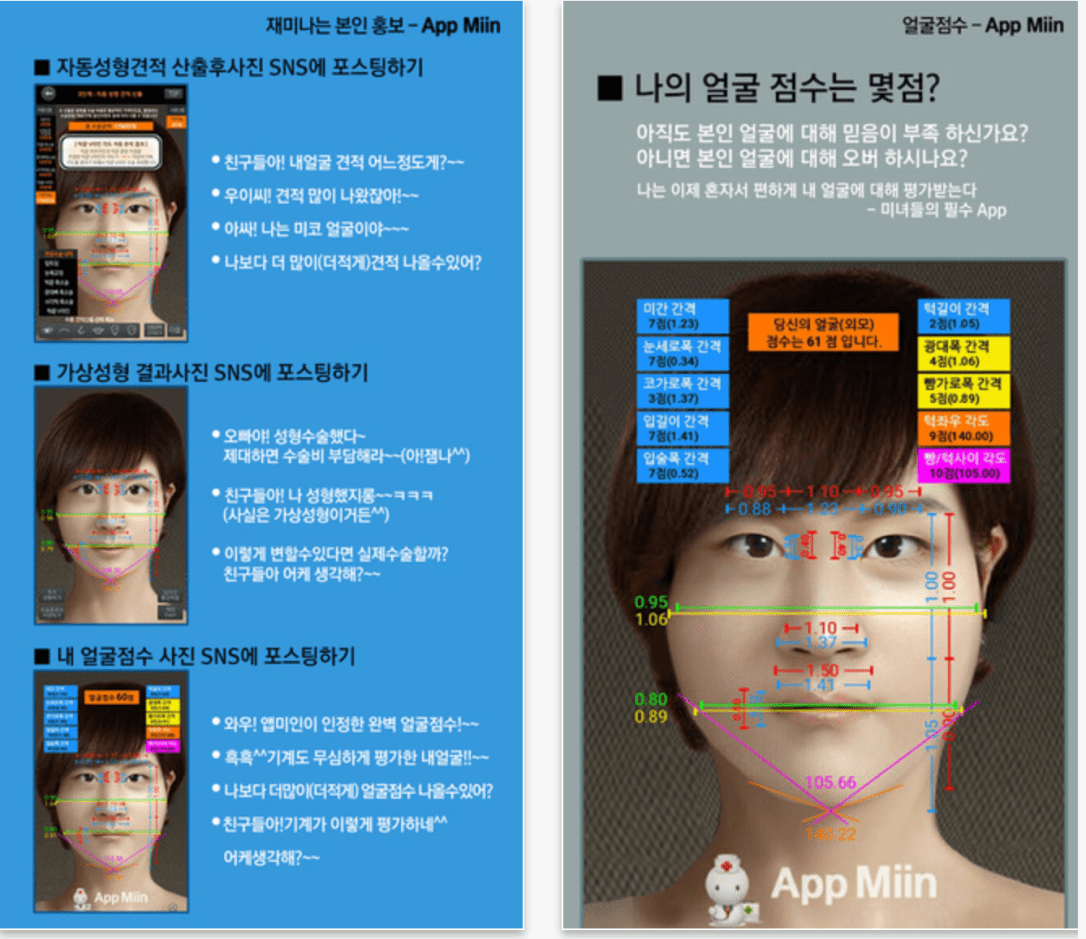
In addition, there are apps for plastic surgery as well. I just found some of them and need to research more about this ‘beauty app’ asap. Here is an example of plastic surgery app that is called, ‘App Miin’. App is for application and Miin means a beauty in Korean. So it means application beauty. Users are able to try virtual plastic surgery through using this app and they can make estimate for the plastic surgery in the future as well.

Screen Shot 2016-07-05 at 7.28.03 PM.png

(click the image above, it goes to the website of App Miin, https://itunes.apple.com/kr/app/aebmiin)

I take a profound interest  in the things that are related to beauty industry, women and digital media. Thus I keep thinking about the research that I will do for the next. (another research idea is in my mind, too)

note for today

1.Today, I tried to make another version of a short video clip with using LivePhoto of ajumma that I’ve taken in Gwang Jang Market few months ago. Well, I made it but I can’t export that video for now. I have to sort this problem out asap.

2.Writing a research blog isn’t simple thing because I have to write a ‘research blog’. But I feel getting better to upload posts on this blog compared with few months ago. Yes, it’s already been 6 months since I’ve started writing blog posts. Writing in other language  (English) than Korean isn’t easy and I know there’re some mistakes of awkward expressions and poor grammar. But I just keep writing my research blog posts both in Korean and English because I believe this helps me to keep doing my research (other than phd project) continuously in many ways. So I will keep writing.

3.Thinking about few topics to start a new research by myself. Of course, it will be related to media, digital technology, gender, Korean (or Asian) studies, pop culture, etc. I will post about it as well.

4.Still, the topic about ‘ajumma’ and their usage of smartphones in daily lives with their own ways of mobile communication is not ‘hot’ thing for people in Korea, I think. I’ve contacted to several communities and associations but they aren’t interested in this topic yet. (But it’s now getting better compared with 3 years ago! At least, they replied back to me about my research topic!)


Ajummas are in Live Photo

Music credit: Peppertones, ‘For all dancers’ (less than 5 seconds, looping)

I just played with the keynote to create a live photo video for this blog. All the videos are made with (include Digital Ppal-let-ter project) photos and keynote. This looping live photo video reminds me a rhizome movie (by Adrian Miles) that we’ve learnt at RMIT almost 10 years ago. I’m thinking to create short video clips (like this) through using keynote, live photo and maybe photo collage.